




Blue Porcelain Temple Jars
These blue porcelain temple jars bring centuries of Chinese and Japanese ceramic artistry into a room.
Blue Porcelain Temple Jars
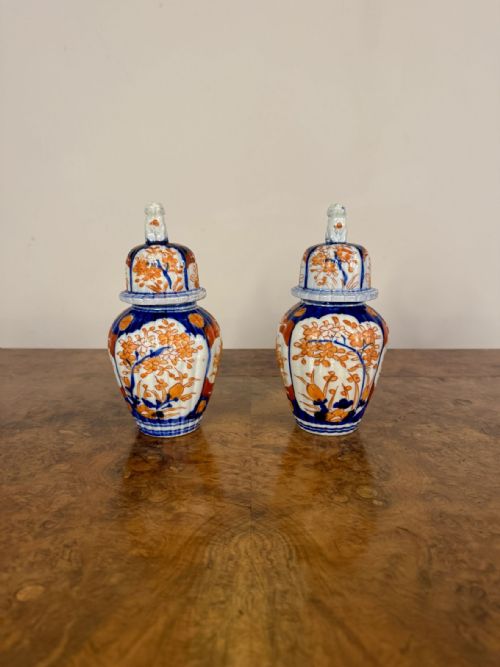
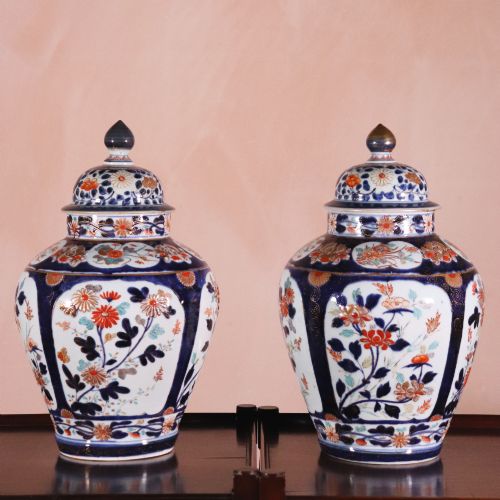
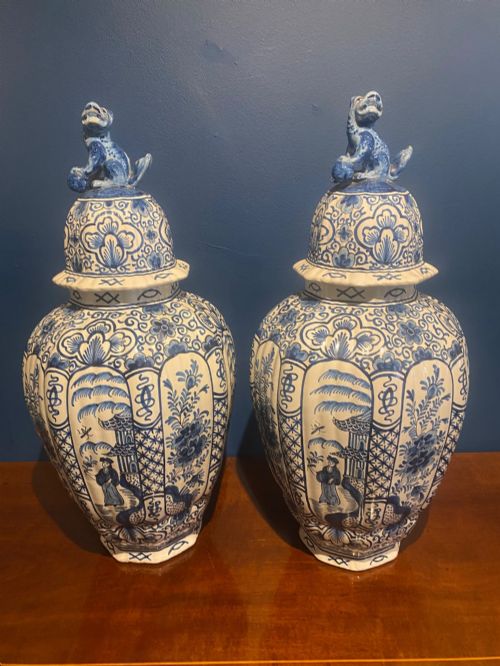
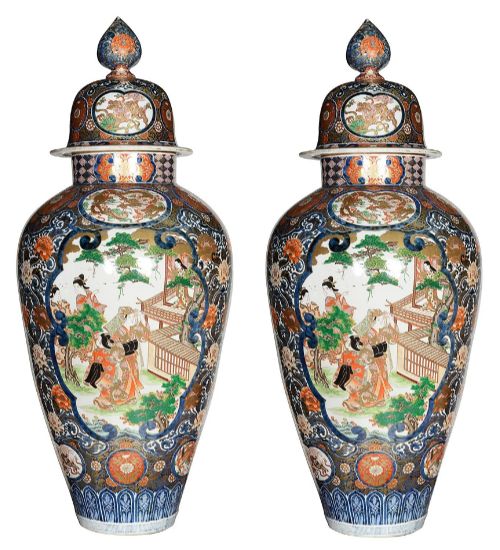
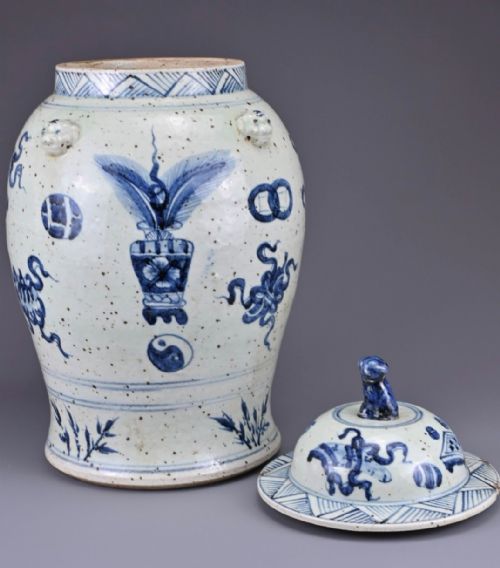
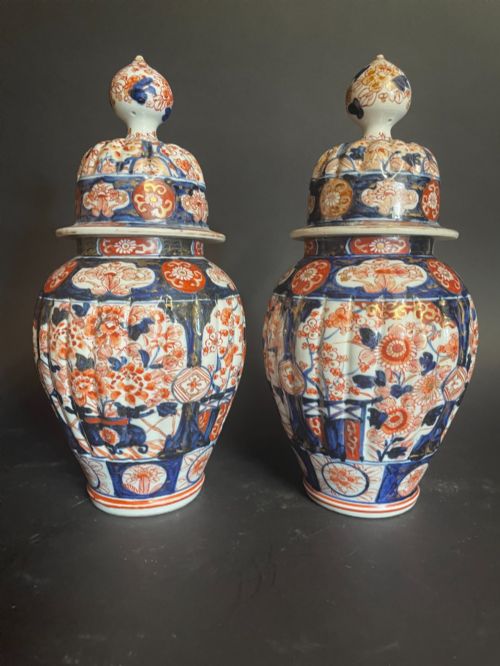
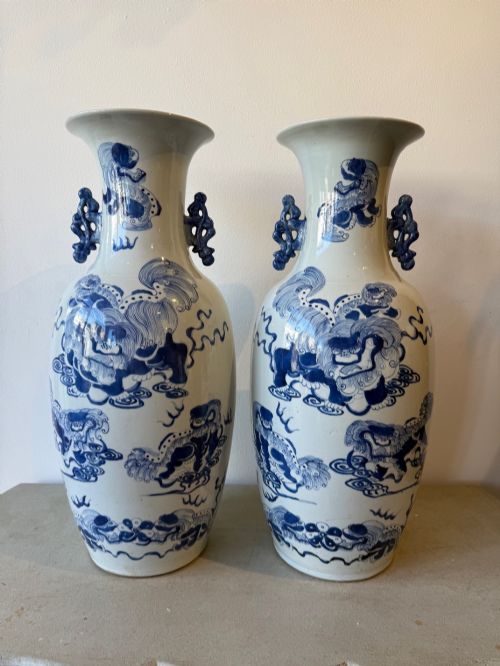
Blue porcelain temple jars encompass lidded vessels, ginger jars, and baluster vases created across multiple centuries in China and Japan. When you search for blue porcelain temple jars, you encounter forms ranging from seventeenth-century Arita wares to nineteenth-century Imari productions and later Chinese blue and white interpretations. These vessels frequently appear as pairs or garnitures, designed to hold dry goods or simply to ornament grand interiors.
The material expression centres on cobalt blue underglaze and the rich Imari palette of iron red, cobalt, and gilt. Forms vary from octagonal baluster shapes to rounded ovid jars fitted with matching covers. Examples span the Edo and Meiji periods in Japan alongside the Qing Dynasty and later eras in China, reflecting diverse manufacturing traditions across East Asia.
What varies in quality
Quality rests upon the crispness of the cobalt painting and the depth of the glaze beneath the surface. Superior examples display confident brushwork and precise control over the cobalt blue tones without blurring or running.
The presence of undamaged original covers and matching pairs elevates a piece above single mismatched components. Refinement in the potting, balanced proportions, and well-executed gilding or enamel highlights distinguish high-grade specimens from standard production wares.
Blue Porcelain Temple Jars Retail Price Guide 2026
Typical asking prices for blue porcelain temple jars among the pieces listed under this phrase on Sellingantiques today, from the lower quarter to the upper quarter. They describe what is for sale here now, not the wider market.
Some nineteenth-century makers concealed subtle kiln debris beneath heavy gilding, giving stubborn evidence of real wood-fired imperfections.
Fukagawa·Samson
The Blue Porcelain Temple Jars Glossary
- Imari
- A style of Japanese porcelain decorated in underglaze blue, iron red, and gilt. Originating in Arita, these wares gained immense popularity in Europe during the seventeenth and eighteenth centuries.
- Baluster
- A vase form characterised by a bulbous lower portion tapering toward a narrower neck and flared rim. This silhouette provides stability and visual balance to large lidded jars.
- Garniture
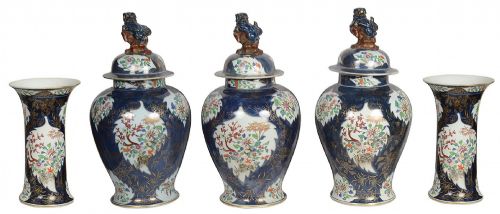
- A set of three or more matching vases and jars designed to be displayed together on a mantelpiece or cabinet. These sets typically combine jars with covers and open vases of graduated heights.
- Ovid
- An egg-shaped vessel profile commonly found in ginger jars and storage vessels. This rounded form maximises interior capacity while offering a smooth canvas for surface decoration.
Blue Porcelain Temple Jars: Frequently Asked Questions
Were these jars actually used in temples?
Despite the traditional collector term, most of these lidded vessels served as storage containers for spices or precious goods, or functioned purely as decorative display items in domestic interiors.
Over time, European collectors applied the descriptor to large oriental jars due to their impressive scale and ornamental presence in grand rooms.
How do I distinguish Edo period pieces from later ones?
Edo period and early Arita pieces display a particular weight, iron-foot characteristics, and deeper cobalt tones influenced by Chinese Kangxi prototypes.
Later nineteenth-century Meiji and twentieth-century interpretations often reveal brighter modern enamel colours, starker white porcelain bodies, and more mechanised potting techniques.
Can I use these jars as lamps?
Many historical vessels received professional ormolu mounts and electrical wiring during the nineteenth and twentieth centuries to serve as functional table lamps.
Original porcelain bodies remain intact beneath such conversions, though collectors generally prefer pieces retaining their original lids and untouched ceramic surfaces.
Why do some jars lack covers?
Lids suffered high rates of breakage over centuries of domestic handling, cleaning, and moving between rooms.
Finding a jar with its original matching cover significantly enhances its historical integrity and desirability among collectors.