



Blue Porcelain Mantle Clock
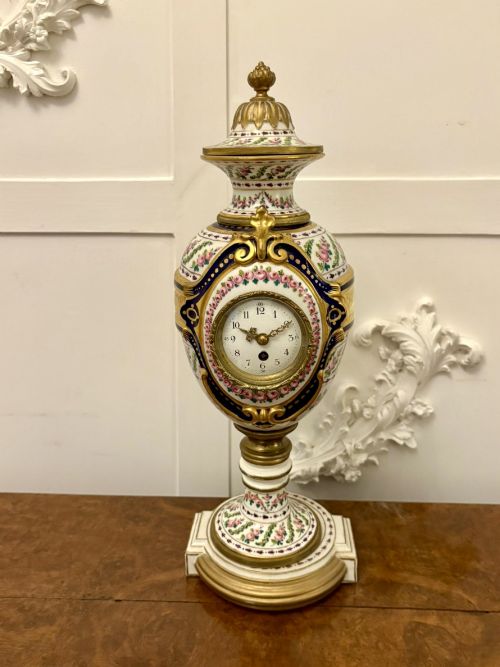
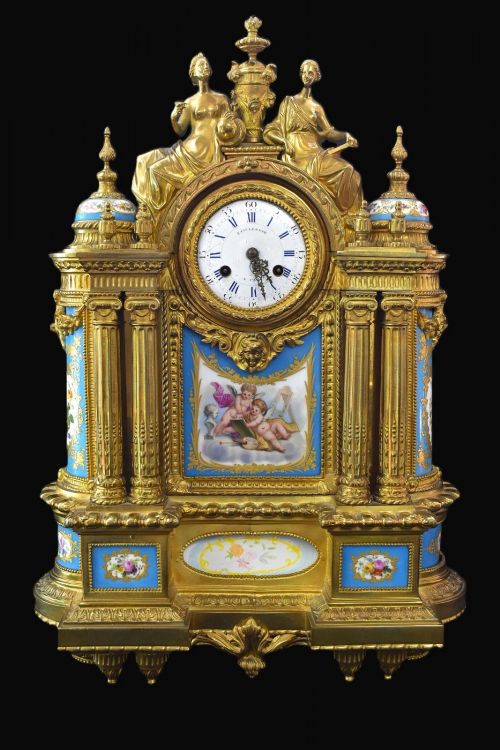
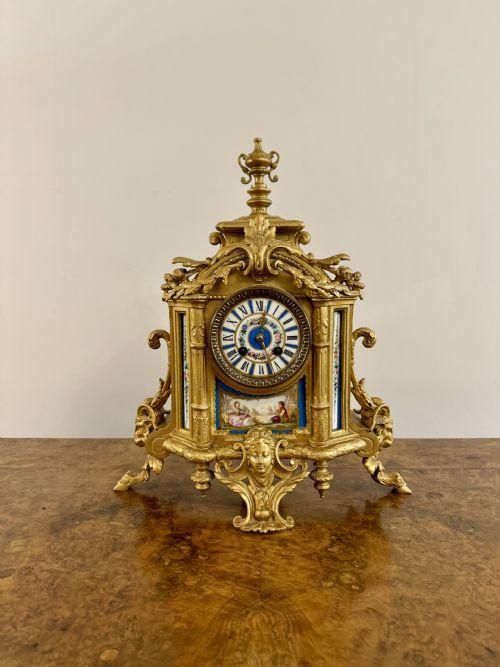
A blue porcelain mantle clock combines intricate ceramic bodies with gilded mounts, offering a striking centrepiece for a mantelpiece.
Blue Porcelain Mantle Clock
A blue porcelain mantle clock forms a distinct group of decorative timepieces, most commonly seen in French 19th century revival styles.
These items frequently appear as urn-shaped bodies or clock sets paired with matching garnitures, drawing on Victorian and Napoleon III aesthetics.
Makers utilised porcelain panels, often decorated with hand-painted scenes or portraits, set within housings of gilt bronze, ormolu, or gilded metal.
Materials and construction
Craftsmen shaped porcelain into urns and architectural housings, applying enamel dials with delicate numerical markers.
Metalworkers cast bronze and brass into ornate mounts, using ormolu and gilding to enrich the surfaces of the clock cases.
Listings feature items spanning the Victorian era and Napoleon III period, incorporating porcelain, ormolu, gilt bronze, and glass domes.
Assessing quality and execution
The fineness of the hand-painted porcelain panels and the crispness of the gilt metal castings separate simpler pieces from more elaborate examples.
The inclusion of complete garniture sets or protective glass domes alters the substantial presence of the clock on a mantel.
Etienne Lenoir·Finnigan Manchester
The Blue Porcelain Mantle Clock Glossary
- Ormolu
- A technique of applying finely ground, high-carat gold to an bronze object. This method gives the metal mountings a rich, durable golden lustre.
- Garniture set
- A decorative grouping consisting of a central clock flanked by matching ornaments such as urns or vases. These sets were designed for symmetry on a fireplace mantel.
- Crystal regulator
- A clock encased in glass panels that reveal the internal movement from multiple angles. It became popular in the later part of the nineteenth century.
- Cloisonné
- An ancient technique for decorating metalwork objects with colourful material held in place by thin metal strips. It appears on select clock cases and garnitures.
Blue Porcelain Mantle Clock: Frequently Asked Questions
How do I wind the clock?
Most of these mechanical movements require a key to tension the springs for the timekeeping and striking trains. Turning the key gently in the designated arbors keeps the movement running.
Care should be taken not to overwind the springs, as this can damage the internal gearing of the antique mechanism.
Are these clocks suitable for daily use?
While they were originally built to keep domestic time, their age means they function best with occasional gentle setting rather than heavy daily use. Many collectors run them periodically.
Professional servicing helps maintain the delicate balance of the vintage pendulum and escapement mechanisms.
What is a clock garniture?
A garniture is a matching set of decorative objects designed to sit alongside the main clock on a mantelpiece. They usually share the same porcelain colour and metal mounts.
This matched grouping creates a balanced visual display characteristic of grand Victorian and Napoleon III interiors.
How do I identify the period?
Dating relies on examining the style of the gilt metal mounts, the painting on the porcelain plaques, and the shape of the case. French pieces from the mid to late nineteenth century often display distinct revival motifs.
Signatures on the enamel dials or movement backplates also provide clues to the exact decade of manufacture.