





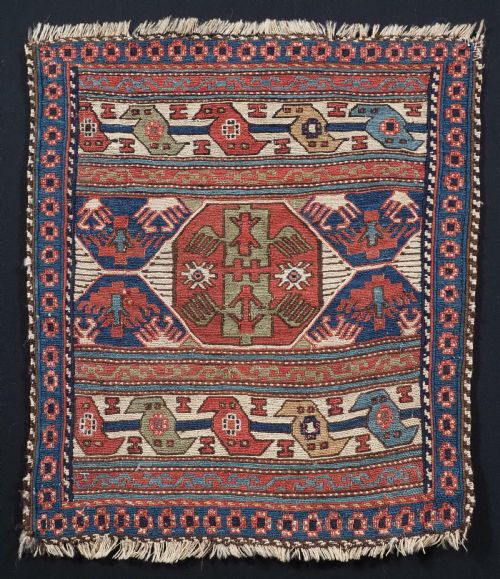
Blue Persian Bag
When you search for a blue persian bag, you step into the world of nomadic weaving where utilitarian sacks transform into intricate tribal art.
Blue Persian Bag
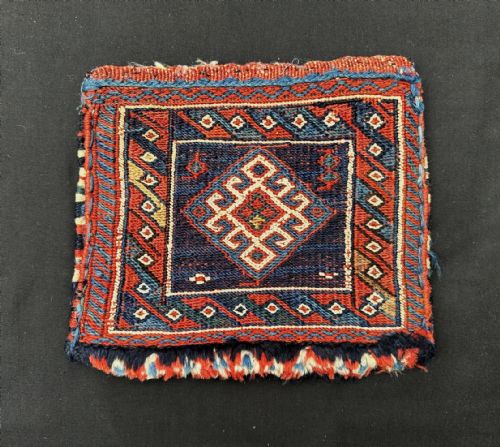
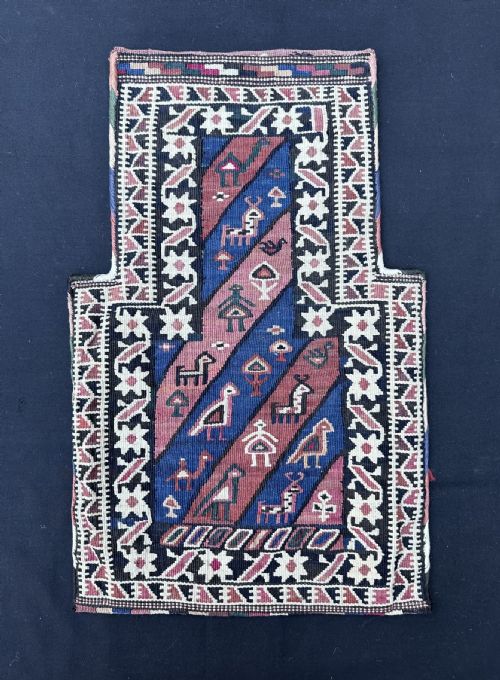
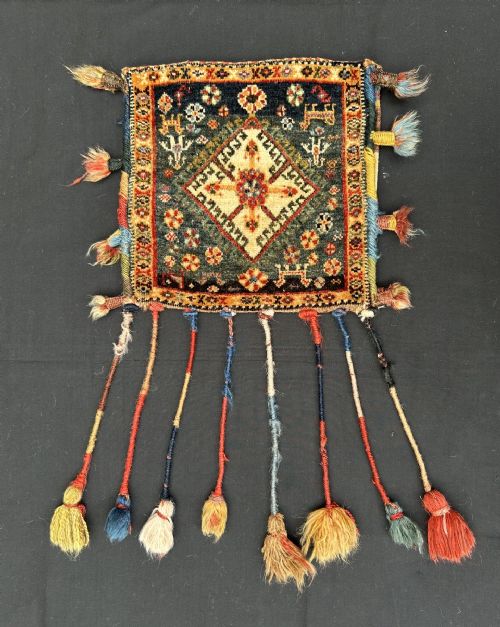
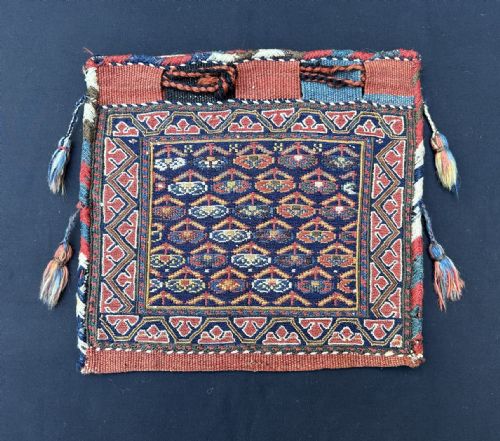
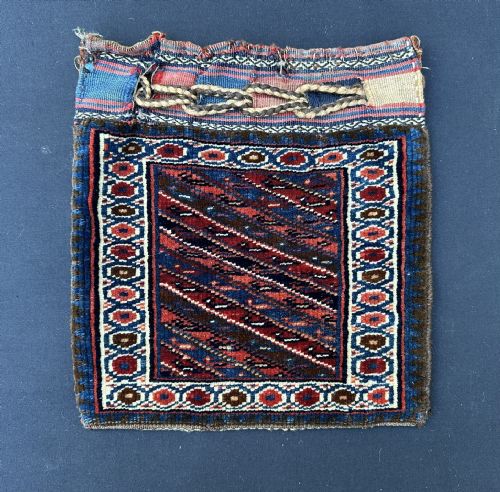
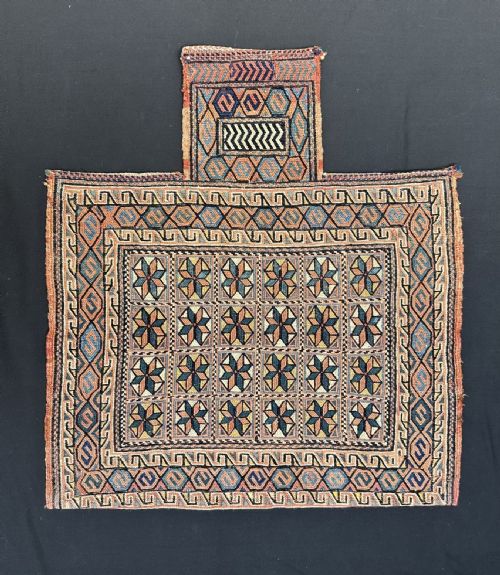
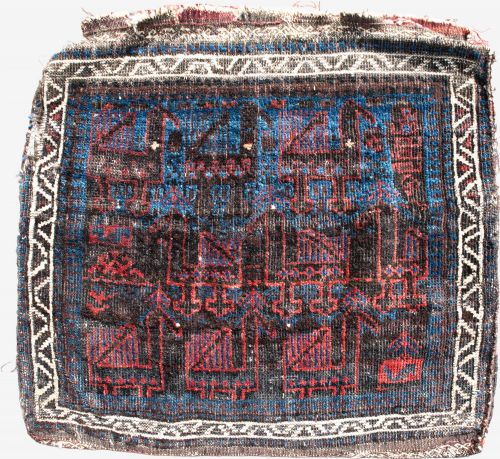
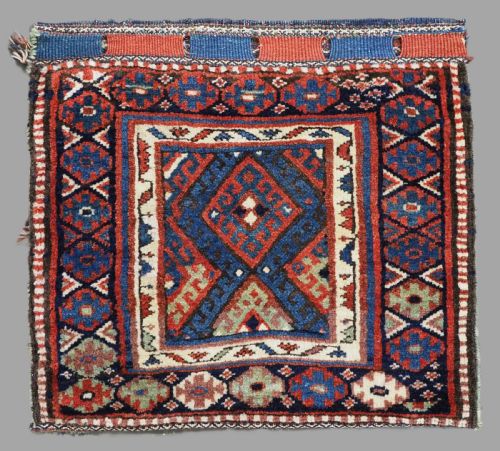
A blue persian bag typically manifests as a saddlebag face, salt-bag, vanity-bag, or tacheh woven by nomadic and village tribes across Persia during the nineteenth and early twentieth centuries. These functional textiles served practical storage needs for nomadic life, carrying grain, salt, or personal possessions during seasonal migrations.
The pieces appearing on this page span diverse tribal origins, including Afshar, Qashqai, Shahsavan, Kurdish, and Bakhtiari groups. Collectors encounter complete pairs, single bag faces, and half-khorjin examples showcasing traditional regional motifs and distinctive indigo palettes.
Materials and construction
Weavers utilised hand-spun wool and cotton foundations, often incorporating goat hair for durability along selvages and structural edges. Natural dyes and vegetable colorants provided the deep blues and contrasting hues characteristic of these tribal textiles.
Techniques varied between pile knotting and flatweave construction such as soumak work or plain weave. Artisans executed these structures entirely by hand on portable vertical or horizontal looms set up in nomadic camps.
Blue Persian Bag Retail Price Guide 2026
Typical asking prices for blue persian bag among the pieces listed under this phrase on Sellingantiques today, from the lower quarter to the upper quarter. They describe what is for sale here now, not the wider market.
Listings feature wool, cotton, and goat hair combined with natural and vegetable dyes across nineteenth and early twentieth century dates.
Gradations of quality
Quality rests upon the handle and lustre of the wool, where natural oils and hand-spinning yield a supple, tactile surface. Tightly beatenweft compaction and precise structural execution distinguish superior nomadic weaving from simpler utilitarian work.
Design clarity and the depth of natural indigo dye usage dictate visual success. Pieces featuring crisp geometry, balanced proportions, and well-preserved structural integrity command greater appreciation among discerning collectors.
The Blue Persian Bag Glossary
- Khorjin
- A traditional tribal double saddlebag designed for transport on pack animals during migration. These were frequently cut apart over time, leaving individual bag faces for modern collectors.
- Soumak
- A supplementary weft-wrapping technique that creates a durable, textured surface without pile. This method allows for sharp diagonal pattern work often seen on Shahsavan and Afshar pieces.
- Tacheh
- A large flatwoven grain or wheat sack used by nomadic groups for household storage. They typically display bold geometric patterns intended to ward off misfortune.
- Boteh
- An ancient motif resembling a stylized almond, floral spray, or flame. It appears frequently across Persian tribal weaving.
- Plain weave
- A simple alternating over-under interlacing of warp and weft threads. It forms the unornamented backs and structural portions of complete bags.
Blue Persian Bag: Frequently Asked Questions
What is a blue persian bag?
A blue persian bag is a hand-woven nomadic container, such as a saddlebag face or salt-bag, dominated by indigo and blue tones. These textiles were produced by tribal groups across Persia for daily use.
Over generations, many complete sacks were separated into individual bag faces, preserving the decorative front panels while losing their plain weave backs.
How were these bags used?
Nomadic tribes utilised these bags to transport grain, salt, personal belongings, and household goods during seasonal migrations. They hung from pack animals or served as interior storage containers within tents.
Their sturdy construction ensured they could endure the rigours of a nomadic lifestyle before eventually entering the collector market.
How do I identify tribal origins?
Tribal attribution relies on specific structural traits, colour palettes, and motif repertoires associated with distinct groups like the Afshar, Qashqai, or Shahsavan. Each confederation developed characteristic weaving habits and wool preparation techniques.
Examining the weave structure, such as soumak wrapping or pile knot density, helps narrow down the geographical region of manufacture.
How do I care for antique textiles?
Antique tribal bags require gentle handling and protection from direct sunlight to prevent natural dye fading. Regular light vacuuming with a mesh screen safeguards the old wool fibres from damage.
Professional textile conservationists should handle any necessary cleaning or structural stabilization to preserve the integrity of the hand-spun materials.