




Blue Patterned Tureen
A blue patterned tureen brings transfer-printed depth and form to the table, uniting practical servingware with rich historical patterns.
Blue Patterned Tureen
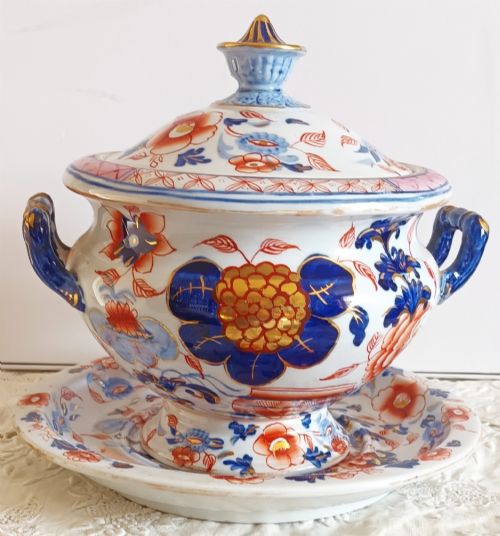
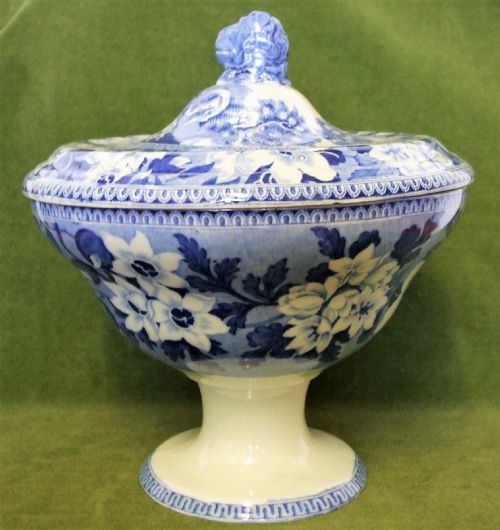
A blue patterned tureen is a covered vessel designed for serving soup, vegetables, or sauces at the dining table, often accompanied by a matching stand or ladle. These pieces appear most frequently in 19th-century earthenware, ironstone, and porcelain forms, reflecting the widespread popularity of blue and white transfer printing during the Georgian and Victorian eras.
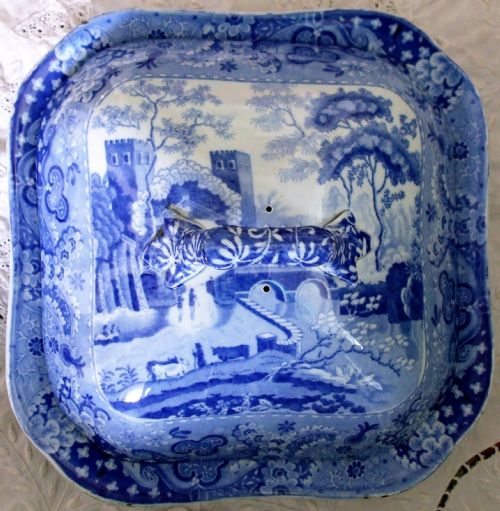
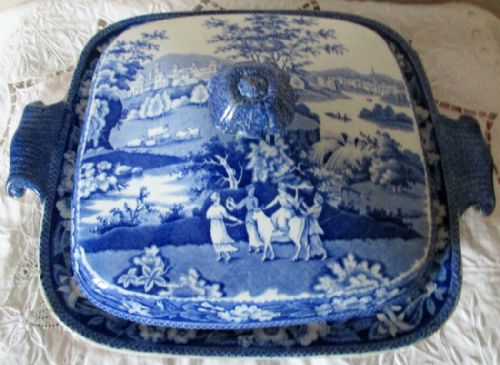
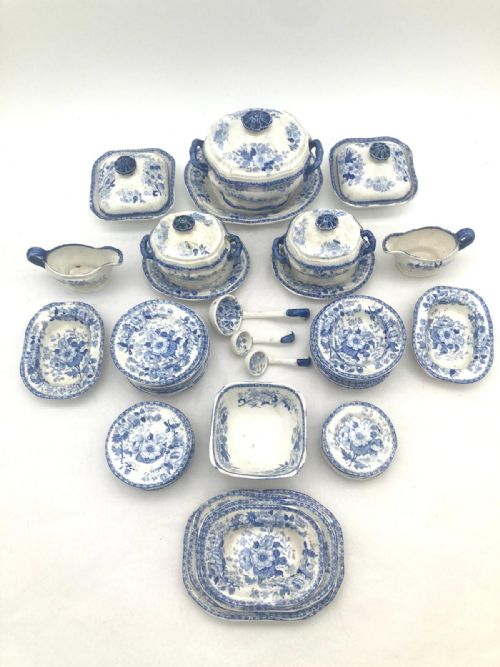
The selections on this page showcase various forms ranging from large soup tureens to smaller vegetable dishes and sauce tureens. Makers employed distinct named patterns such as Castle, Elephant, Europa, and Chinoiserie, applying deep cobalt transfer prints across ceramic surfaces.
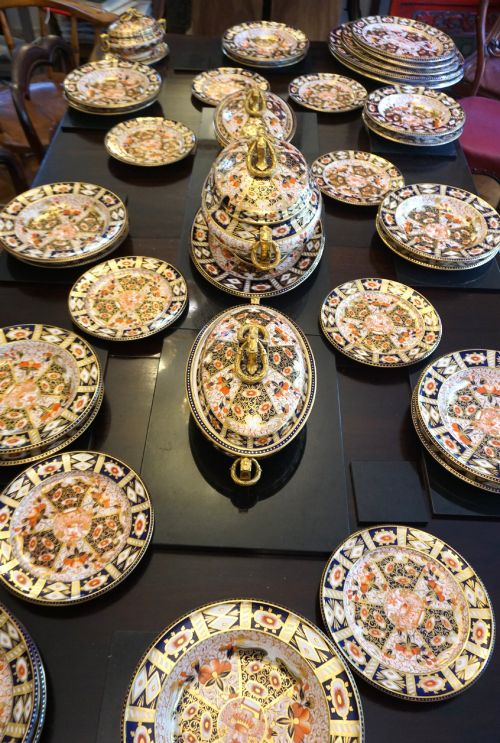
Originating primarily from English potteries, these tureens capture domestic dining habits of the 18th, 19th, and Regency periods. Buyers encounter both individual lidded vessels and components from larger dinner services, each demonstrating robust utility combined with decorative narrative scenes.
How they were made
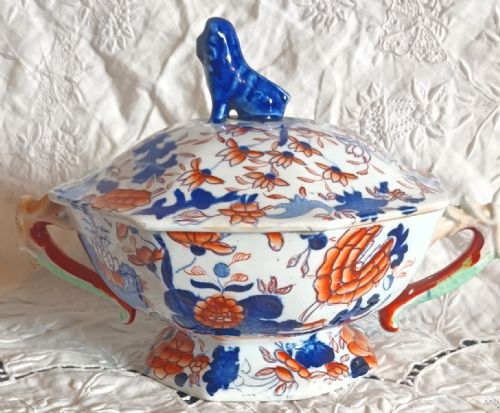
Potters shaped these tureens using earthenware, ironstone ceramic, or porcelain, applying fluid glazes to seal the porous clay bodies. Ironstone offered a heavier, more durable alternative to traditional earthenware, allowing bodies to withstand heavy daily use while retaining crisp moulded details on handles and finials.
Decoration relied on transfer printing, a technique where an engraved copper plate transferred an inked pattern onto tissue paper, which was then rubbed onto the biscuited ceramic surface. Enamel colours and gold leaf accents were occasionally hand-painted over the blue transfer print before final glazing and firing.
Blue Patterned Tureen Retail Price Guide 2026
Typical asking prices for blue patterned tureen among the pieces listed under this phrase on Sellingantiques today, from the lower quarter to the upper quarter. They describe what is for sale here now, not the wider market.
Listings feature 19th-century ironstone, earthenware, and porcelain tureens decorated with blue transfer prints.
What varies in quality
Quality rests heavily on the crispness of the transfer print and the clarity of the underlying ceramic body. Superior examples maintain sharp pictorial details without blurred edges or bleeding cobalt, ensuring narrative scenes such as romantic ruins or exotic landscapes remain distinct and legible.
The presence of matching original elements, such as lids, ladles, and stands, significantly elevates a tureen's integrity. Furthermore, balanced moulding, delicate handles shaped like animal paws or naturalistic branches, and even glaze coverage without excessive kiln pockmarks separate standard domestic ware from finer production.
Minton·Wedgwood·Mason's Ironstone·J. and R. Clews·John Rogers and Son·John and Richard Riley·Ridgways·Coalbrookdale·James Wallace and Co.
The Blue Patterned Tureen Glossary
- Transfer printing
- A method of decorating ceramics by pulling an inked impression from a copper plate onto tissue paper and pressing it onto the clay. This technique allowed intricate pictorial scenes to be replicated consistently across multiple vessels.
- Ironstone
- A patented ceramic body invented in the 19th century that combined refined earthenware with slag and feldspar. It produced a dense, heavy, and highly durable material well suited for large serving tureens.
- Chinoiserie
- A decorative style reflecting European interpretations of East Asian artistic motifs. It frequently appears on blue and white ceramics depicting imaginary oriental landscapes, bamboo, and architectural pagodas.
- Tureen stand
- A matching ceramic platter designed to sit beneath the base of the tureen. It caught drips and protected table surfaces during formal service.
- Glaze
- A glassy coating fused to the ceramic body through high-temperature firing. It waterproofs the vessel and imparts a glossy finish over the blue transfer decoration.
Blue Patterned Tureen: Frequently Asked Questions
What is a blue patterned tureen?
A blue patterned tureen is a covered ceramic vessel intended for holding and serving soup, vegetables, or sauces at the dining table. These pieces typically feature blue transfer-printed designs depicting landscapes, architectural ruins, or oriental motifs.
Most examples date from the 18th and 19th centuries, originating from prominent English potteries. They serve as both functional dining accessories and decorative display items.
How were these tureens used?
These vessels functioned primarily as table service items during formal meals, keeping soups or vegetables warm before being ladled out to guests. Matching stands caught spills, while ladles provided hygienic portioning.
Beyond dining rooms, many homeowners today utilise them as decorative centrepieces on sideboards or as standalone focal points on open shelving.
How do I tell different periods apart?
Differentiating periods depends on observing the ceramic body, weight, and style of decoration. Earlier 18th-century pieces often use softer porcelain or refined earthenware, while 19th-century items frequently employ heavy ironstone.
Transfer print styles also shift over time, moving from delicate Georgian pastoral scenes to bolder Victorian floral sheets and dense scenic borders.
Are lids and ladles common?
While lids frequently survive alongside the main tureen body, matching ladles and under-stands are scarcer due to their fragile nature and tendency to become separated over generations. Finding a complete set with all original components remains unusual.
When present, matching accessories substantially increase the historical completeness and visual harmony of the piece.