


Blue Painted Rococo Vases
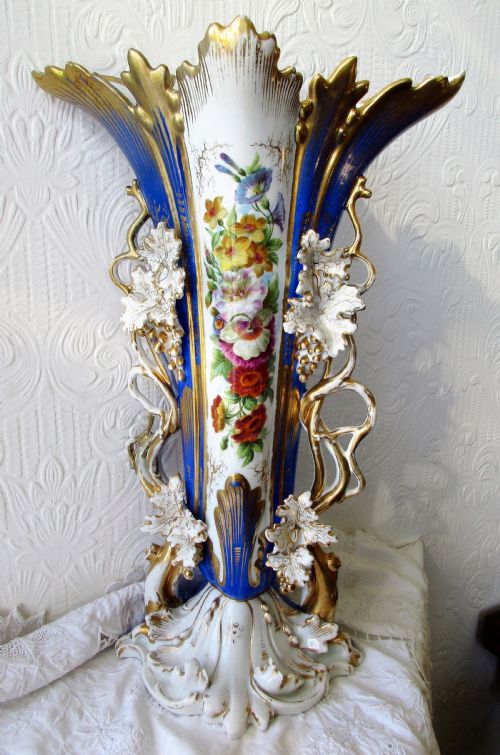
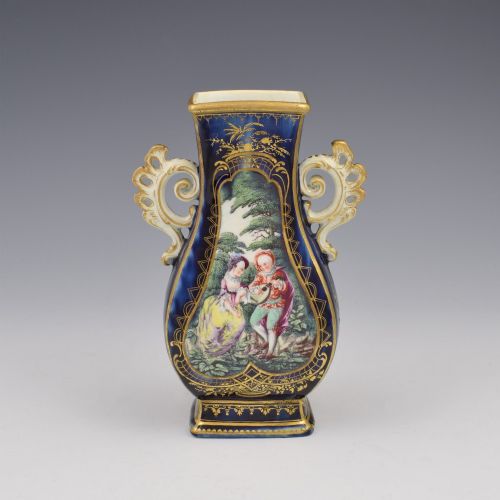
These blue painted rococo vases combine curved porcelain bodies with vibrant blue grounds and ornate gilt mounts, bringing dramatic 18th-century French flourish into domestic spaces.
Blue Painted Rococo Vases
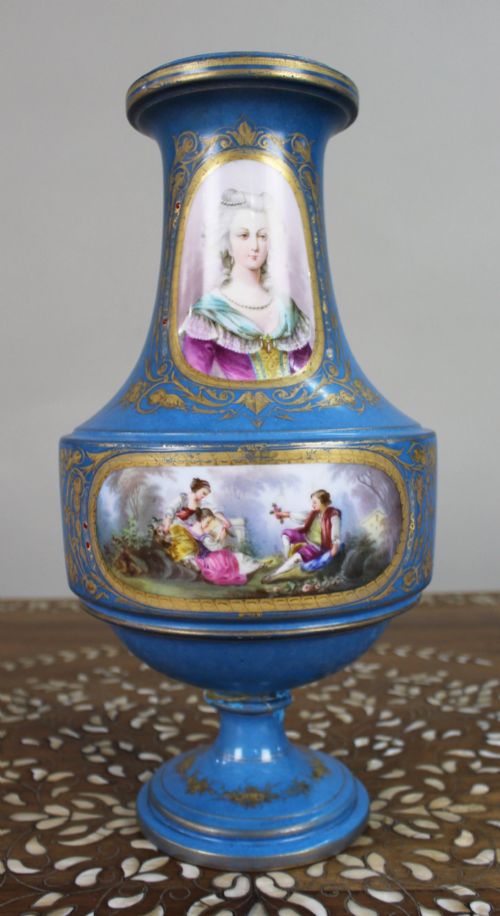
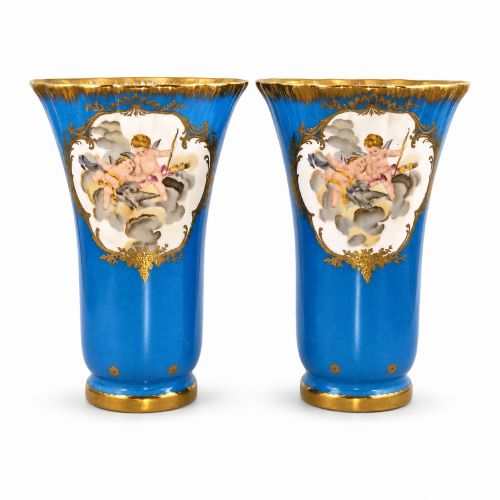
When you search for blue painted rococo vases, you encounter an array of ornate vessels rooted primarily in nineteenth-century revivals of earlier French styles. The selections on this page lean heavily toward French Sèvres-style porcelain, featuring rich cobalt or bleu céleste grounds paired with elaborate handles and covers.
Beyond standard decorative vessels, the inventory includes ginger jars, lidded urns, pot pourri containers, and even mantel clocks incorporating porcelain bodies. Makers from English factories like Coalport and Chelsea sit alongside continental workshops including Desvres, Samson, and Dresden to offer diverse interpretations of the aesthetic.
The forms draw directly from eighteenth-century design principles, prioritising asymmetry, scrolling foliage, and shell motifs executed in ceramics. Most surviving examples date from the nineteenth century, capturing the Victorian appetite for opulent continental interior decoration.
Materials and construction
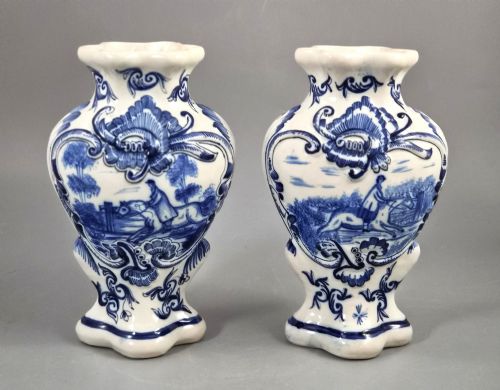
Potters shaped these vessels using fine porcelain, earthenware, and faience as a base for vibrant cobalt and bleu céleste glazes. Artisans then applied intricate blue painted scenes, often depicting figures or pastoral landscapes inspired by earlier Watteau compositions.
Gilt bronze, ormolu, and gold leaf mounts provide structural frames and decorative accents that accentuate the sweeping, curved contours of the porcelain bodies. These metal additions require precise casting and fire-gilding techniques to complement the glossy ceramic surfaces.
Materials recorded on this page include earthenware, porcelain, gilt bronze, ormolu, and gold leaf across various revival styles.
Distinguishing quality in production
The refinement of the hand-painted blue grounds and figural scenes separates standard production pieces from exceptional works. Superior examples display crisp detail in the cobalt application and finely rendered pastoral motifs rather than repetitive stencilling.
The weight and chasing of the ormolu or gilt metal mounts dictate the overall tier of the piece. High-grade items feature cast bronze mounts with sharp chiselling that fit the porcelain contours precisely, whereas lesser items use lighter, unrefined metal elements.
Fourmaintraux Courquin·Samson Paris·Samuel Alcock·Wolfsohn Dresden·Coalport
The Blue Painted Rococo Vases Glossary
- Bleu Céleste
- A bright sky-blue ceramic ground colour developed at the Sèvres factory. This shade became a defining characteristic of luxury porcelain revival pieces.
- Ormolu
- Finely chopped gold suspended in mercury and fired onto bronze mounts. It provides a rich, durable golden finish characteristic of high-end French decorative arts.
- Faience
- Tin-glazed earthenware produced across continental Europe. Desvres workshops utilised this technique to create traditional painted wares.
- Pot Pourri
- A vessel designed with a pierced cover to allow dried scented herbs to fragrance a room. These containers often featured elaborate rococo scrollwork.
- Lacca Povera
- The Venetian practice of applying paper cut-outs to furniture and objects, then varnishing them to imitate expensive Asian lacquer.
Blue Painted Rococo Vases: Frequently Asked Questions
What is a rococo revival vase?
These vessels copy the 18th-century French style defined by asymmetrical C-scrolls, floral garlands, and naturalistic curves. 19th-century factories produced them in large numbers to satisfy demand for opulent decoration.
They rely heavily on rich blue ground colours contrasted against gilded metal mounts and hand-painted panels depicting pastoral scenes.
How do I identify Sèvres style porcelain?
Sèvres style pieces typically display deep cobalt or sky-blue grounds combined with heavy gilding and romantic painted vignettes. Many items imitate the royal French factory's output from the 18th century.
Makers across Europe produced these items during the 19th century, sometimes using pseudo-marks that emulate the original royal cyphers.
Where were these decorative vases made?
Production centres spanned England and continental Europe, with French firms and German porcelain houses creating the majority of surviving examples. Factories like Samson in Paris and Wolfsohn in Dresden specialised in these continental revivals.
English manufacturers such as Coalport and Chelsea also contributed distinct porcelain forms to this decorative tradition.
How should I display a lidded porcelain urn?
These large vessels function well as focal points on mantelpieces, console tables, or dedicated pedestals where their painted panels remain visible. Their symmetrical forms and gilded mounts demand a secure, stable surface away from busy walkways.
Pairing them symmetrically enhances the formal aesthetic established by 19th-century interior decorators.