




Blue Painted Ceramic Miniatures
Blue painted ceramic miniatures bring centuries of artisan scale work to your mantel, capturing intricate scenes and rich glazes in the palm of your hand.
Blue Painted Ceramic Miniatures
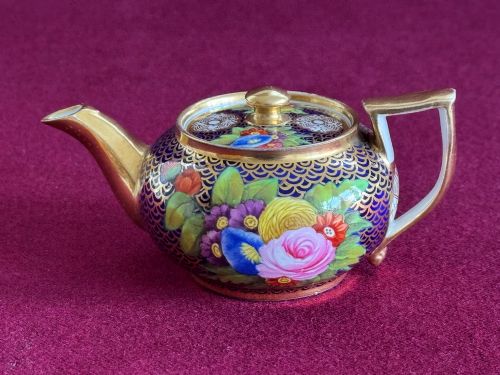
Blue painted ceramic miniatures comprise small scale vessels, figures, and decorative objects created across the eighteenth, nineteenth, and early twentieth centuries. When you search for blue painted ceramic miniatures, you encounter diverse forms ranging from Dutch Delft furniture pieces and English porcelain toy teapots to Japanese Imari vases and Qing Dynasty snuff bottles.
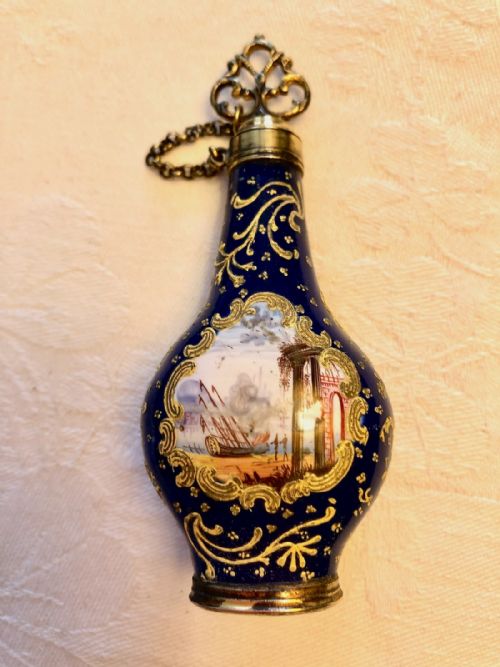
The objects on this page span several distinct traditions, including Georgian enamel scent bottles, Victorian Continental dog figures, and Edwardian Japanese-style vases. Each piece reflects the specific aesthetic of its origin, whether it is the tin-glazed earthenware of European workshops or the fine porcelain of Asian kilns.
Collectors find these items in various functional and decorative shapes, including miniature longcase clocks, mantel clocks, and decorative vases. The unifying thread is the compact physical size combined with cobalt pigment or enamel painting applied by hand.
Materials and production techniques
Makers utilised porcelain, earthenware, and enamel as the primary substrates for these small objects, shaping them by hand or throwing them on small wheels. Once formed, artisans applied cobalt oxide or cobalt pigment directly to the ceramic body before glazing and firing at high temperatures.
Certain pieces received additional enrichment through gold leaf or ormolu mounts, combining metalwork with glazed ceramic surfaces. The Dutch Delft and Japanese Imari traditions relied on precise brushwork to render detailed patterns across restricted surface areas.
The listings span multiple centuries, incorporating eighteenth-century Georgian enamel alongside nineteenth-century Japanese Imari and early twentieth-century British art pottery.
Factors that distinguish quality
Quality in these small pieces rests upon the precision of the hand-painted brushwork and the clarity of the glaze. Superior examples display crisp cobalt lines and controlled application that maintain proportion despite the diminutive scale.
The sophistication of the form and the integrity of the material also dictate standard. Pieces that retain original gilding, unblemished enamel, or balanced proportions demonstrate the higher tier of period craftsmanship.
Moorcroft·Spode
The Blue Painted Ceramic Miniatures Glossary
- Cobalt oxide
- A metallic compound utilised to produce deep blue pigment on ceramics before glazing and firing. This mineral withstands high kiln temperatures without losing its colour intensity.
- Imari
- A Japanese style of porcelain decoration featuring deep underglaze blue combined with iron red and gilt highlights. The style originated in Arita and became widely exported to Europe.
- Delftware
- Tin-glazed earthenware produced in the Netherlands, typically decorated in blue and white with landscapes, figures, or floral motifs. The technique mimics Chinese porcelain imported by the Dutch East India Company.
- Toy teapot
- A miniature ceramic teapot produced in England during the Georgian and Regency periods, often used in dollhouses or as cabinet display pieces rather than for actual tea service.
- Snuff bottle
- A small container designed to hold powdered tobacco, highly developed during the Qing Dynasty in China. These bottles frequently feature detailed interior or exterior painted scenes.
Blue Painted Ceramic Miniatures: Frequently Asked Questions
What were blue painted ceramic miniatures used for?
These small pieces served primarily as cabinet specimens, decorative display items, or accessories for wealthy households and dollhouses. Wealthy collectors gathered them in specialised rooms to showcase refined taste on a miniature scale.
Some items, such as snuff bottles and scent bottles, had practical functions for holding personal items, while others were strictly ornamental additions to mantelpieces and side tables.
How can I tell the period of a miniature?
Examine the base material, glaze characteristics, and painting style to help determine the era of manufacture. Georgian and Regency pieces often show specific British paste formulations, while nineteenth-century Japanese exports display distinct Imari or Satsuma palettes.
Consulting known patterns, such as specific Spode documentation or Dutch Delft numbering, provides further chronological context.
Are all blue and white miniatures from China?
No, while Chinese kilns produced significant quantities of export porcelain and snuff bottles, European makers adopted the blue and white tradition extensively. Workshops in England, the Netherlands, France, and Germany created their own distinct versions.
Dutch Delftware and English porcelain manufacturers developed local styles that reinterpreted Asian designs for Western markets.