


Blue White Porcelain Miniatures
Blue white porcelain miniatures are delightful small-scale ceramics that bring intricate cobalt decoration into tight spaces.
Blue White Porcelain Miniatures
Blue white porcelain miniatures comprise small ceramic items decorated in cobalt blue, spanning tea services, furniture pieces, vases, and snuff bottles. These charming items capture domestic and ornamental forms on a tiny scale, reflecting global production traditions from Dutch delftware to Qing Dynasty wares. Buyers searching for blue white porcelain miniatures frequently encounter nineteenth-century pieces alongside Japanese imari and Victorian child's sets.
The objects on this page range from miniature longcase clocks and armchairs to delicate figurines and opium pots. Many originate from the nineteenth century, including specific decades such as eighteen eighty and eighteen ninety, reflecting diverse regional aesthetics. Each miniature demonstrates how makers scaled down full-sized domestic and decorative objects without losing their characteristic detailing.
How they were made
Makers utilised fine porcelain, earthenware, and ceramic bodies shaped into miniature forms before applying cobalt glaze or cobalt oxide for the signature blue decoration. Hand-painted brushwork or transfer-printing techniques transferred floral, figurative, and landscape patterns onto the small surfaces before firing. A protective ceramic glaze sealed the pieces, producing the glossy finish seen across the items.
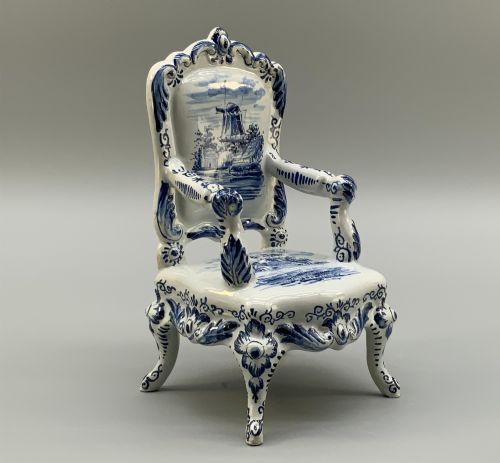
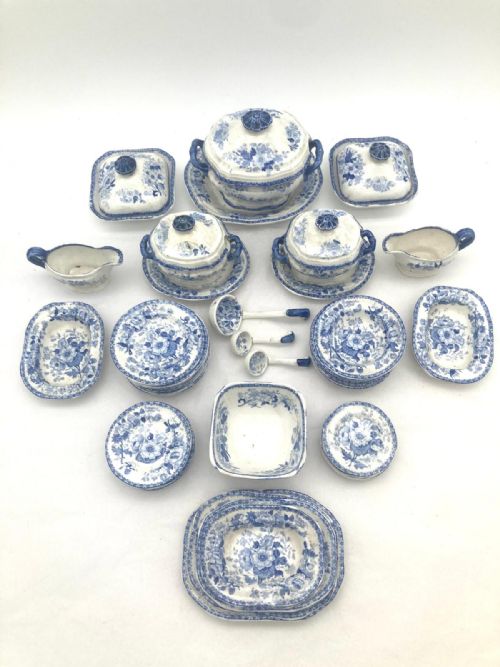
Production methods varied from the delicate hand-painted Dutch delft furniture to flow blue child's services featuring floral sheet patterns. Artisans balanced the challenges of shrinking intricate designs onto tiny porcelain canvases, relying on precise temperature control during kiln firing to secure the cobalt blue tones.
Listings feature items spanning the nineteenth century, including specific periods from eighteen eighty up to nineteen hundred.
What varies in quality
The consistency of the glaze and the purity of the white ceramic surface also dictate the standing of a piece. Finer examples maintain an even glaze without cloudiness, allowing the cobalt blue ornamentation to remain the visual focal point.
Copeland·Minton
The Blue White Porcelain Miniatures Glossary
- Cobalt glaze
- A colouring oxide applied to ceramic wares that turns vibrant blue under high-temperature kiln firing. This material provides the primary hue for the decoration on these small objects.
- Flow blue
- A nineteenth-century transfer-printing technique where the blue cobalt colour deliberately blurred slightly into the surrounding white glaze during firing. This effect creates a soft, misty appearance on tea services and plates.
- Delftware
- Tin-glazed earthenware originating from the Netherlands, known for its distinctive blue and white palette. Makers often utilised this style to produce miniature furniture and decorative items.
- Snuff bottle
- A small container designed to hold powdered tobacco, frequently produced in porcelain with detailed ornamentation. These miniature flasks reflect high levels of artistic skill in small-scale ceramics.
- Transfer-printing
- A method of applying pre-printed designs onto ceramic surfaces using paper or tissue from an engraved copper plate. This technique allowed makers to achieve intricate floral sheet patterns on child's services.
Blue White Porcelain Miniatures: Frequently Asked Questions
What were blue white porcelain miniatures used for?
These small ceramics served various purposes ranging from children's playthings and dollhouse furnishings to decorative cabinet display items. Child's tea services introduced young people to formal dining customs on a reduced scale.
Other items like snuff bottles and opium pots held personal commodities for adults, while miniature clocks and furniture decorated parlour rooms and mantels.
How do I care for antique miniatures?
Keep these delicate ceramics away from direct sunlight and areas prone to sudden temperature shifts. Dust them gently with a soft, dry brush to protect the delicate glaze and painted surfaces.
Avoid using liquid cleaners or submersing antique pieces in water, particularly if they feature old repairs or vulnerable enamel details.
How can I tell the age of a piece?
Examining the base, glaze texture, and manufacturing style helps indicate the period of creation. Nineteenth-century examples often display specific transfer-printing methods or hand-painted characteristics typical of Victorian or Qing Dynasty production.
Comparing the decorative motifs, such as Japanese imari patterns or Dutch delft designs, against known historical periods provides further context for dating.
Why are some miniatures painted differently?
Makers across different regions applied distinct artistic traditions to their small ceramics. Dutch delftware relied on tin glazing and specific blue pigments, whereas Japanese imari combined cobalt blue with other enamel colours.
Transfer-printed child's services achieved uniform floral patterns through mechanical printing plates, contrasting with the freehand brushwork found on figures and opium pots.