



Blue Overlay Glass
Blue overlay glass combines layered colour with meticulous cutting and metal mounts to create striking decorative and functional objects for the home.
Blue Overlay Glass
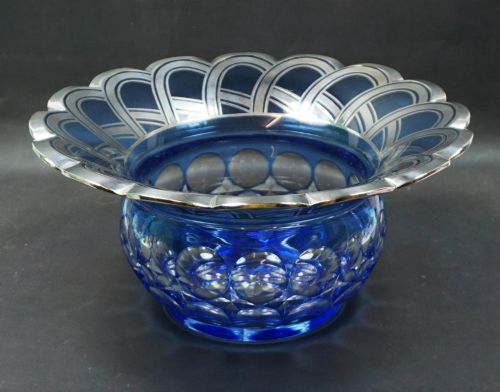
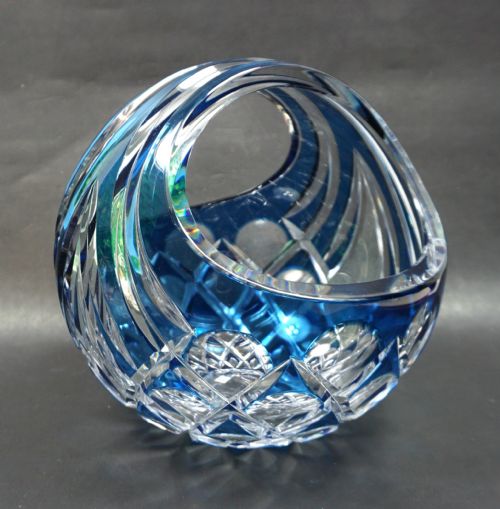
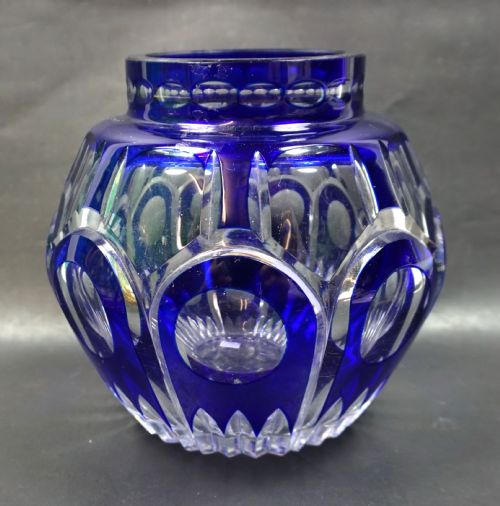
Blue overlay glass encompasses decorative objects where a layer of blue glass is fused over a clear or contrasting ground, then cut back to expose the underlying material. This phrase covers items produced across the nineteenth and twentieth centuries, originating from English, French, Belgian, and Bohemian workshops. The selection on this page ranges from utilitarian scent bottles and decanters to vases, bowls, and table lamps.
The objects frequently feature metal additions, including sterling silver mounts, silver deposit work, pewter, or gilt bronze. Victorian scent bottles and decanters dominate the archived pieces, whilst twentieth-century examples lean towards Art Nouveau designs and Belgian cased glass bowls or vases. Buyers encounter both cut-to-clear patterns and cameo or silver-overlay variations.
Materials and Techniques
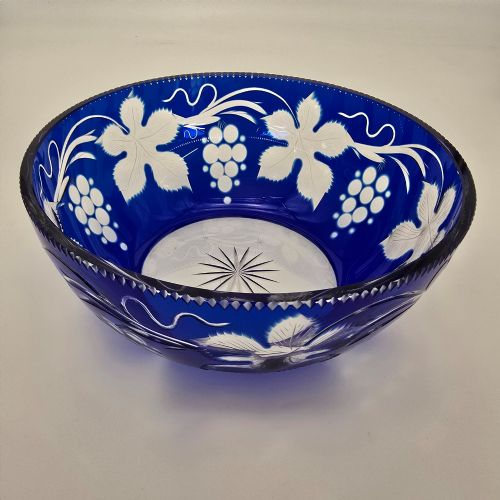
Makers produced blue overlay glass by gathering a core of clear or cased lead crystal and dipping it into molten cobalt or coloured glass before blowing. This layered blank was then subjected to wheel-cutting, carving, or acid etching to reveal the contrasting glass beneath in distinct geometric or floral patterns.
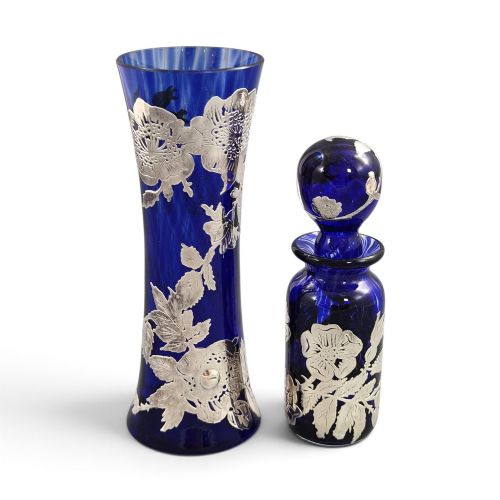
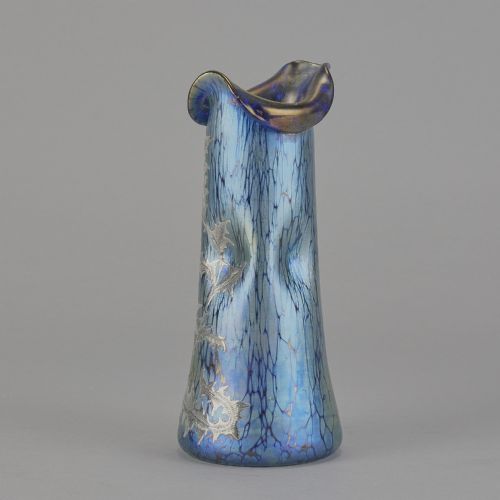
Metalwork was often applied directly to the hardened glass surface. Techniques included mounting sterling silver collars, forming intricate silver deposit networks, or wrapping the vessels in pewter and copper frames characteristic of the Secessionist and Art Nouveau periods.
Blue Overlay Glass Retail Price Guide 2026
Typical asking prices for blue overlay glass among the pieces listed under this phrase on Sellingantiques today, from the lower quarter to the upper quarter. They describe what is for sale here now, not the wider market.
Victorian ladies trusted tiny silver-capped scent bottles to survive carriage rides smelling suitably fragrant.
Judging Quality
Quality in these pieces rests upon the precision of the glass cutting and the harmony between the blue layer and the base crystal. Sharply defined facets and smooth, even colour saturation distinguish superior examples from heavier, simpler press-molded goods.
The integration of metal mounts also dictates the standard of the piece. Finely worked sterling silver, intricate pewter framing, or hand-engraved silver deposit indicate higher tiers of craftsmanship compared to plain or loosely fitted collars.
Loetz Witwe·Emile Galle·Val St. Lambert·Moser Crystal·Jean Gille
The Blue Overlay Glass Glossary
- Overlay glass
- A technique where a vessel of one glass colour is cased within one or more distinct outer layers of a different colour. The outer layer is partially removed through cutting or etching to expose the base material.
- Cut-to-clear
- A method of decorating layered glass where deep wheel-cutting slices through the coloured exterior to expose the clear crystal beneath. This creates stark contrasts between the vibrant blue and transparent sections.
- Silver deposit
- A manufacturing process where metallic silver is electroplated onto the surface of the glass in specific decorative motifs. The resulting silver design is then polished or engraved.
- Cased glass
- Glass formed of multiple distinct layers of different colours fused together during the blowing process. It provides the structural depth required for subsequent overlay cutting.
Blue Overlay Glass: Frequently Asked Questions
What is blue overlay glass?
Blue overlay glass is a type of decorative glassware featuring a distinct layer of blue glass fused over clear crystal or another colour. Artisans carved or cut through the blue exterior to create contrasting patterns and reveal the material underneath.
Items made with this technique include scent bottles, decanters, vases, and tableware. These pieces often incorporated precious metal mountings such as sterling silver or gilt bronze.
How do I date a piece?
Dating these objects relies heavily on stylistic markers, hallmark stamps on silver mounts, and manufacturing techniques. Victorian examples frequently feature heavy cut crystal and hallmarked sterling silver collars, whereas twentieth-century items often display Art Nouveau or Secessionist motifs.
Examining the depth of the glass layers and the nature of any metal ornamentation helps narrow down the period of production. Comparing pieces to documented works by known glasshouses also assists in establishing an era.
How were scent bottles used?
Scent bottles made from blue overlay glass served as functional accessories for carrying personal perfumes during the nineteenth and early twentieth centuries. Ladies kept them on dressing tables or carried them inside chatelaines for everyday use.
The metal caps and stoppers were designed to preserve volatile fragrances securely. Their decorative appearance also made them popular gifts and display items.
How should I clean these items?
Cleaning these delicate glass objects requires gentle handling, particularly when silver mounts or pewter overlays are present. Warm water and mild soap applied with a soft cloth help maintain the finish without harming the metal or glass.
Harsh chemical cleaners and abrasive scrubbing pads should be avoided to prevent scratching the surface or damaging silver deposits. Thorough drying prevents moisture from getting trapped beneath metal collars.