




Blue Opalescent Perfume Bottle
A blue opalescent perfume bottle catches the light with shifting milk-blue tones, offering a tactile piece of early twentieth-century dressing table history.
Blue Opalescent Perfume Bottle
A blue opalescent perfume bottle is a decorative vanity vessel created primarily during the early decades of the twentieth century. These flasks combine functional design with sculptural glasswork, emerging from European glass houses during the height of decorative arts movements.
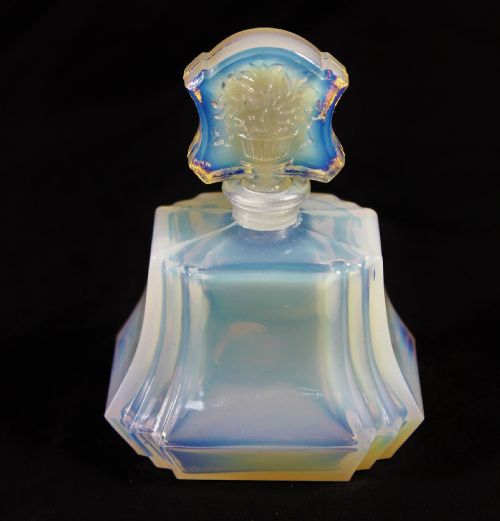
Collectors searching for a blue opalescent perfume bottle most frequently encounter French examples from the nineteen-twenties and nineteen-thirties. The selection spans distinct stylistic periods, ranging from flowing organic motifs to geometric moulded forms.
How they were made
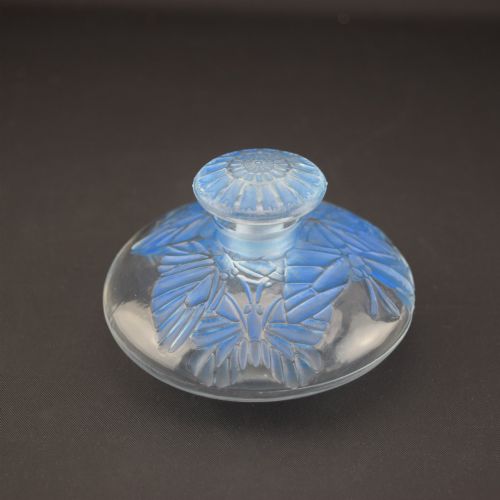
Makers utilised pressed glass techniques to achieve sculptural depth, forming intricate motifs across the body and stopper of each flask. The characteristic milky blue glow arises from specific chemical agents added to the molten glass during production.
Frosted glass finishes were frequently applied to contrast against translucent or semi-opaque areas, highlighting the moulded relief details. Signatures or maker marks were often pressed directly into the base during the moulding process.
Butterflies and botanical motifs frequently perch upon these stoppers, allowing delicate insects to permanently guard nineteenth-century vanity tables.
What varies in quality
Quality in a blue opalescent perfume bottle rests upon the crispness of the moulded relief and the intensity of the optical fire within the glass. Superior examples display sharp definition in figurative or geometric motifs without blurring across the high points.
The integration of the stopper with the main body defines another tier of craftsmanship, where well-fitted components maintain the sculptural silhouette. The depth and spread of the opalescent effect across the blue ground also determine the visual impact of the piece.
Rene Lalique·Sabino
The Blue Opalescent Perfume Bottle Glossary
- Opalescent Glass
- Glass that diffuses light to display a milky blue or fiery orange glow when viewed from different angles. This optical phenomenon occurs through precise heat treatment during shaping.
- Pressed Glass
- Glass formed by shaping molten material inside a metal mould using a mechanical plunger. This technique allowed intricate patterns to be produced consistently.
- Frosted Glass
- Glass treated to achieve a textured, matte surface through acid etching or sandblasting. This finish softens light reflection and accentuates moulded details.
- Art Deco
- A design style dominant in the nineteen-twenties and nineteen-thirties characterised by sleek geometric shapes and stylised motifs. It succeeded the organic curves of earlier decorative movements.
- Art Nouveau
- An international style prominent around nineteen-ten that favoured asymmetrical lines and organic forms inspired by natural shapes. Perfume bottles from this period often incorporate insect or floral designs.
Blue Opalescent Perfume Bottle: Frequently Asked Questions
What is a blue opalescent perfume bottle?
A blue opalescent perfume bottle is a moulded glass vanity vessel designed to hold fragrance while displaying shifting milky blue optical effects.
These pieces were produced primarily in France during the early twentieth century by notable glass houses.
How do I date a blue opalescent perfume bottle?
Dating relies on stylistic markers such as Art Nouveau floral motifs versus Art Deco geometric patterns, alongside maker signatures.
Pieces generally span from nineteen-ten through the nineteen-thirties, reflecting the working periods of prominent French designers.
Are stoppers original to the bottle?
Original stoppers were moulded to match the specific contours and decorative scheme of the corresponding base.
Checking for matching opalescence and harmonious design helps confirm the integrity of the ensemble.
How should I display these bottles?
Displaying these flasks where light passes through the glass allows the opalescent properties to activate fully.
Placing them on mirrored trays or near natural light sources enhances the shifting blue tones.