

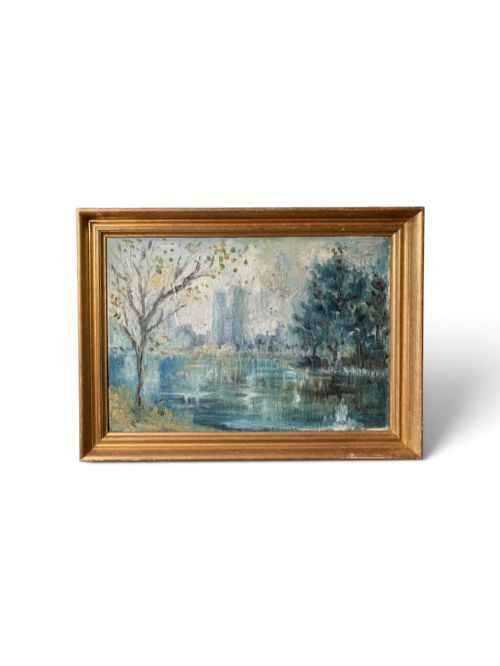
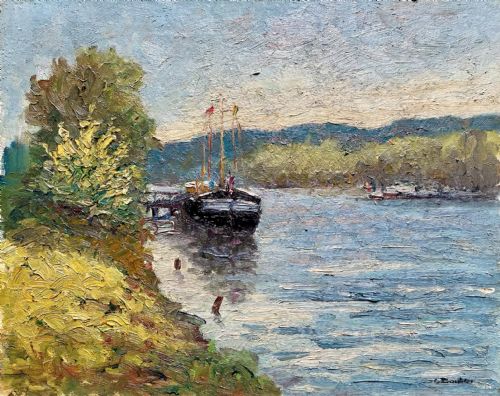

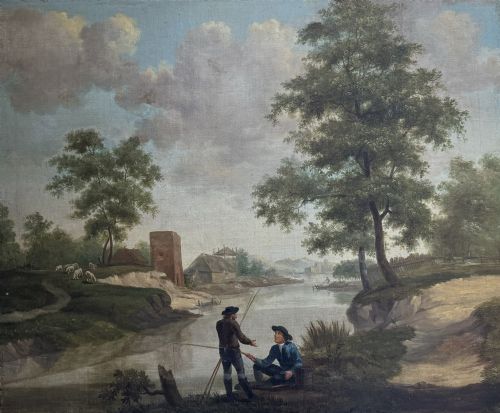
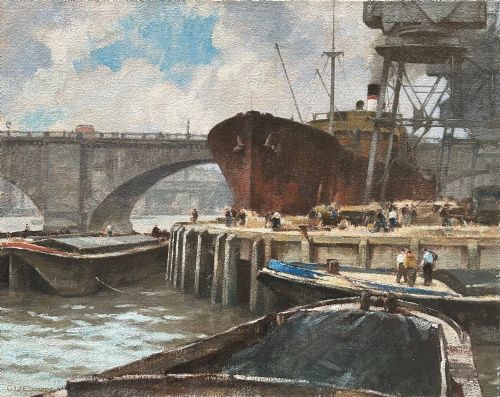
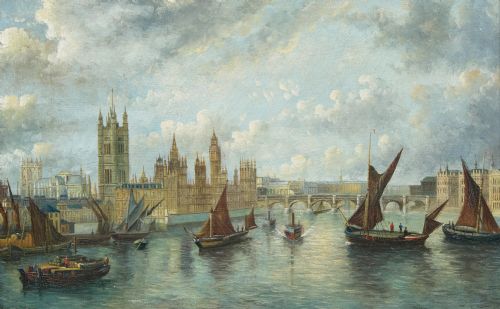


Blue Oil River Scene
A blue oil river scene captures moving water and quiet banks in pigment, offering a slice of plein air atmosphere for your wall.
Blue Oil River Scene
When you search for a blue oil river scene, you are looking at oil paintings depicting waterways, bridges, and pastoral shores from various historic periods. The versions you are most likely to meet on this page range from Victorian canvases to mid-century British and French impressionist works.
These pieces focus on rivers like the Seine, the Thames, and the Danube, capturing the play of light upon the water. They appear in forms such as framed oil paintings on canvas, wood panel, and board.
The selection includes works from the eighteenth century through to the mid-twentieth century, showing diverse regional schools from Britain, France, and Scotland.
What varies in quality
The strength of the composition and the confidence of the brushwork separate the most accomplished river paintings from simpler decorative works. Handling of light and atmospheric depth dictates the artistic merit of each piece.
The reputation of the painter and the clarity of the provenance add distinction to individual canvases.
Blue Oil River Scene Retail Price Guide 2026
Typical asking prices for blue oil river scene among the pieces listed under this phrase on Sellingantiques today, from the lower quarter to the upper quarter. They describe what is for sale here now, not the wider market.
Several canvases manage to capture the damp chill of a French river breeze entirely through dabs of blue and grey pigment.
Albert Bierstadt·Cyril Walduck Edwards·Florence Adelina Hess·Hubert Wellington·Archibald Kay·William Grant Murray·John Wright Oakes·Armand Guillaumin·Edmond Defonte·Herbert Royle·Antoine Bouvard·Benjamin Callow·Adolphe Gumery·Owen Bowen·Edward Seago
The Blue Oil River Scene Glossary
- Impasto
- Paint applied thickly to a canvas or panel, standing out in relief from the surface. This technique adds tactile texture and catches physical light in the room.
- Plein air
- Painting outdoors in direct contact with the subject and the changing light. Artists utilised this method to capture immediate atmospheric conditions along riverbanks.
- Wood panel
- A rigid flat support made of timber used by artists instead of woven fabric. Panels offer a stable ground that preserves fine brush detail over centuries.
- Post-Impressionism
- An art movement extending impressionism while rejecting its limitations for more expressive forms and colours. Works in this style emphasise vivid hues and distinct emotional resonance.
Blue Oil River Scene: Frequently Asked Questions
What periods do these river paintings come from?
The works span multiple eras, beginning with the eighteenth-century British school and moving through Victorian, early twentieth-century, and mid-century modern periods.
Each period brings distinct stylistic choices, shifting from traditional tonal landscapes toward brighter impressionist palettes.
Are these paintings created on canvas or wood?
Artists used several different supports depending on the era and the school of painting. You will find works executed on traditional woven canvas, linen canvas, sturdy wood panels, and flat boards.
Support types often help date the piece and reflect the working habits of regional artists.
How should I hang an oil painting?
Select a wall away from direct sunlight and excessive temperature fluctuations to protect the oil paint and the underlying canvas or wood panel from warping or fading.
Ensure your wall fixings are strong enough to support the weight of the framed artwork safely.
What is impressionism in these river scenes?
Impressionist river scenes focus on capturing the fleeting effects of natural light, water reflections, and atmospheric conditions rather than precise botanical detail.
Artists used visible brushstrokes and vibrant blue pigments to render the fluid motion of rivers like the Seine and the Thames.