


Blue Ocean Canvas Artwork
Blue ocean canvas artwork brings maritime history and coastal movement into a room through oil paint applied to woven cloth.
Blue Ocean Canvas Artwork
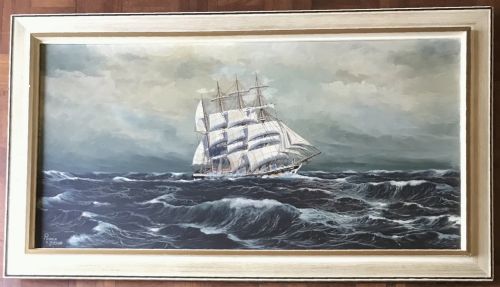
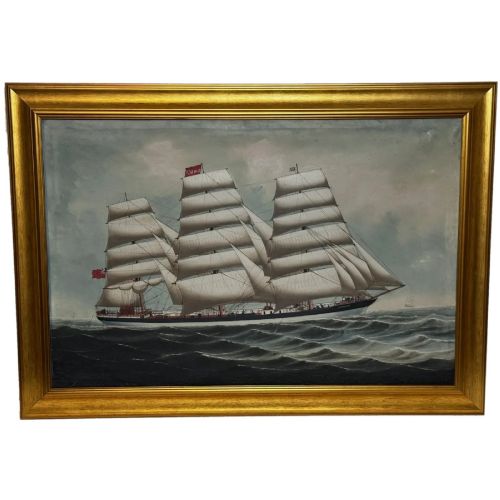
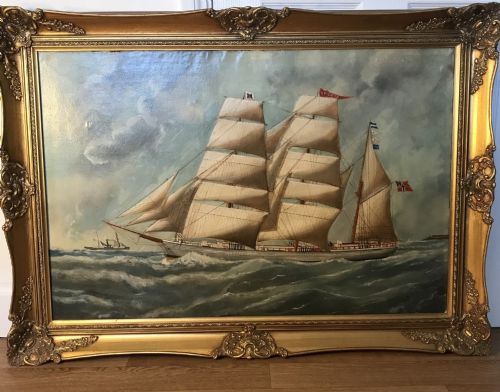
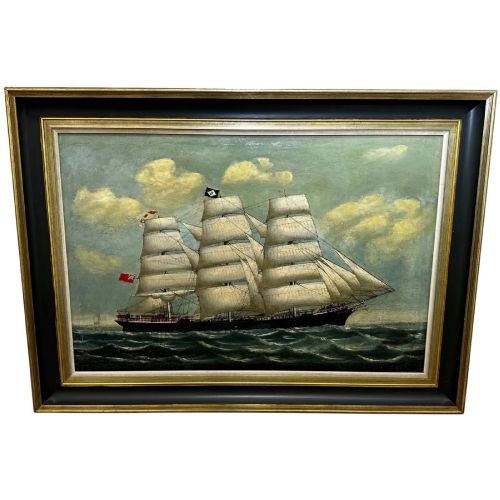
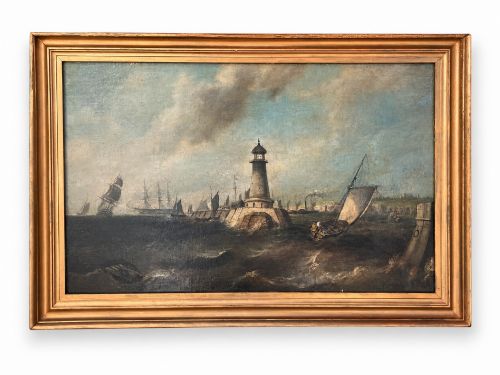
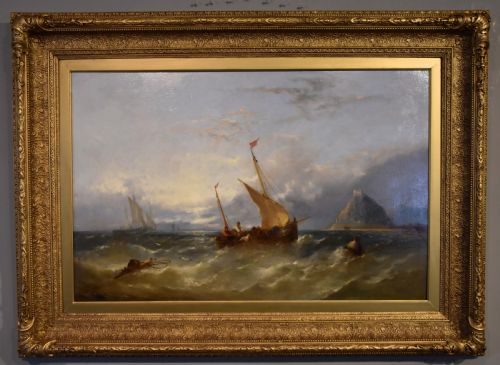
Blue ocean canvas artwork spans nineteenth-century marine scenes, Victorian coastal landscapes, and mid-twentieth-century sea views. These oil paintings depict sailing ships, steamships, lighthouses, and coastal waters across various periods.
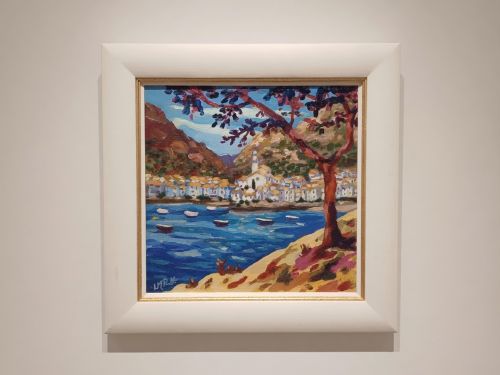
The pieces on this page are oil paintings on canvas, often presented in wood or giltwood frames. They range from nineteenth-century historical ship portraits to later impressionist coastal interpretations.
Materials and technique
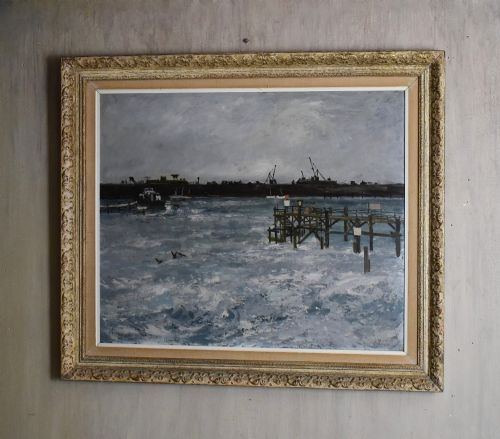
Artists painted these works using oil paint applied to stretched canvas supported by wooden frames. Brushwork varies from precise maritime realism detailing rigging and hulls to heavier impasto capturing stormy waves.
Frames incorporate wood and giltwood, sometimes matching the period of the painting. Canvases are secured to wooden stretchers, occasionally showing past relining or conservation work.
Several paintings capture nineteenth-century captains who clearly considered their ships far more photogenic than their wives.
Assessing quality
Quality rests upon the artist's handling of water, light, and maritime architecture. Finer works show accurate depictions of vessel rigging, convincing sea movement, and balanced composition.
Condition of the canvas and paint surface dictates overall quality. Works retaining their original texture without excessive retouching command greater attention from collectors.
Reginald Arthur Borstel·Lucy Pratt·Peter Brannan·Lai Fong·Nicholas Condy·William Henry Williamson·Elisabeth Bardon·Charles Napier Hemy·Norman Lloyd·Gustave De Bréanski·Daniel Sherrin·Charles Malfroy·Stephen J. Renard·Hendrik Willebrord Jansen·Dion Pears·George Gregory·Richard Ball Spencer·Thomas Rose Miles·James Scrimgeour Mann
The Blue Ocean Canvas Artwork Glossary
- Canvas
- A heavy woven fabric used as a surface for oil painting. It is typically stretched over a wooden frame before work begins.
- Impasto
- Paint applied thickly to a canvas so that it stands out from the surface. This technique adds visible texture to waves and clouds.
- Giltwood
- Wood carved and covered with thin gold leaf or gold paint. It frequently appears on traditional frames housing marine paintings.
- Pierhead painting
- A specific genre of ship portrait created for captains and owners. These works record vessels accurately as they entered or left port.
Blue Ocean Canvas Artwork: Frequently Asked Questions
What subjects do these paintings show?
These works depict maritime scenes, including sailing ships, ocean liners, coastal cliffs, and harbours. The subjects range from historical naval battles to quiet fishing boats off the coast.
Many pieces document specific vessels, such as clipper ships and steamships, recorded by artists specialising in marine art.
How should I hang a canvas painting?
Hang oil paintings on canvas away from direct sunlight and steady heat sources. Proper picture wire and wall fixings suited to the weight of the framed canvas are essential.
Keep the environment stable in humidity to protect both the wooden stretcher and the canvas from warping.
How do I identify the period of a painting?
Period identification relies on ship types, clothing styles of any figures, and framing materials. Nineteenth-century works often show detailed sailing vessels, while mid-twentieth-century pieces lean towards impressionist coastal views.
Signatures, artist dates, and stretcher construction provide further clues to the age of the work.