



Blue Nude Painting
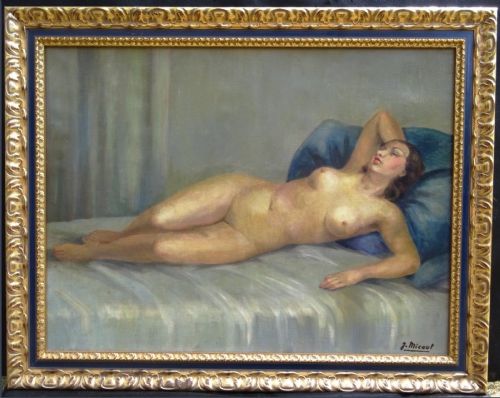
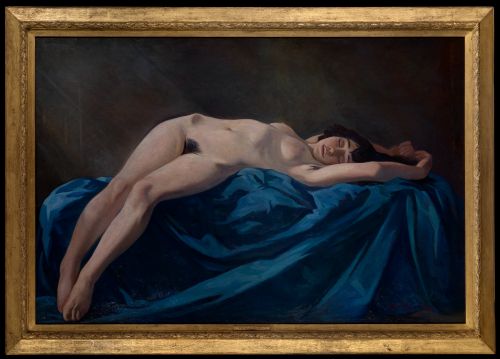
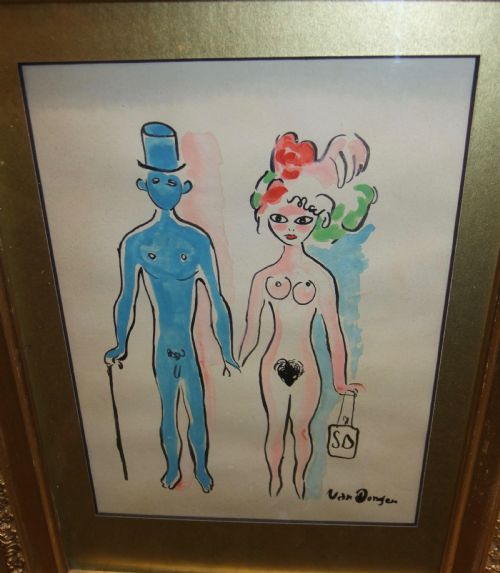
A blue nude painting captures the human form through cool azure tones, offering collectors a striking study in colour and mood.
Blue Nude Painting
A blue nude painting brings together figurative subject matter and a distinct palette dominated by cool tones, spanning the early decades of the twentieth century. These works appear in forms such as oil on canvas, oil on paper, and watercolour, framed in wood or gilt wood.
The selections on this page draw from periods including the nineteenth century, the 1910s, 1920s, 1930s, 1950s, and 1960s. Styles range from French Art Deco and Fauvism to Impressionism, Modern British, and Post-War British Realism.
Buyers will encounter framed original artworks, studio interior portraits, and coastal scenes showing figures by cliffs or rivers. Each piece reflects the artistic movements of its decade, utilising varied interpretations of the human figure.
How they were made
Artists built these compositions primarily using oil paint on canvas or paper, applying pigment to capture texture and depth. Watercolours on paper also appear, offering a lighter application of tone and line.
Supporting these artworks are traditional wooden supports and gilt wood frames, which house the paintings. The integration of canvas, paper, and pigment defines the physical structure of each piece.
Listings feature oil on canvas, paper, and watercolour across Art Deco, Fauvism, and Impressionist styles from the twentieth century.
What varies in quality
The strength of composition and brushwork distinguishes individual works, determining how effectively the artist handles form and light. Mastery over the palette, particularly the management of blue tones, shapes the visual impact of the canvas.
The preservation of the original surface, whether oil on canvas or watercolour on paper, influences the integrity of the piece. Frame construction and the harmony between the artwork and its mounting also contribute to the overall standing of the work.
Eric Robertson·Raymond Moritz·Tony Giles·Sir William Russell Flint·Pinchus Krémègne·Yetta Kane·Frank Dobson·Kees van Dongen
The Blue Nude Painting Glossary
- Fauvism
- An early twentieth century style characterised by vibrant colours and bold brushwork rather than realistic values. This movement prioritised painterly qualities over naturalistic representation.
- Chiaroscuro
- The use of strong contrasts between light and dark to give a three-dimensional volume to figures. Artists deploy this technique to create dramatic depth within a composition.
- Gilt wood frame
- A wooden framing structure covered with a thin layer of gold leaf or gilt finish. These frames often accompany period paintings to enhance the presentation.
- Studio interior
- A genre of painting depicting models or artists inside a workspace. These settings provide context for figurative studies and academic sessions.
- Post-War British Realism
- An artistic movement focusing on representational depictions of everyday subjects following the mid-century period. Works from this category reflect the social conditions of their time.
Blue Nude Painting: Frequently Asked Questions
What defines a blue nude painting?
A blue nude painting centres on the human figure rendered primarily in blue pigments or cool chromatic harmonies. This approach shifts focus from realistic flesh tones to atmospheric mood.
Artists across the twentieth century adopted this palette to convey emotional depth, movement, and stylistic experimentation within figurative art.
How should I display these paintings?
These artworks suit domestic spaces with controlled lighting to protect pigments, particularly works on paper or watercolour. Pairing them with period frames enhances their visual presence on the wall.
Consider the surrounding interior style, as mid-century and Art Deco pieces complement both modern and traditional rooms.
How do I identify the period?
Dating relies on stylistic markers such as the loose brushwork of Fauvism, the crisp lines of Art Deco, or the realism of post-century British works. Signatures, inscriptions, and framing materials often provide further chronological clues.
Examining the canvas preparation and backing materials helps confirm the era in which the piece was produced.
What is the difference between oil and watercolour?
Oil paintings utilise pigments suspended in drying oils applied to canvas or paper, offering rich texture and depth. Watercolours use water-soluble pigments on paper, yielding a translucent quality.
Both mediums produce distinct visual results, with oils allowing heavier layering and watercolours depending on the white of the paper for luminosity.