




Blue Kilim Runner
A blue kilim runner provides a flat-woven textile surface with tribal motifs, offering durability and historical character for hallways and narrow spaces.
Blue Kilim Runner
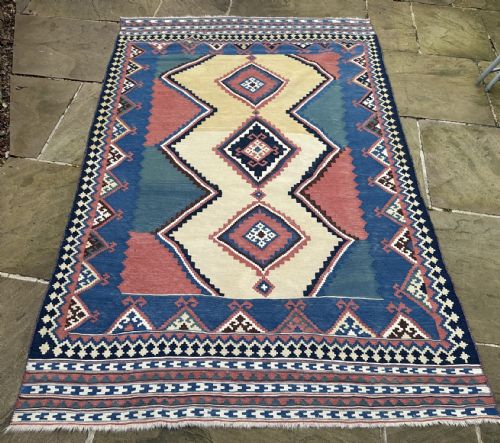
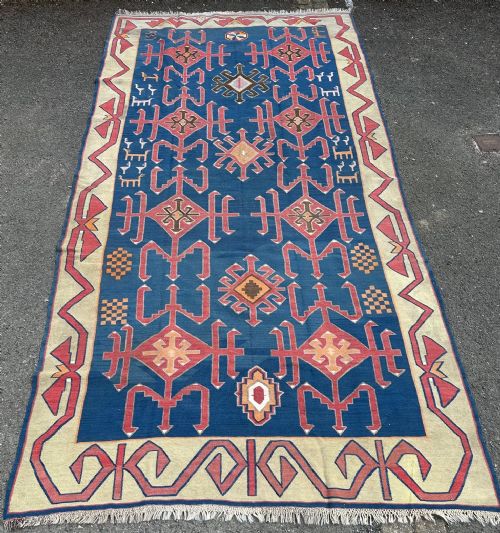
A blue kilim runner is a flat-woven textile created by tribal groups across Persia, the Caucasus, Anatolia, and Central Asia. These narrow rugs serve functional flooring roles in corridors and long rooms while displaying traditional geometric patterns.
The pieces available originate from various production centres, including Persian regions like Senneh, Bijar, and Khorassan, alongside Caucasian and Turkish districts. Examples range from nineteenth-century village weaves to twentieth-century tribal panels.
Makers include nomadic and village groups such as the Baluch, Qashqai, Shahsavan, and Uzbek communities. Each weaving group employs distinct structural traditions and regional palettes.
Materials and construction methods
These textiles rely on wool and cotton foundations, frequently utilising hand-spun wool for the pileless flat-weave structure. Natural dyes provide the underlying colour palette, yielding soft tones across the woven surfaces.
Weavers construct many examples in multiple strips joined together or in two separate parts before stitching them into a unified format. The slit-tapestry technique creates sharp geometric boundaries within the pattern.
Uzbek weavers occasionally assembled floor coverings out of thirteen separate narrow strips to reach a usable width.
Assessment of quality
Quality rests upon the fineness of the flat-weave structure and the integrity of the hand-spun wool materials. Tighter weaves and precise geometric execution distinguish superior village and tribal productions.
The depth and harmony of the natural dyes influence the visual success of each piece. Surviving examples with well-preserved structures and intact borders represent the higher end of the range.
The Blue Kilim Runner Glossary
- Kilim
- A flat-woven carpet or rug made without a pile by tightly interweaving warp and weft strands. This construction produces a lightweight textile suitable for floors or wall hanging.
- Sofreh
- A spread or cloth used for dining or food preparation in tribal households. These woven items often double as decorative flat-weaves.
- Soumak
- A brocade-like flat-weave technique where extra weft threads wrap around the warp yarns. This method creates a textured surface on the face and loose threads on the reverse.
- Warp
- The vertical foundation threads stretched lengthwise on the loom before weaving begins. Weft threads pass horizontally through these stationary yarns.
Blue Kilim Runner: Frequently Asked Questions
Where were these runners used originally?
Nomadic and village weavers produced these flat-weaves for domestic utility within tents and homes. They functioned as floor coverings, blankets, or storage bags.
In contemporary interiors, their narrow formats suit hallways, staircases, and corridors where pile carpets might prove too thick.
How do I clean a flat-weave runner?
Gentle surface brushing and careful vacuuming without a rotating power head remove loose dirt. Professional textile cleaning is necessary for deeper maintenance.
Keeping the textile away from direct sunlight preserves the natural dye colours over time.
What causes the split in two-part kilims?
Many large nomadic flat-weaves required looms narrower than the intended final width. Weavers produced two separate panels and stitched them together down the centre.
This construction method remains a standard indicator of traditional tribal manufacturing techniques rather than damage.
How do I distinguish regional tribal designs?
Caucasian pieces tend to display crisp geometric medallions and angular borders in cooler tones. Persian and Anatolian versions often incorporate curvilinear elements or specific tribal symbols.
Material analysis and structural characteristics help assign pieces to groups like the Shahsavan or Baluch.