

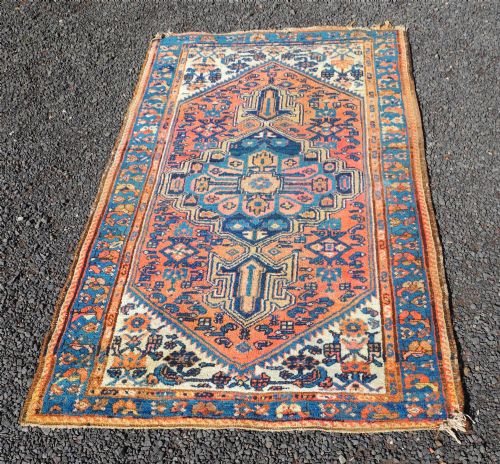
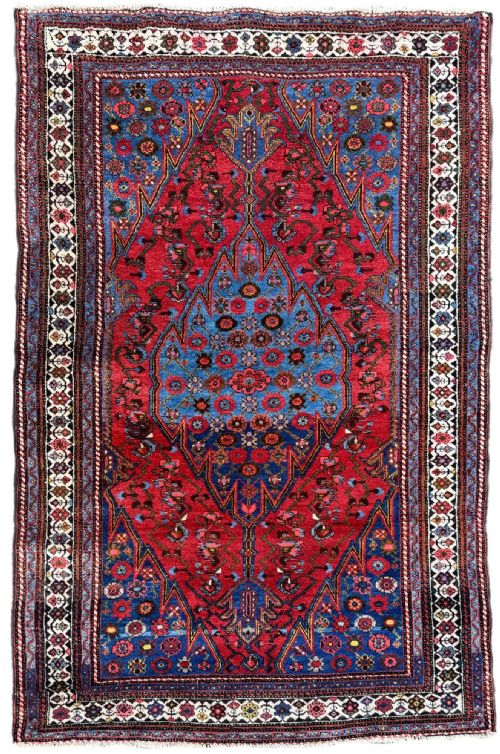
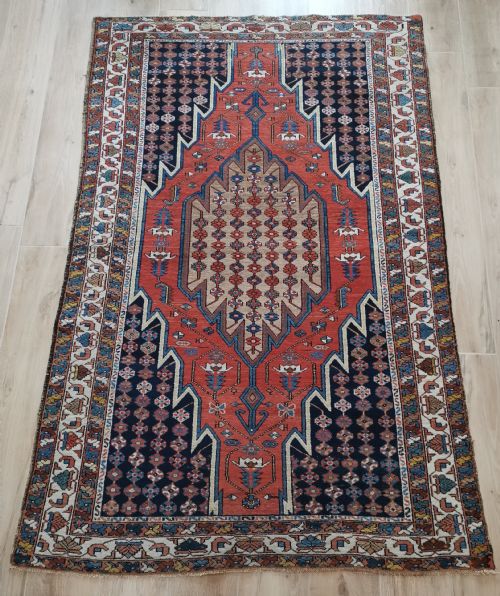
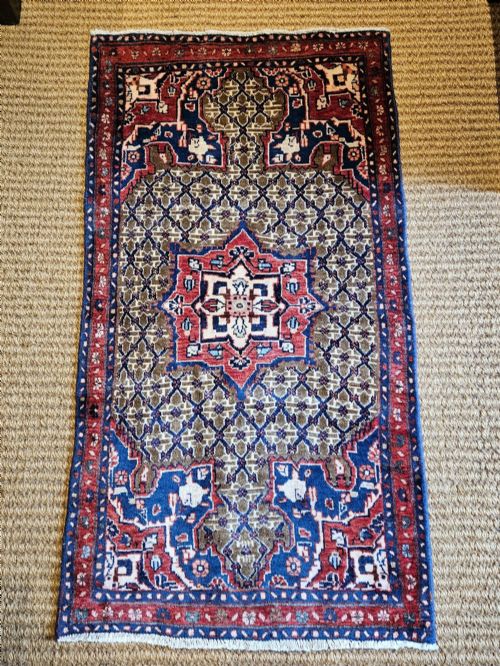
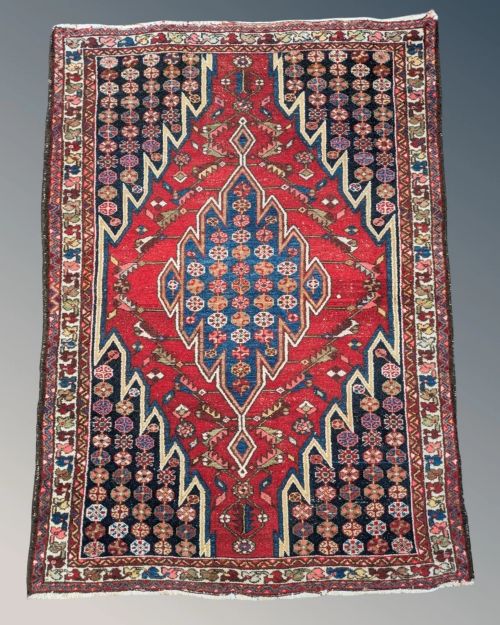
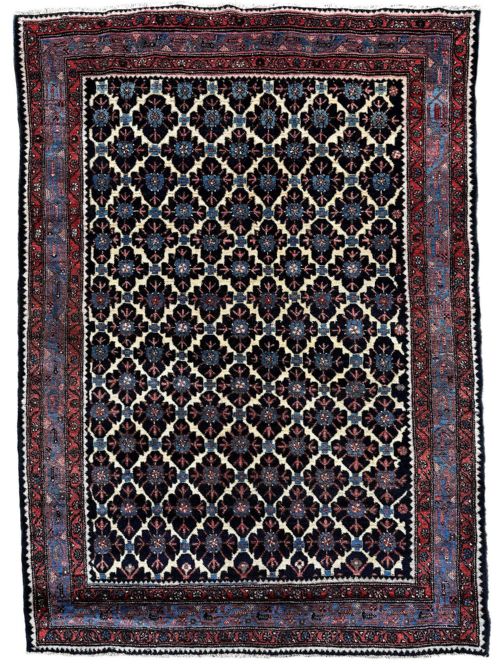
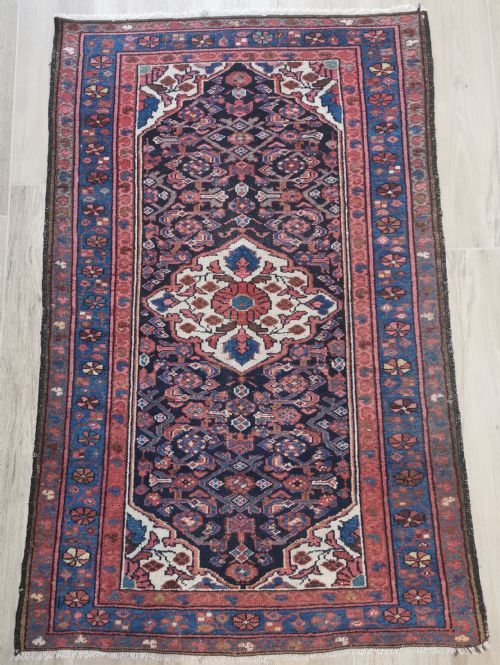


Blue Hamadan Rug
A blue hamadan rug brings centuries of Persian village weaving tradition into a room, offering durability and geometric charm.
Blue Hamadan Rug
The inventory on this page spans from the late nineteenth century through the mid-twentieth century, specifically capturing decades such as 1890, 1900, 1910, 1920, 1930, and 1940. Alongside core Hamadan pieces, related West Persian village types like Mazlaghan, Mishan Malayer, and Borodjert village rugs appear within the listings. Forms range from compact area rugs and hearth-sized pieces to narrow hallway runners and larger carpets.
Village weavers constructed these floor coverings to withstand daily use while expressing traditional regional designs through knotted piles. The persistent presence of wool and cotton materials across these decades demonstrates a continuity in foundational textile production. Selecting one of these pieces means bringing a genuine slice of Persian tribal and traditional artistry into a contemporary interior space.
How they were made
Weavers relied primarily on wool for the pile, utilising its natural resilience to create dense, durable surfaces capable of handling heavy foot traffic. Cotton frequently served as the foundation material, providing structural stability for the warp and weft threads beneath the knotted wool. This combination of wool and cotton underpins the physical construction seen across nineteenth and twentieth-century village pieces.
The creation of these textiles involved hand-knotting wool onto sturdy cotton foundations, a technique passed down through generations in West Persian villages. Artisans employed natural and early synthetic dyes to achieve deep indigo and blue tones across fields, borders, and intricate geometric patterns. The resulting carpets and runners reflect the direct, unhurried methods of traditional Persian village workshops.
Blue Hamadan Rug Retail Price Guide 2026
Typical asking prices for blue hamadan rug among the pieces listed under this phrase on Sellingantiques today, from the lower quarter to the upper quarter. They describe what is for sale here now, not the wider market.
Listings feature pieces spanning from 1890 through the 1940s, predominantly constructed from wool and cotton.
What varies in quality
The fineness of the knotting and the complexity of the design layout distinguish the finer examples from simpler utilitarian pieces. Tighter construction yields a crisper definition in geometric and floral lattice motifs, allowing intricate patterns to stand out clearly against the blue field. Greater density in the wool pile also contributes to longevity and a more substantial weight underfoot.
Age and regional attribution introduce further distinctions, with late nineteenth-century specimens and specific village variants like Mishan Malayer holding particular interest for collectors. The depth and saturation of the blue indigo dye, alongside the balance of the overall composition, dictate the visual impact of each runner or carpet. Artisanal skill in proportioning borders to the central field ultimately separates standard village utility items from exceptional works.
The Blue Hamadan Rug Glossary
- Hamadan rug
- A woven floor covering produced in or around the West Persian city of Hamadan, encompassing numerous surrounding villages and nomadic groups.
- Warp
- The stationary vertical threads stretched on the loom that form the structural foundation of the rug.
- Weft
- The horizontal threads passed across the warp threads to bind the knots and secure the structure of the weave.
- Runner
- A long, narrow carpet format specifically designed for hallways, corridors, or alongside furniture.
- Mazlaghan
- A specific type of West Persian village rug known for distinct geometric medallions and contrasting colour palettes.
- Malayer
- A style of Persian rug originating from the town and district south of Hamadan, often noted for fine wool and floral designs.
Blue Hamadan Rug: Frequently Asked Questions
Where were these rugs made?
These textiles originate from the town of Hamadan and the surrounding farming and tribal villages in West Persia. Weavers in settlements such as Borodjert contributed to this rich regional tradition.
Production spanned generations of domestic and cooperative workshop weaving, utilising local materials and traditional motifs passed down through families.
How do I use a runner in a hallway?
Narrow runners fit ideally into corridors, entryways, and galleys where floor protection and visual warmth are needed. Their elongated proportions guide movement through a home while softening hard flooring.
Ensure you place a quality rug underlay beneath the piece to prevent slipping and reduce wear on the cotton foundation.
What materials make up these carpets?
The pile consists predominantly of sheep wool, chosen for its durability and ability to take rich dye colours. Cotton forms the hidden foundation of warp and weft threads that hold the knots in place.
This pairing of materials provides both structural stability and a comfortable surface for daily living spaces.
How do I date an older Persian rug?
Dating relies on stylistic clues, structural characteristics, dye types, and historical documentation associated with specific weaving eras. Pieces in this collection span from the late nineteenth century through the 1940s.
Expert examination of the knot density and material wear helps narrow down the period of manufacture.