



Blue Glaze Porcelain Urn
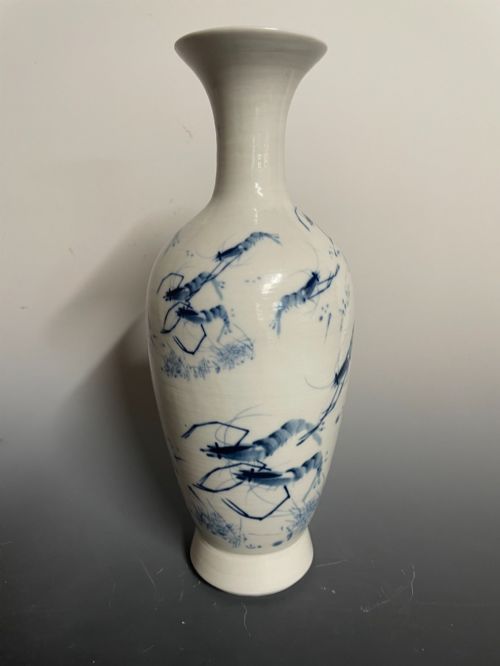
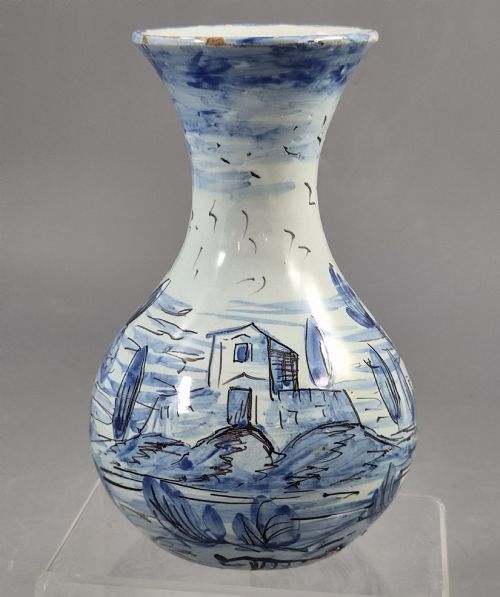
These blue glaze porcelain urn pieces and related vessels bring depth of colour and historical form to a room.
Blue Glaze Porcelain Urn
A blue glaze porcelain urn or associated vessel brings together centuries of ceramic tradition, ranging from Chinese export wares to European revivals. Buyers seeking this phrase typically encounter vases, jars, lamps, and covered urns finished in cobalt or turquoise tones.
The selections span distinct periods, most notably the nineteenth century, alongside earlier sixteenth-century imperial pieces and later twentieth-century decorative productions. Forms vary from bottle vases with flaring necks to monumental baluster jars and mounted table lamps.
Origins stretch across Chinese dynasties, Japanese kilns, and European potteries including Delft, Doulton, and French faience workshops. This mix reflects global trade routes and the enduring European fascination with oriental and classical forms.
Materials and methods
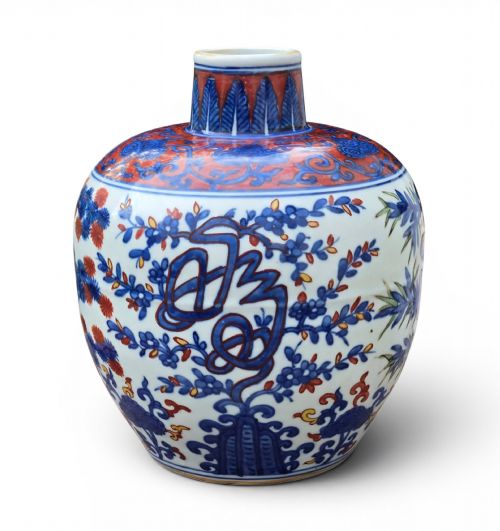
Makers shaped these objects from porcelain, earthenware, and tin-glazed ceramic bodies, applying cobalt blue glaze beneath or over the fired surface. Many examples incorporate intricate hand-painted decoration, sometimes enhanced with enamel or iron-red pigments.
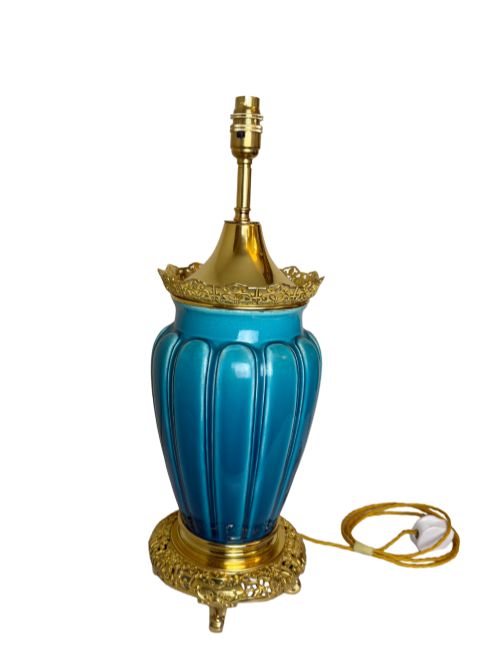
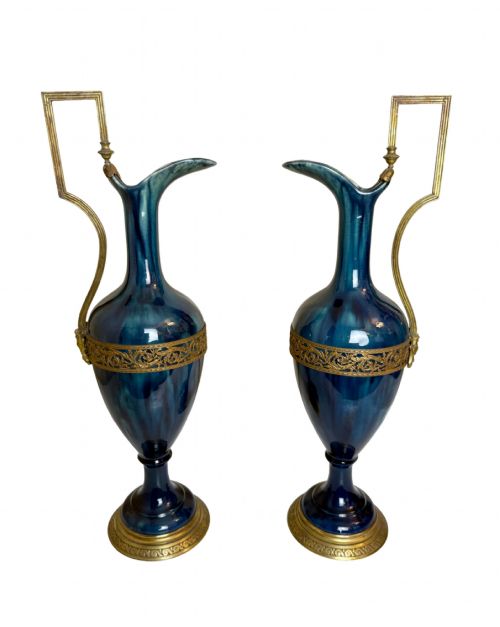
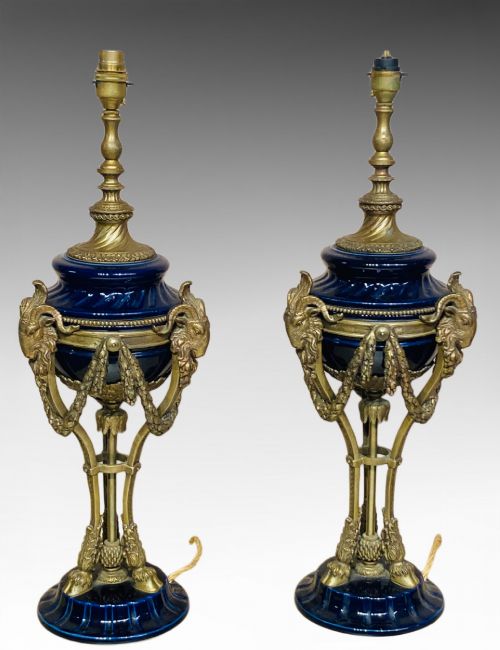
Mounts play a significant structural and decorative role, with workshops utilising gilt bronze, ormolu, and brass trim to elevate standard ceramic vessels into ornate table lamps and garniture urns. Gilding and gold leaf further accent moulded details and panels.
Several mallards painted on ceramics remind us that nineteenth and twentieth-century artisans possessed a profound fondness for decorative ducks.
Distinctions in quality
Quality rests primarily on the depth and clarity of the cobalt glaze, the precision of the hand-painted motifs, and the crispness of the porcelain body. Superior pieces display vibrant pigment control without pooling or fading, alongside well-balanced potting.
The integration of metal mounts also dictates standard; cast bronze and ormolu fittings that complement the exact contours of the ceramic demonstrate higher craftsmanship than generic or later adaptations.
Cantagalli·Doulton·Wedgewood·Falcon Ware·Tashiro
The Blue Glaze Porcelain Urn Glossary
- Porcelain
- A hard, white ceramic material fired at high temperatures, known for its density and ringing tone when struck. It forms the primary body for traditional oriental and European urns.
- Cobalt Glaze
- A deep blue mineral pigment applied to ceramics before firing, capable of withstanding extreme kiln temperatures. It creates the rich cobalt ground seen on many classical vases.
- Ormolu
- Finely ground gold applied in a mercury amalgam to bronze mounts, producing a rich golden finish. It frequently frames nineteenth-century French and English porcelain urns.
- Baluster
- An architectural form resembling a wide-bellied column, translated into a curvaceous vase shape. This silhouette provides stability and visual weight to large jars and urns.
- Moriage
- A Japanese ceramic decorating technique using piped clay to create raised relief patterns. It adds distinct tactile texture beneath coloured glazes.
Blue Glaze Porcelain Urn: Frequently Asked Questions
How do I date a blue glaze porcelain urn?
Dating relies on examining the potting style, glaze characteristics, and any base marks corresponding to specific dynasties or European factory periods.
Secondary indicators include the presence of metal mounts, such as nineteenth-century ormolu trim or later electrical fittings.
Were these urns originally used as lamps?
Many urns and vases were adapted into table lamps during the nineteenth or twentieth centuries, often incorporating brass or gilt bronze bases.
Original function typically involved display, storage, or floral decoration rather than lighting.
What is the difference between porcelain and earthenware?
Porcelain is fired at much higher temperatures, resulting in a vitrified, non-porous body that is often translucent.
Earthenware and tin-glazed ceramics like Delft are more porous and require an opaque glaze to seal the clay body.
How should I clean a antique porcelain urn?
Dusting gently with a dry, soft brush is the safest method for preserving delicate enamel and gilt surfaces.
Avoid immersing antique vessels in water, particularly those with exposed clay bodies or applied metal mounts.