





Blue Glass Vanity Box
A blue glass vanity box brings dressing table elegance to life, holding precious trinkets and powders inside rich cobalt or Bristol hues.
Blue Glass Vanity Box
A blue glass vanity box serves as a functional dressing table container, most commonly appearing as an Art Deco jar or a nineteenth-century French piece paired with silver and enamel.
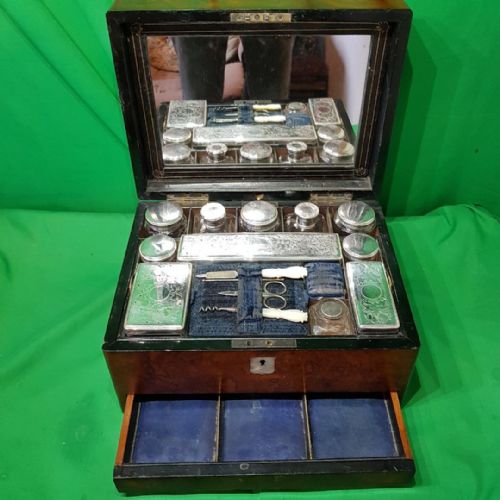
Buyers encounter everything from small Georgian patch boxes to substantial Victorian travelling sets and twentieth-century powder jars.
The phrase covers dressing cases and trinket pots alongside dedicated powder boxes, uniting pieces defined by their rich colour and intimate uses.
Materials and construction
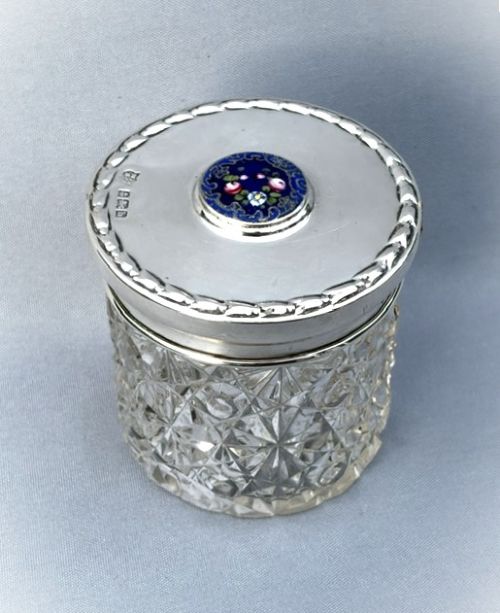
Makers combined deep blue glass, such as Bristol or Clichy varieties, with sterling silver lids, brass mounts, and occasionally fitted wooden carcasses of burr walnut or rosewood.
Surface decoration frequently relied on guilloche enamel work, cut glass facets, and delicate hand-painted motifs set into metal mounts.
Blue Glass Vanity Box Retail Price Guide 2026
Typical asking prices for blue glass vanity box among the pieces listed under this phrase on Sellingantiques today, from the lower quarter to the upper quarter. They describe what is for sale here now, not the wider market.
Some tiny Georgian patch boxes were fitted with tiny interior mirrors so owners could check their cosmetic beauty spots on the go.
Assessing quality and execution
Superior examples show crisp execution in the metalwork and enamel, alongside heavy, clear glass free from accidental distortion.
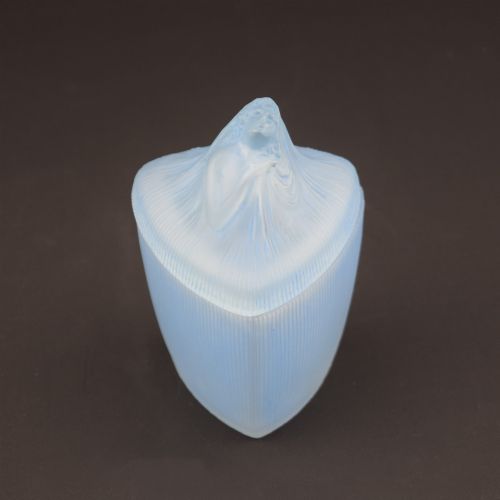
Makers such as René Lalique or known silversmiths elevate a piece through signed mouldings or robust hallmarked mounts that secure the glass firmly.
Henry Clifford Davis·Rene Lalique
The Blue Glass Vanity Box Glossary
- Guilloche enamel
- An ornamental metalworking technique where a precise, intricate pattern is mechanically engraved beneath a translucent layer of enamel.
- Bristol glass
- A distinctive type of opaque or coloured glass produced in Bristol, famous for its deep cobalt blue shades often utilised on dressing table wares.
- Patch box
- A small container used during the eighteenth century to hold cosmetic patches made of silk or velvet.
- Clichy glass
- Nineteenth-century glassware produced near Paris, recognised by rich colour tones and fine nineteenth-century decorative treatments.
- Sterling silver
- An alloy of silver containing ninety-two point five percent pure silver, standard for the hallmarked lids and mounts found on these boxes.
Blue Glass Vanity Box: Frequently Asked Questions
What went inside a vanity box?
These containers held loose face powder, small cosmetic patches, hairpins, and daily trinkets needed for grooming at the dressing table.
Larger travelling versions also accommodated scent bottles and small brushes for journeys.
How do I date a blue glass box?
Silver hallmarks provide the most reliable dates, showing exact assay office years for the metal lids and mounts.
Style indicators like geometric Art Deco lines or Georgian enamel painting help place unmarked pieces.
Where were these boxes displayed?
Victorian and Edwardian owners placed them prominently on dressing tables, washstands, or mantelpieces as colourful decorative accents.
Their vibrant blue glass added a rich splash of colour to bedroom interiors.
Are the glass and metal parts original?
Many surviving pieces retain their matched original lids and glass bodies, though replacement components occasionally occur over centuries of use.
Checking for correct fit and matching hallmarks confirms whether the components belong together.