





Blue Glass Dressing Jar
A blue glass dressing jar sits upon the dressing table to hold powders, pins and perfumes within rich blue vessels.
Blue Glass Dressing Jar
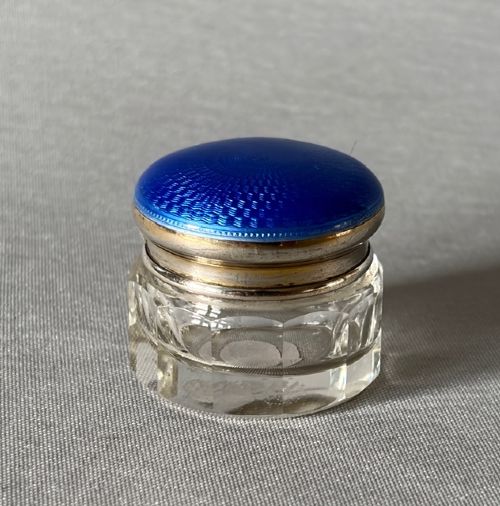
A blue glass dressing jar is a vanity container designed for the dressing table, travel set or powder box collection. These vessels hold small personal items and cosmetics, often fitted with precious metal lids.
The examples gathered here span from the Regency era through Victorian and Edwardian decades into Art Deco designs. One encounters small scent bottles, vanity boxes and lidded trinket pots alongside traditional jars.
French and English workshops produced these pieces, utilising rich Bristol blue or Clichy glass paired with sterling silver, brass or burr walnut. Each object reflects the dressing rituals of its period.
How they were made
Makers shaped the vessels from deep blue glass, frequently employing cut glass techniques to catch the light on vanity tables. These glass bodies provide a striking contrast to mounted metal fittings.
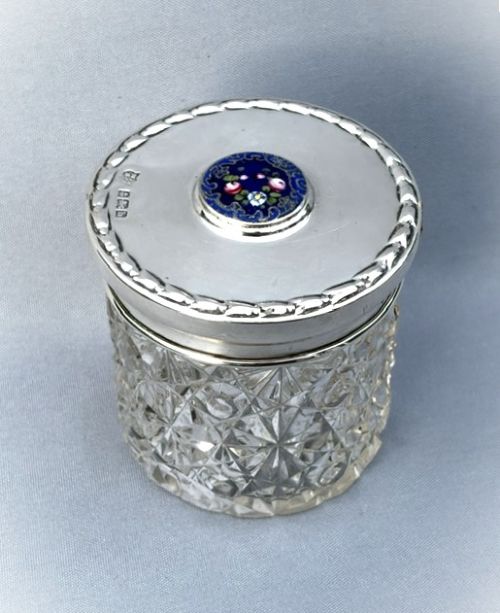
Lids and collars typically consist of sterling silver, often decorated with guilloche enamel in blue or other pastel shades. Artisans secured these mounts tightly to the glass rims to protect the contents.
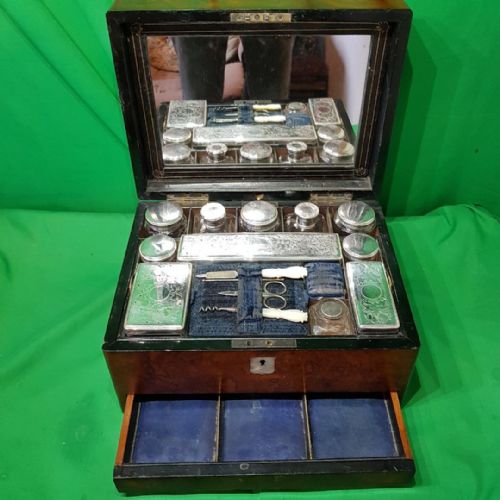
Travel sets and vanity cases incorporate wooden carcases of burr walnut or rosewood, lined with velvet to cradle the glass jars securely during transit.
Blue Glass Dressing Jar Retail Price Guide 2026
Typical asking prices for blue glass dressing jar among the pieces listed under this phrase on Sellingantiques today, from the lower quarter to the upper quarter. They describe what is for sale here now, not the wider market.
Listings feature items in glass, enamel, sterling silver, burr walnut and velvet across periods from Regency to Art Deco.
What varies in quality
The fineness of the glasswork dictates the character of the jar, from simple moulded vessels to deeply cut crystal that refracts light with precision. Heavy metal mounts and crisp hallmarks indicate higher workshop standards.
Enamelwork on the silver lids displays distinct degrees of skill, with translucent guilloche patterns requiring expert hand-turning beneath the coloured glaze. Intricate engine-turning separates standard production from superior pieces.
Fitted vanity boxes reveal quality through the integration of their interior components, where velvet linings and secure silver hinges demonstrate careful cabinetmaking.
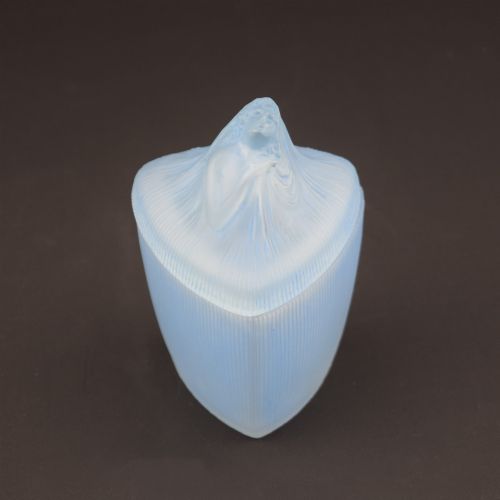
Henry Clifford Davis·Rene Lalique
The Blue Glass Dressing Jar Glossary
- Guilloche enamel
- A decorative technique where metal is engraved with an intricate geometric pattern beneath a translucent enamel coating. This method was widely favored during the Art Deco period.
- Bristol blue glass
- A deep, vibrant cobalt blue glass traditionally associated with factories in Bristol during the eighteenth and nineteenth centuries. The rich colour remains a defining characteristic of these vanity pieces.
- Clichy glass
- Glassware produced by the famous French glassworks near Paris, known for rich hues and fine decorative finishes. Such pieces often appear in nineteenth-century French vanity jars.
- Burr walnut
- A highly figured wood veneer taken from the burl growths of walnut trees. Cabinetmakers utilised this timber for luxury Victorian vanity boxes and travelling sets.
- Sterling silver
- An alloy consisting of ninety-two point five percent silver and seven point five percent other metals, chiefly copper. British pieces bear hallmark stamps denoting the assay office and year.
Blue Glass Dressing Jar: Frequently Asked Questions
What is a blue glass dressing jar?
A blue glass dressing jar is a lidded container used on dressing tables to store cosmetics, pins or small trinkets. These vessels combine deep blue glass bodies with metal or enamel lids.
They emerged in various forms across the nineteenth and twentieth centuries, serving both functional and decorative roles in private dressing rooms.
How were travel vanity sets used?
Travel vanity sets housed glass jars, scent bottles and brushes within fitted wooden boxes made of burr walnut or rosewood. Owners transported these cases during journeys to maintain grooming routines away from home.
Inside, velvet linings kept the glass components secure and separated from metal fittings.
How do I identify Art Deco jars?
Art Deco dressing jars typically feature geometric motifs, clean lines and guilloche enamel in colours like blue. Makers utilised sterling silver mounts stamped with dates from the nineteen-twenties and nineteen-thirties.
These pieces reflect the modern design sensibilities of the interwar period, contrasting with earlier Victorian ornamentation.
How should I clean these jars?
Cleaning requires gentle care, using warm soapy water for the glass while keeping moisture away from velvet linings and delicate enamel. Silver mounts benefit from soft polishing cloths without abrasive chemicals.
Preserving the original interior fabric and enamel surface maintains the historical integrity of the piece.