


Blue Gemstone Gold Necklace
A blue gemstone gold necklace brings together cool blue stones and warm precious metal in wearable forms shaped by decades of design.
Blue Gemstone Gold Necklace
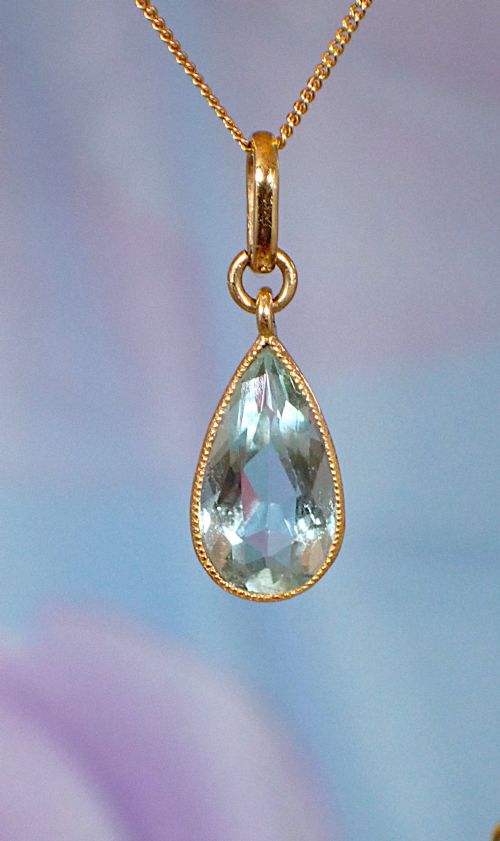
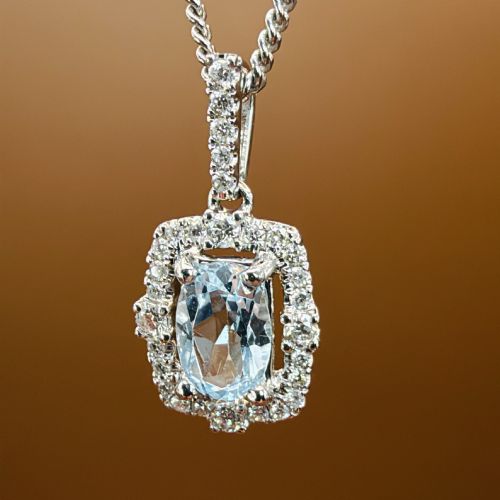
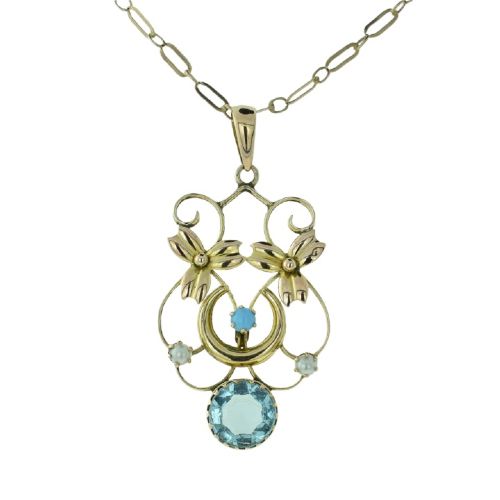
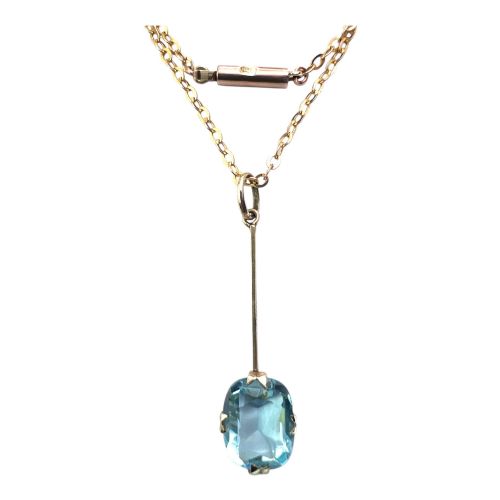
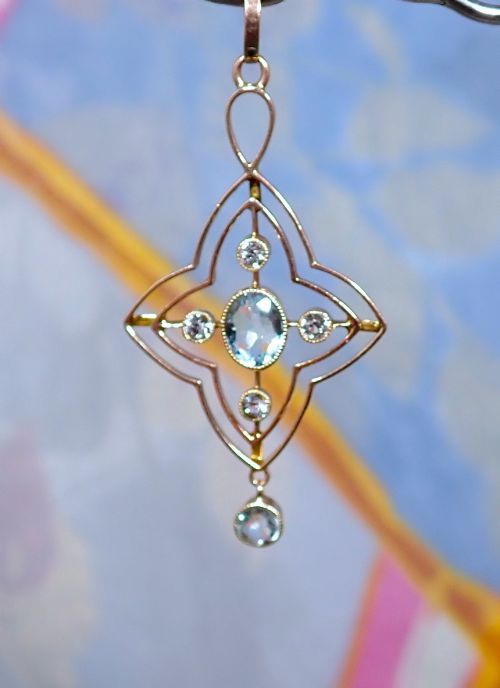
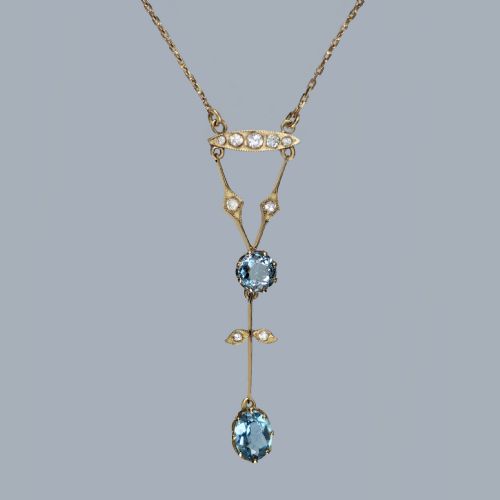
A blue gemstone gold necklace combines blue stones such as aquamarine, sapphire, blue topaz, zircon, and moonstone set in yellow, white, rose, or standard gold. Buyers examine various forms on this page, including drop pendants, cluster necklaces, halo designs, crosses, and star motifs.
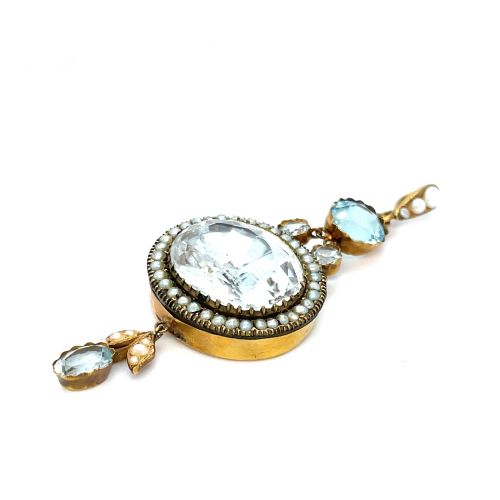
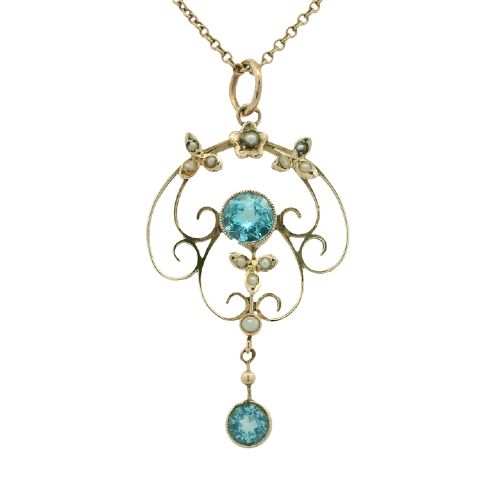
The selections span distinct periods, including Victorian, Edwardian, Art Nouveau, Art Deco, mid-century, and later decades. Pieces frequently integrate accent stones like diamonds, pearls, turquoise, rock crystal, and white sapphires alongside the primary blue gems.
How they were made
Goldsmiths shape metal into varying purities, including 9ct, 14ct, 15ct, 18ct, and 22ct gold, occasionally combining silver or platinum settings. Stones undergo diverse cuts such as oval, cabochon, and solitaire arrangements.
Craftsmen secure gems using cluster, halo, foil-backed, and drop constructions, often pairing central blue stones with seed pearls, diamonds, or secondary gems.
Aquamarines in these necklaces range from modest carat weights to substantial statement stones exceeding forty carats.
What varies in quality
Quality rests in the depth of stone colour, the weight and purity of the gold, and the precision of the stone setting. Maker attribution and period integrity elevate certain pieces above standard commercial examples.
The complexity of the metalwork, whether Edwardian openwork or Art Deco geometric framing, distinguishes finer artisan production from simpler manufactured items.
Dorrie Nossiter·C'est Laudier
The Blue Gemstone Gold Necklace Glossary
- Aquamarine
- A pale blue to light green variety of beryl frequently featured in Edwardian and mid-century pendants. It forms the primary blue gem in a significant portion of these listings.
- Cabochon
- A gemstone shaped and polished with a smooth, rounded surface rather than faceted edges. This cut appears frequently on sapphires and moonstones within the selection.
- Seed Pearl
- A very small, naturally occurring or cultured pearl used extensively as an accent material in Victorian and Edwardian jewellery. These pearls often border central blue gemstones.
- Foil Back
- A manufacturing technique where a thin sheet of metallic foil is placed behind a gemstone to enhance its brilliance and colour. This method appears in antique Victorian pieces.
Blue Gemstone Gold Necklace: Frequently Asked Questions
What periods do these necklaces cover?
The pieces span from the Victorian and Edwardian eras through Art Deco and mid-century modern designs up to late twentieth-century examples. Each era brings distinct metal tones and stone-setting techniques.
Victorian and Edwardian works often feature delicate seed pearls and intricate yellow gold drop mounts, while later mid-century items utilise cleaner white or yellow gold cluster configurations.
What gold purities appear in the selection?
Items utilise a range of gold purities, predominantly 9ct yellow, white, and rose gold, alongside 14ct, 15ct, 18ct, and 22ct variations. Some pieces incorporate platinum or silver elements alongside the gold.
Higher carat numbers indicate a greater proportion of pure gold within the alloy, influencing the warmth and colour of the metalwork.
Which blue stones are most common?
Aquamarine and blue topaz dominate the listings, accompanied by various shades of sapphire and occasional blue zircon, iolite, and moonstone. These stones range from pale watery blues to deep saturated tones.
Many designs pair these primary blue gems with accent diamonds, white sapphires, or turquoise.
How do pendant necklaces and chains arrive?
Many listings include both the pendant and a matched or original chain, while others offer the drop pendant or necklace standalone. Descriptions specify whether a chain accompanies the primary piece.
Buyers should check individual entries to confirm if the included chain matches the period and metal purity of the pendant.