


Blue Framed Oriental Art
Blue framed oriental art brings together diverse regional pieces from watercolours to silk embroideries, offering rich historic character for your walls.
Blue Framed Oriental Art
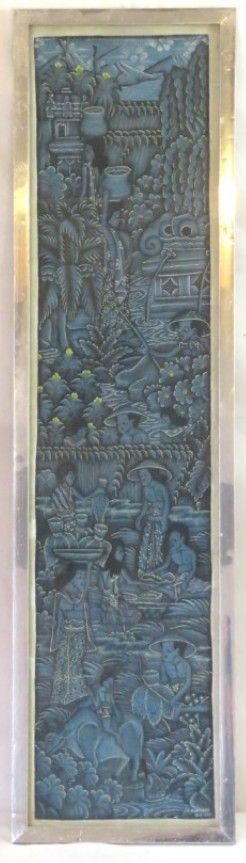
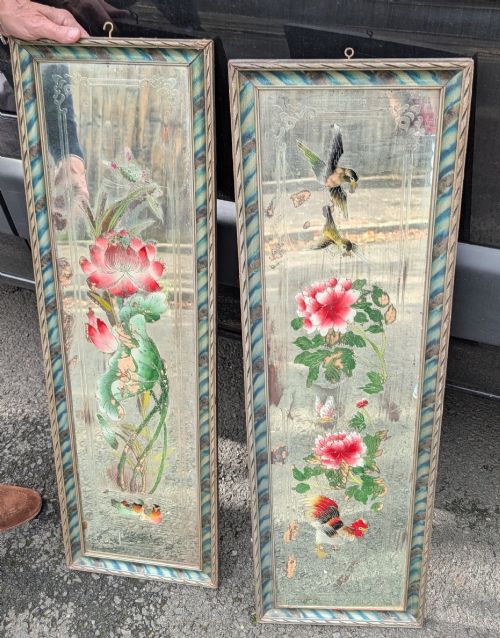
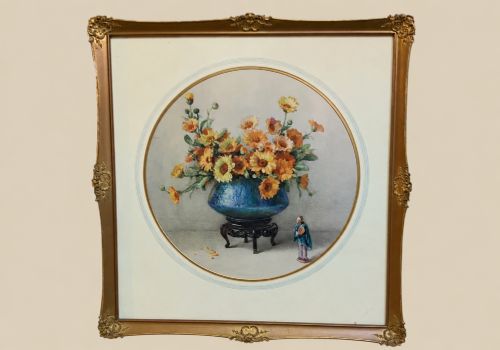
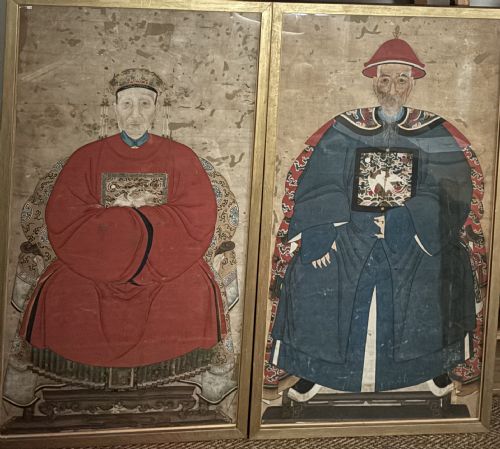
When you search for blue framed oriental art, you encounter a varied collection spanning traditional Chinese paintings, Japanese woodblock prints, and Balinese textiles. These pieces range from nineteenth century ancestor portraits to early twentieth century watercolours and embroideries.
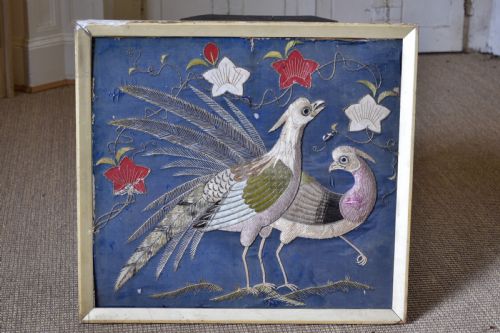
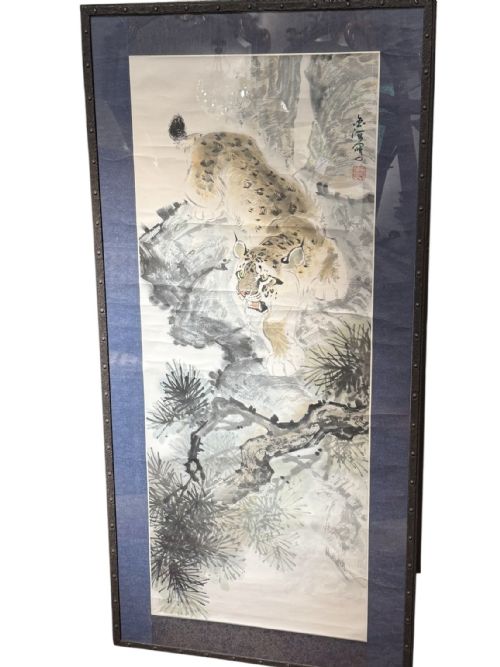
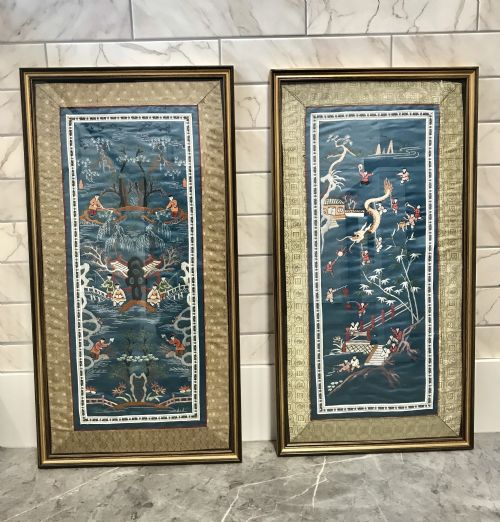
The objects themselves include framed textile art, pith paper paintings, scroll panels, and decorative wall hanging mirrors. Many works incorporate delicate materials such as silk, paper, and ink, preserved beneath glass within distinct frames.
You find works originating from different periods including the nineteenth century, nineteen hundred, and mid twentieth century creations. The stylistic influences encompass Qing Dynasty aesthetics, Victorian framing choices, and traditional Chinese or Japanese artistry.
Materials and techniques
Makers utilised traditional supports such as wood, paper, and woven silk for their compositions. Pigments, watercolour, ink, and metallic thread provided the colour and detail across paintings, prints, and embroideries.
Artisans applied hand sewn stitches to textile panels and robes, whilst artists painted directly onto pith paper or mounted gouache works. Woodblock printing techniques produced graphic prints featuring distinct pigmented lines.
Framing protected these fragile organic materials behind glass, enclosing paper scrolls, fabric art, and paintings within wooden structures.
Listings span periods from the nineteenth century through to nineteen sixty, utilising silk, paper, wood, and watercolour.
Assessing quality and execution
Quality rests in the precision of the handwork, whether observing the fine execution of silk embroidery stitches or the delicate brushwork of a watercolour painting. Superior examples display control and clarity in pigment application.
The integrity of the materials also dictates the standard of the piece, particularly regarding the preservation of antique silk, paper, and textile art. Well maintained frames and intact glass protect the delicate works housed within.
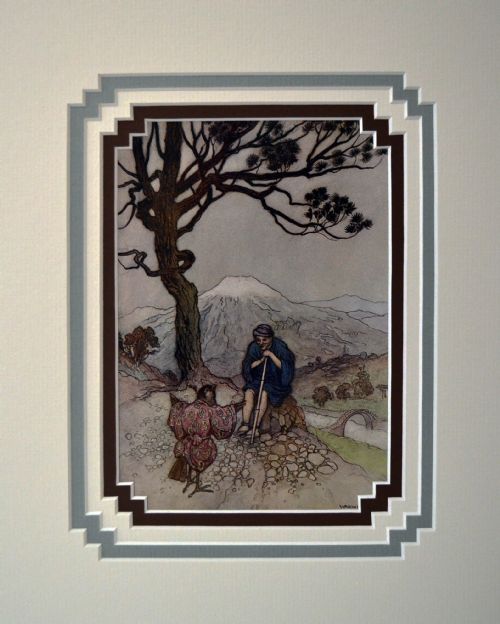
Warwick Goble·Kunisada
The Blue Framed Oriental Art Glossary
- Pith paper
- A delicate material derived from the pith of the tetrapanax papyrifer plant, frequently used for nineteenth century Chinese paintings. It absorbs watercolours in a distinctive manner.
- Woodblock print
- An image created by carving a design into a wooden block, applying pigment, and pressing it onto paper. This technique was widely utilised in Japanese printmaking.
- Ancestor portrait
- A formal painting depicting family forebears, created to honour lineage in traditional Chinese culture. These works often feature rigid frontal poses.
- Gouache
- An opaque water-based medium that provides solid, flat areas of colour in painted works. It appears frequently in mounted Chinese decorative sets.
- Chinoiserie
- A European artistic style reflecting Chinese motifs and decorative techniques. It emerged strongly in western interior design during earlier centuries.
Blue Framed Oriental Art: Frequently Asked Questions
How should I hang silk art?
Keep textile art and silk embroideries away from direct sunlight to prevent the natural fibres and dyes from fading over time.
Ensure the room maintains a stable humidity level to protect the fragile organic materials used in these framed pieces.
What is pith paper?
Pith paper is a delicate, spongy substance cut from plant stems and used as a painting surface in nineteenth century China.
Works on this material require protective glass framing because the surface is fragile and prone to cracking.
How do I identify a woodblock print?
Look closely at the paper for subtle impressions left by the carved block and variations in pigment density.
Traditional Japanese examples often bear publisher marks or signatures within the border of the composition.
Can I clean the glass on framed art?
Apply glass cleaner to a cloth rather than spraying it directly onto the frame, protecting the antique wood and fabric.
Take care not to let moisture seep beneath the edge of the glass where it could damage the paper or silk inside.