




Blue Floral Ginger Jar
A blue floral ginger jar brings centuries of ceramic tradition into a modern room, offering striking pattern and practical storage in one vessel.
Blue Floral Ginger Jar
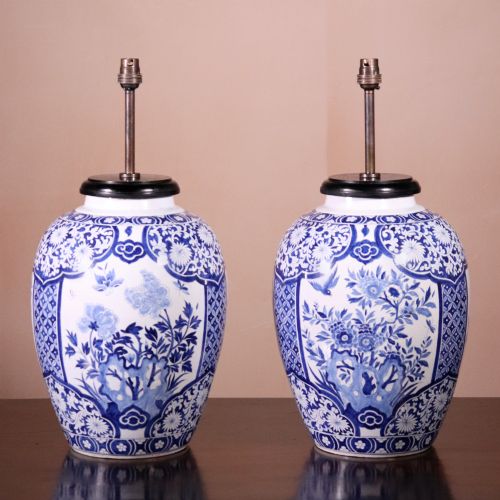
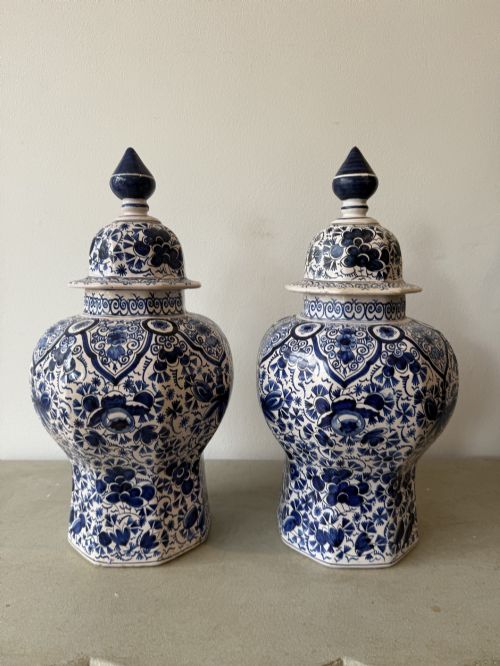
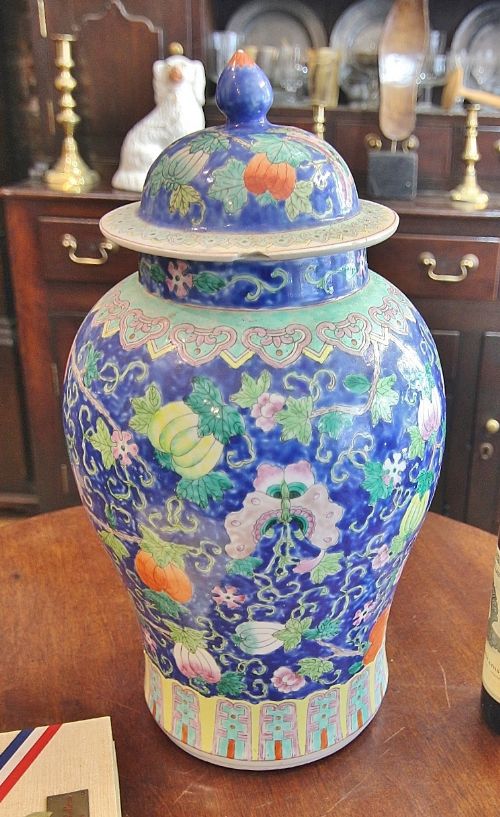
A blue floral ginger jar represents a diverse group of lidded vessels spanning the eighteenth, nineteenth, and twentieth centuries. These pieces cross multiple regional traditions, drawing on Chinese style, Japanese Imari, Dutch Delftware, and English earthenware production.
Buyers encountering this category will frequently find lidded vases, baluster forms, and covered jars alongside converted table lamps. The physical evidence shows distinct variations in scale, ranging from imposing nineteenth century examples to balanced pairs and smaller decorative pots.
The aesthetic bridges distant eras, uniting Victorian and Edwardian interpretations with earlier periods. Each blue floral ginger jar serves as both a functional container and a decorative focal point within an interior space.
Materials and construction methods
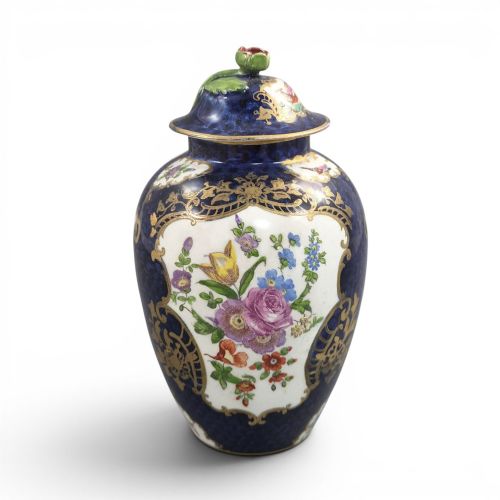
Makers shaped these vessels using porcelain, ceramic, and earthenware bodies, finished with protective glaze or enamel layers. Surface decoration frequently incorporates blue pigment applied beneath the glaze, complemented on certain pieces by gold leaf accents or brass fittings.
Production techniques varied from traditional Asian throwing and firing methods to European industrial output like Booths silicon china and Losol wares. Artisans combined hand-painted brushwork with moulded forms to achieve the characteristic blue floral patterns recorded across the periods.
Blue Floral Ginger Jar Retail Price Guide 2026
Typical asking prices for blue floral ginger jar among the pieces listed under this phrase on Sellingantiques today, from the lower quarter to the upper quarter. They describe what is for sale here now, not the wider market.
The listings span eight distinct periods, from the eighteenth century through to nineteen-forty.
Assessing quality and execution
Quality reveals itself in the crispness of the blue pigment and the control shown in the floral brushwork. Superior pieces display harmonious proportions between the body and the matching cover, whereas lesser examples show stiffness in the painted motifs or mismatched lids.
The handling of the glaze and the refinement of the ceramic body separate standard production from exceptional output. Clarity of detail within the patterns, whether Japanese Imari or Dutch Delft, dictates the overall standing of the object.
Booths Silicon China·Losol
The Blue Floral Ginger Jar Glossary
- Ginger jar
- Originally designed to store spices and preserves in international trade, these sturdy lidded vessels later became decorative staples. Their rounded shoulders and wide bodies define the classic silhouette.
- Imari
- A distinct decorative style originating in Japan, characterised by underglaze blue combined with iron red, gold, and secondary colours. Pieces in this tradition often feature intricate floral and panel designs.
- Delftware
- Tin-glazed earthenware produced in the Netherlands, famous for emulating blue and white Chinese porcelain. The soft glaze absorbs pigment in a characteristic way, yielding blurred edges on floral motifs.
- Baluster
- A vase form featuring a rounded body that tapers toward the base and swells near the centre. This architectural silhouette provides stability and visual balance to lidded jars.
- Cloisonne
- A metalwork technique where thin wires create compartments on a vessel surface, which are then filled with enamel paste and fired. Pieces using this method offer a textured, colourful alternative to ceramic.
Blue Floral Ginger Jar: Frequently Asked Questions
What were blue floral ginger jars used for?
These vessels originally served to transport and store spices, herbs, and ginger along international trade routes. Over time, their practicality gave way to pure ornamentation as European and Asian makers realised their visual appeal.
Today, they function as decorative centrepieces, mantel ornaments, or converted table lamps. Their sturdy lidded forms make them useful for holding small household items while adding pattern to a room.
How do I style a ginger jar at home?
Placing a pair of lidded vases on a sideboard, console table, or mantel creates immediate symmetry and traditional weight in a space. Mixing different periods, such as a nineteenth-century Imari jar with twentieth-century Chinese porcelain, adds depth.
Consider the scale of the room when choosing a vessel, as larger baluster forms demand open space to command attention. They pair well with polished wood surfaces and neutral backgrounds that allow the blue and white palette to stand out.
How can I tell the period of a jar?
Dating relies on examining the characteristics of the ceramic body, the formulation of the glaze, and the style of the painted ornament. Eighteenth-century pieces often show different potting weights and pigment tones compared to Victorian or Edwardian interpretations.
Makers' marks, where present on the base, provide direct evidence of origin and date. Comparing the brushwork to documented examples from periods like the Meiji era helps establish a reliable timeline.
Are all blue and white jars from China?
Many ginger jars draw inspiration from Chinese porcelain traditions, but production spread widely across Japan, the Netherlands, and England. Dutch Delftware and Japanese Imari output developed distinct local characteristics while using the familiar blue floral palette.
English factories like Booths and Losol produced their own interpretations during the late nineteenth and early twentieth centuries. Examining the paste and glaze helps distinguish between Asian export wares and European revivals.