






Blue Faience Charger
A blue faience charger brings rich tin-glazed earthenware into a room, offering deep cobalt pigment on wide decorative plates.
Blue Faience Charger
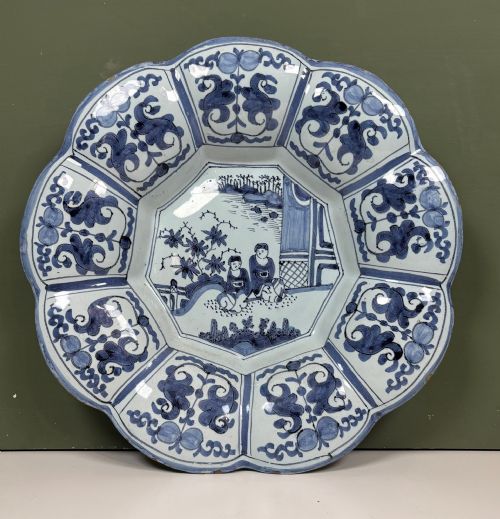
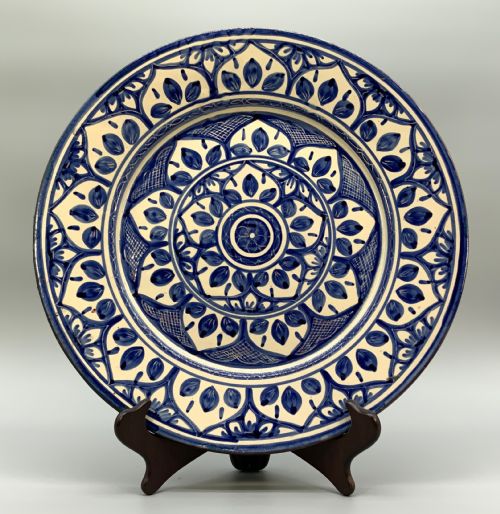
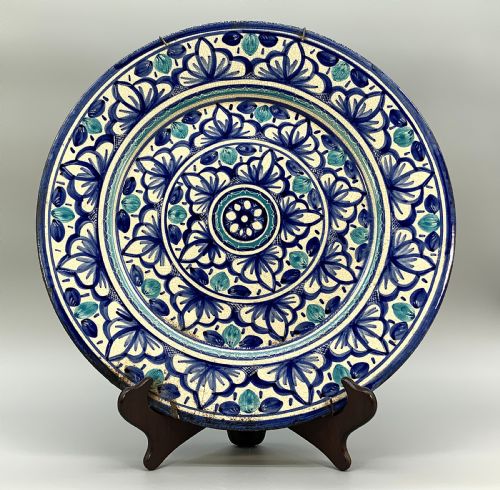
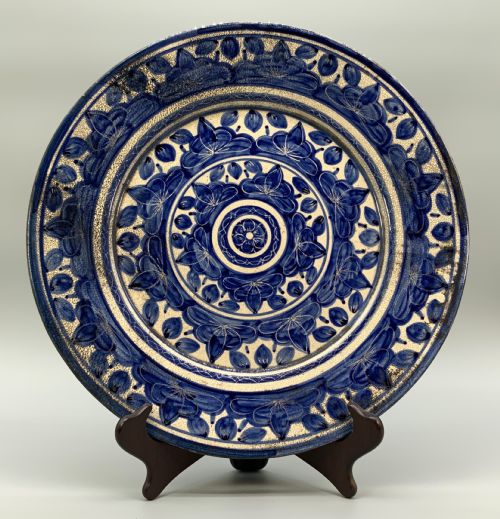
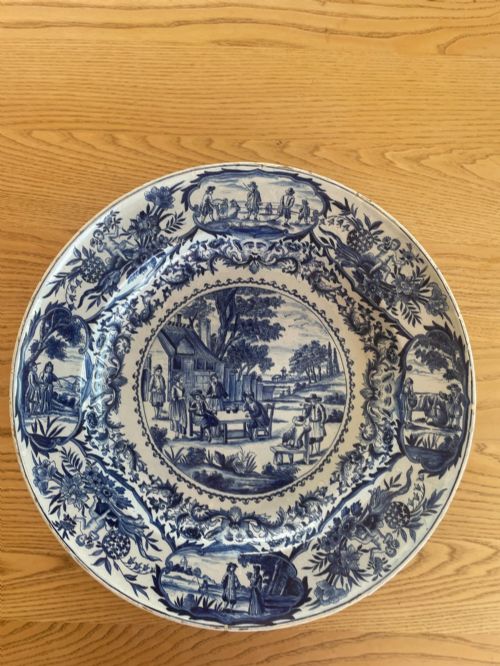
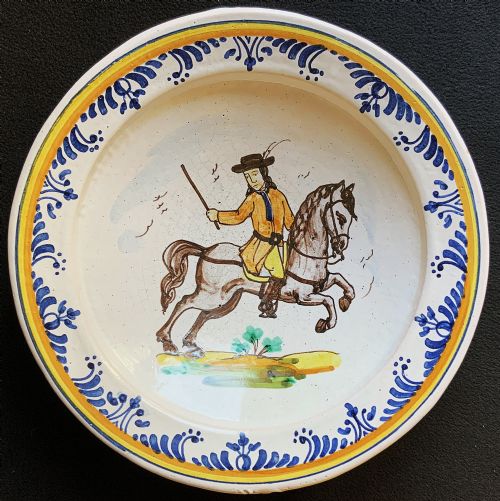
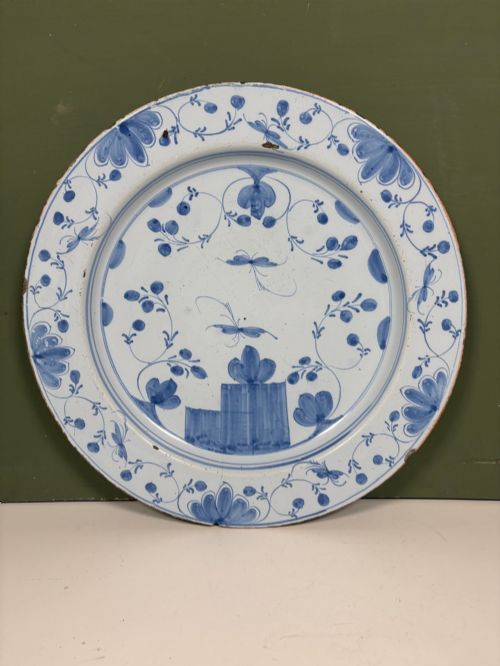
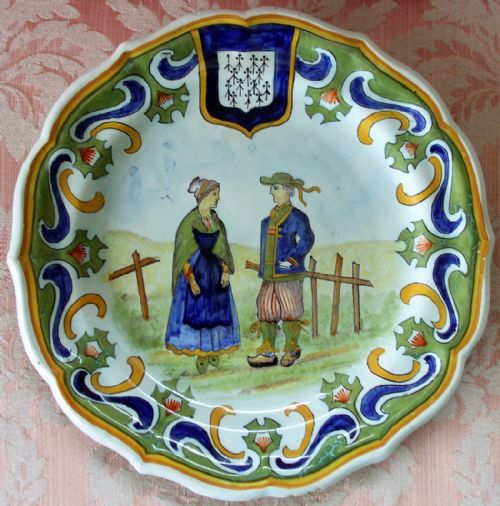
A blue faience charger stands as a large decorative dish or charger plate, often produced across European centres in tin-glazed earthenware. When seeking a blue faience charger, a buyer encounters substantial wall chargers and decorative platters spanning from the seventeenth century through to later revivals.
The pieces appearing on this page stretch from seventeenth-century Dutch Delftware and eighteenth-century examples to later continental works including Moorish style designs and French faience. Dutch Delft charger plates and Spanish or Italian interpretations dominate the forms, frequently featuring large circular surfaces intended for display.
How they were made
The creation of these chargers relies upon earthenware bodies coated in tin glaze, which provides an opaque white canvas for painting. Cobalt pigment is then applied directly to the unfired or raw glaze, absorbing into the surface during firing to create characteristic blue decoration.
Potters shaped these large decorative plates on wheels or moulded them before applying the glaze and pigments. Workshops across different regions utilised traditional kiln firings to fuse the tin glaze and cobalt painting into a durable finish.
Blue Faience Charger Retail Price Guide 2026
Typical asking prices for blue faience charger among the pieces listed under this phrase on Sellingantiques today, from the lower quarter to the upper quarter. They describe what is for sale here now, not the wider market.
Listings feature tin-glazed earthenware chargers spanning from the seventeenth century through to 1940, incorporating Dutch, French, Spanish, and Italian origins.
What varies in quality
Quality in these chargers rests upon the crispness of the cobalt pigment painting and the stability of the tin-glazed earthenware surface. Finer examples display confident brushwork and balanced pictorial compositions across large charger plates without excessive distortion from the kiln.
The ambition of the design distinguishes individual pieces, ranging from straightforward blue painted delftware to elaborate Moorish style patterns or complex historical scenes. Superior making shows careful control over the glaze and pigment during the firing process.
Bassano pottery works
The Blue Faience Charger Glossary
- Faience
- Tin-glazed earthenware produced in Europe, particularly associated with French, Italian, and Dutch traditions. This technique creates a smooth white surface suitable for painted decoration.
- Charger
- A large decorative plate or platter traditionally used for display or ceremonial purposes rather than everyday dining. These wide surfaces provide ample space for pictorial designs.
- Tin glaze
- An opaque white ceramic glaze containing tin oxide, applied to earthenware bodies to mask the darker clay beneath. It serves as the absorbent ground for cobalt painting.
- Cobalt pigment
- A metallic colourant used to produce deep blue tones on ceramic surfaces under or within the glaze. It remains stable at high kiln temperatures.
- Kraak
- A style of Chinese export porcelain featuring panelled designs, which European delftware makers frequently imitated. These patterns appear on early tin-glazed plates.
Blue Faience Charger: Frequently Asked Questions
What is a blue faience charger?
A blue faience charger is a large tin-glazed earthenware plate decorated with cobalt pigment, designed primarily for wall display or sideboard presentation. These substantial dishes span several centuries of European ceramic tradition.
Examples range from early Dutch delftware to later Moorish style revival pieces, each offering a broad circular canvas filled with blue painted motifs.
How were these chargers displayed?
Historical chargers were frequently hung on walls or set upon dressers to showcase their decorative patterns and rich blue glazes. Their generous scale made them prominent visual elements in period interiors.
Today, collectors continue to mount these large decorative plates on walls using appropriate plate hangers or display them upright on sturdy plate stands.
How do you identify seventeenth-century pieces?
Seventeenth-century chargers often display distinct delftware characteristics, including early tin-glazed earthenware bodies and specific painting styles influenced by imported Kraak porcelain. Examining the glaze thickness and pigment behaviour helps indicate the period.
Comparing structural forms and decorative motifs with documented examples assists in distinguishing seventeenth-century production from eighteenth-century or later revival pieces.
Are these chargers suitable for food?
Tin-glazed earthenware chargers from earlier periods are intended for decorative display rather than modern culinary use. The historic ceramic bodies and glazes require careful handling to preserve their surfaces.
Living with these pieces involves placing them securely away from high-traffic areas where accidental impacts might damage the earthenware.