
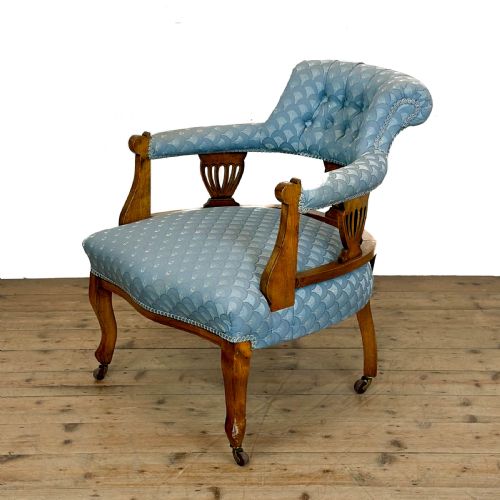


Blue Fabric Fireside Chair
A blue fabric fireside chair brings warmth and traditional comfort to a room, offering deep seating and upholstered frames built for winter evenings by the hearth.
Blue Fabric Fireside Chair
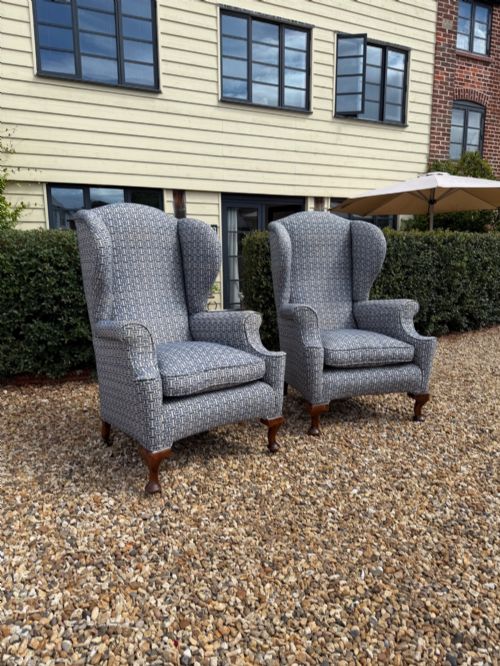
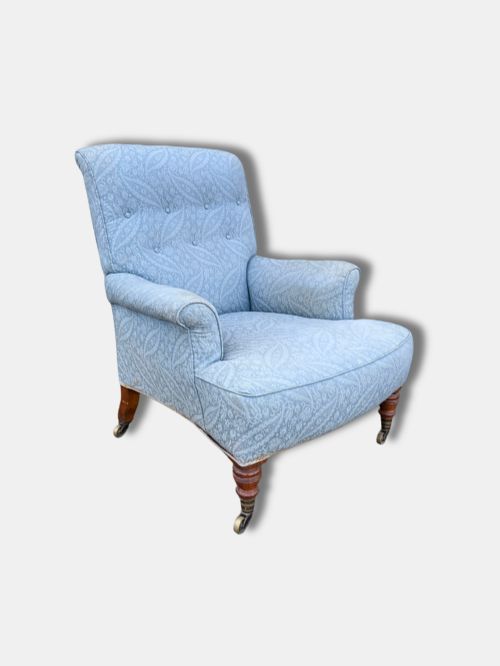
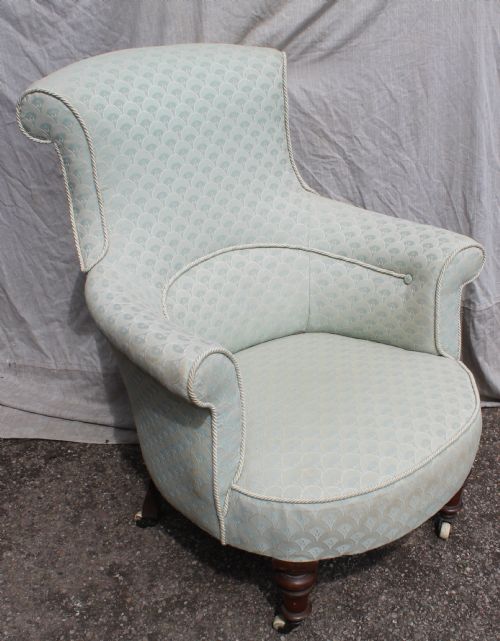
A blue fabric fireside chair is a traditional armchair designed for domestic comfort, commonly appearing in Victorian, Edwardian, and later twentieth-century forms. These pieces often take the shape of wing armchairs, library chairs, or club easy armchairs meant for sitting close to a fireplace.
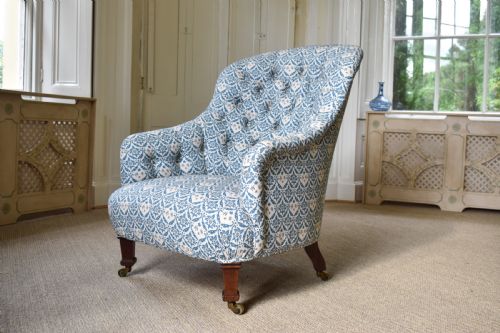
The selection on this page centres on sturdy wooden frames upholstered in blue textiles, ranging from simple cottons to buttoned velvet and ribbed fabrics. Makers of the period engineered these seats with high backs and supportive wings to shield occupants from drafts.
How they were made
Makers constructed the structural frames of these armchairs using solid hardwoods such as mahogany, walnut, and general timber. Craftsmen shaped the exposed wooden legs and arms through turning and hand carving, applying polished finishes to highlight the natural grain.
Upholsterers built deep padding onto webbing and springs, finishing the outer layer with heavy textile upholstery secured by brass tacks or piping. Button backing and pleated folds required precise hand stitching to maintain tension across the curves of the chair.
Listings feature mahogany, walnut, brass, and various textile upholstery fabrics across multiple nineteenth and twentieth-century periods.
What varies in quality
Quality in these armchairs depends largely on the integrity of the underlying timber frame and the complexity of the upholstery work. Pieces constructed by established workshops display tighter joinery, heavier gauge springs, and more durable textiles that withstand decades of use.
The refinement of the carved wooden details and the symmetry of the buttoning distinguish standard domestic seating from high-end library or club chairs. Original upholstery and maker stamps further elevate the standing of a piece among collectors.
Howard and Sons·Thomas Chippendale
The Blue Fabric Fireside Chair Glossary
- Wing armchair
- An upholstered seat featuring projecting side panels designed to trap heat from the fire and block draughts. These wings frame the upper back of the chair above scroll arms.
- Button back
- A traditional upholstery technique where tufts are pulled deep into the padding and secured with twine or buttons, creating a padded diamond pattern. This method keeps internal stuffing firmly distributed.
- Club easy armchair
- A low, deep-seated upholstered chair designed for relaxed lounging, originating in nineteenth-century smoking rooms and clubs. These chairs prioritise heavy cushioning over formal upright posture.
- Mahogany
- A dense, reddish-brown tropical hardwood utilised extensively for the exposed legs and frames of nineteenth-century seating. It accepts fine carving and holds structural joins securely.
Blue Fabric Fireside Chair: Frequently Asked Questions
How do I identify a Victorian armchair?
Victorian armchairs typically feature dark hardwood frames, deep button tufting, and heavy textile upholstery designed for formal domestic parlours. Their proportions tend to be generous, with sprung seats built for heavy daily use.
Inspect the underside of the chair for webbing, castors, and maker markings that help confirm the nineteenth-century manufacturing period.
What is a wingback chair used for?
Wingback chairs were historically placed near hearths to protect sitters from cold draughts while trapping warmth around the head and shoulders. Today, they serve as reading chairs or statement seating in living rooms.
The high back provides structural support for the neck during extended periods of sitting.
How should I clean blue fabric upholstery?
Regular gentle vacuuming removes surface dust from the textile weave before it settles into the padding beneath. For spot cleaning, consult the specific fabric type to determine whether dry cleaning or mild water-based solutions are suitable.
Avoid soaking the fabric, as moisture can penetrate the internal stuffing and weaken the wooden frame.
Are Edwardian armchairs different from Victorian ones?
Edwardian armchairs generally display lighter proportions and simpler silhouettes compared to the heavy, ornate forms of the Victorian era. Upholstery styles shifted toward brighter fabrics and more restrained woodwork as domestic tastes changed.
Makers of this later period often retained traditional joinery while streamlining the overall bulk of the chair.