



Blue Delftware Vases
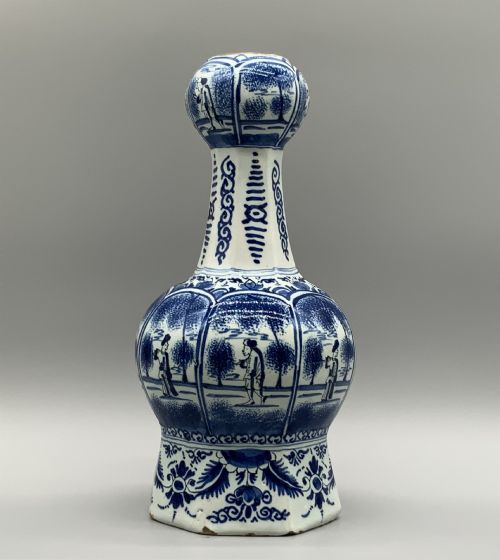
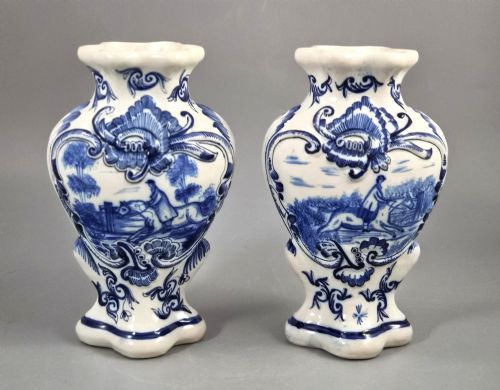
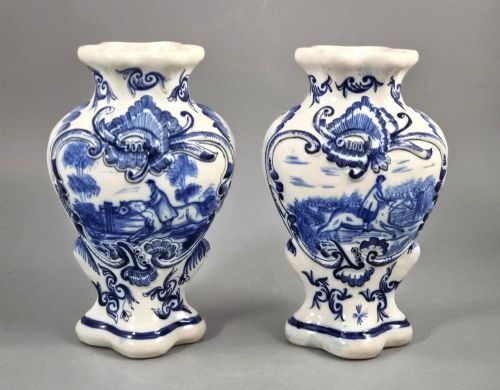
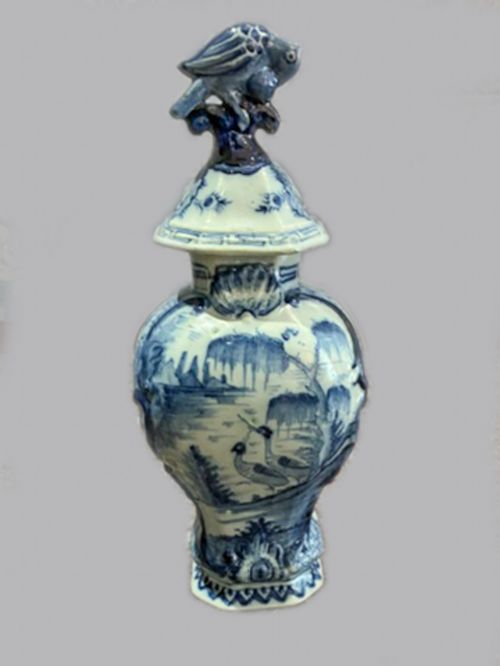
These blue delftware vases bring tin-glazed earthenware into the room, offering centuries of painted blue and white ceramic history.
Blue Delftware Vases
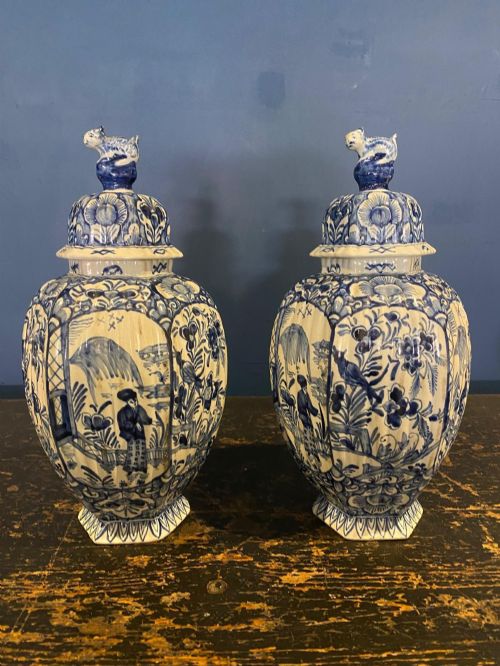
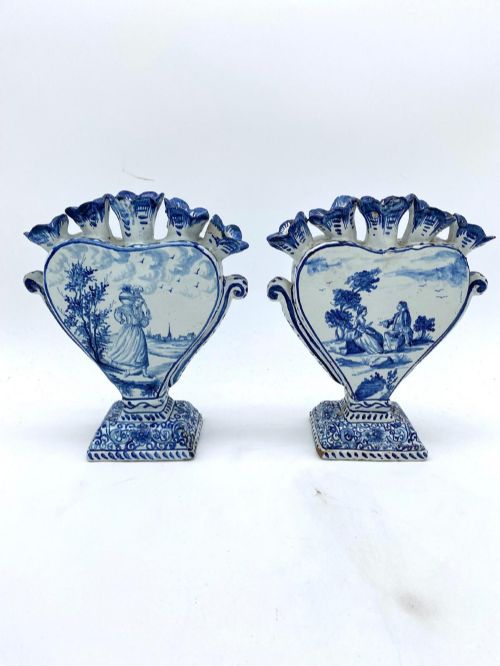
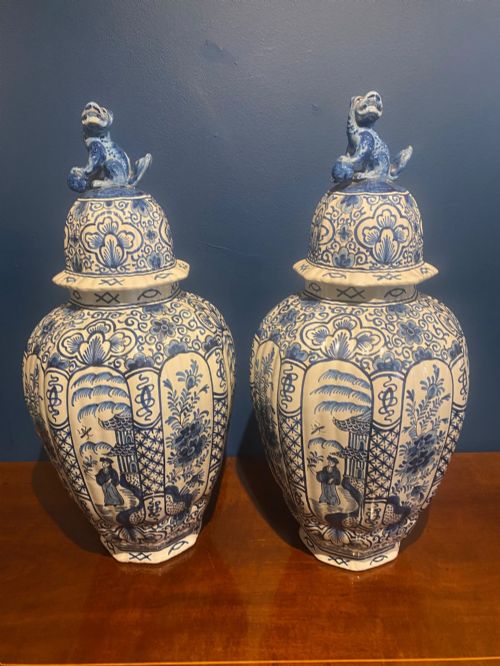
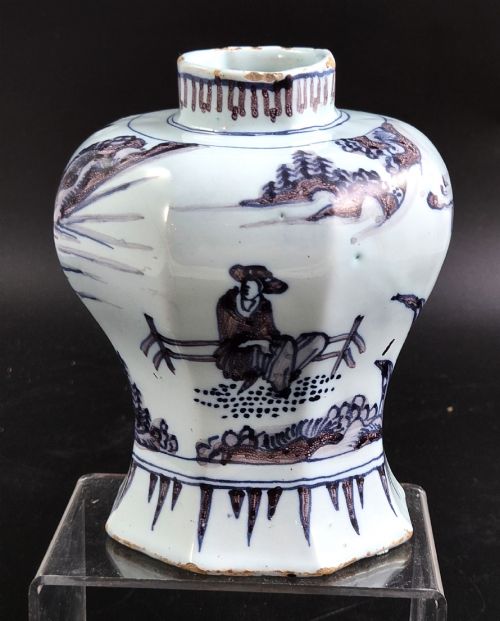
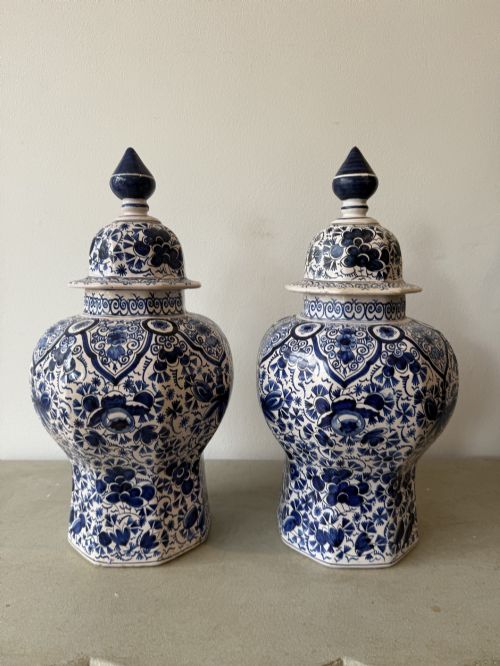
When you search for blue delftware vases, you enter a field spanning earthenware forms from the seventeenth to the twentieth century. These vessels range from simple baluster shapes and lidded jars to garden urns and table lamps converted from earlier vessels.
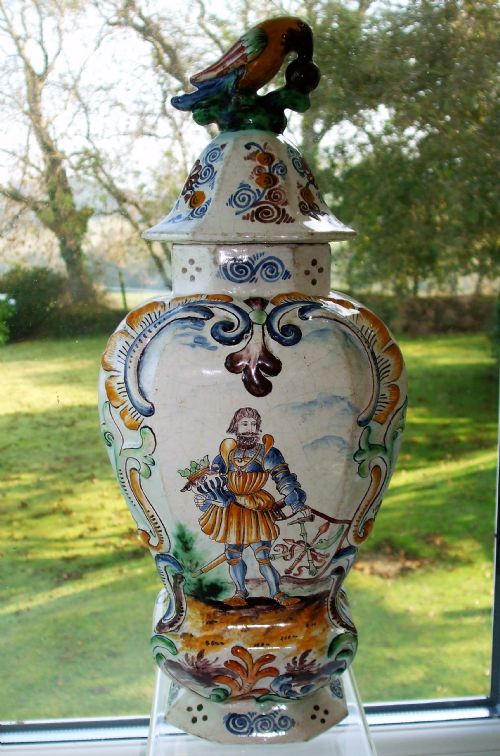
The selections here lean heavily toward eighteenth and nineteenth-century examples originating from Dutch and English kilns, alongside French faience interpretations. Pairs and single display pieces dominate the group, often showing classic blue and white painting alongside occasional polychrome or manganese touches.
How they were made
Makers formed these pieces from clay and earthenware, coating the bodies in an opaque tin glaze that provided a smooth white ground for cobalt blue pigments. Potters shaped baluster bodies, jars, and beakers on the wheel or in moulds before firing.
The tin glaze required careful kiln work to fix the pigments, which sometimes ran or pooled in the white surface to create depth. Certain larger forms incorporate brass fittings or later electrical conversions for domestic lighting.
Blue Delftware Vases Retail Price Guide 2026
Typical asking prices for blue delftware vases among the pieces listed under this phrase on Sellingantiques today, from the lower quarter to the upper quarter. They describe what is for sale here now, not the wider market.
Listings include eighteenth-century Lambeth pottery bottles alongside nineteenth-century French faience and seventeenth-century Dutch baluster vases.
What varies in quality
Quality rests in the crispness of the hand-painted brushwork and the stability of the tin glaze over the earthenware body. Early seventeenth and eighteenth-century pieces often display lively chinoiserie motifs and confident cobalt application that distinguish them from later factory output.
The preservation of the original glaze surface and any accompanying lids shapes the standing of a piece. Well-balanced potting and clean potting lines mark the upper tier of these glazed ceramic objects.
Fourmaintraux-Courquin·3 BELLS Drie klokken Factory·Louis Victor
The Blue Delftware Vases Glossary
- Tin-Glazed Earthenware
- Pottery covered with a lead glaze made opaque by the addition of tin oxide. This surface served as the canvas for blue cobalt painting.
- Baluster
- A vase form with a rounded body that tapers toward the neck and stands on a flared foot. This profile is common in seventeenth and eighteenth-century Dutch production.
- Faience
- European tin-glazed earthenware, particularly associated with French and Italian kilns making vessels in imitation of imported oriental porcelain.
- Chinoiserie
- European decorative motifs imitating Chinese artistic styles. Painters used these imaginary oriental landscapes and figures extensively on early blue and white vessels.
- Polychrome
- Decoration employing multiple colours rather than just blue and white. These pieces include manganese, yellow, and green pigments alongside the primary cobalt.
Blue Delftware Vases: Frequently Asked Questions
What periods do these vases cover?
The selection spans from the seventeenth century through the nineteenth century, with occasional twentieth-century examples.
Most items date from the eighteenth century, representing traditional Dutch and English earthenware production.
Are lids usually original?
Lidded vases and jars appear frequently, though surviving covers often show restoration or match the body from a similar period.
Checking the fit and glaze tone helps determine if the lid belongs to the vessel.
How do I live with lamp conversions?
Several pieces arrive adapted as table lamps, utilising historic vases mounted on bases with modern electrical wiring.
These converted objects allow you to display antique ceramics safely within contemporary living spaces.
What is the difference between delft and faience?
Both terms describe tin-glazed earthenware, with delft traditionally referring to Dutch production and faience commonly used for French and other continental wares.
Both types rely on a white tin glaze painted with cobalt blue designs.