



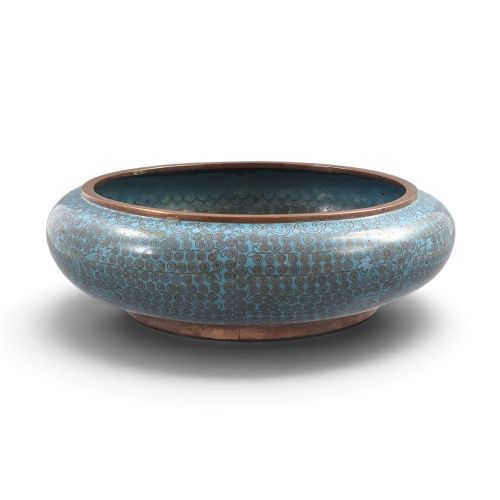
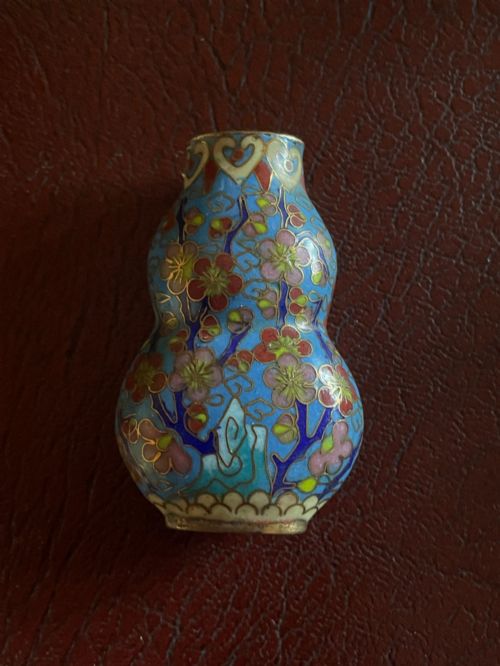


Blue Cloisonne Vessel
These blue cloisonne vessel pieces bring intricate wirework and deep enamel colour into a room, offering both traditional craftsmanship and striking decorative presence.
Blue Cloisonne Vessel
A blue cloisonne vessel represents a diverse category of metalwork objects fashioned with enamelled wire cells, most frequently encountered as vases, ginger jars, and decorative bowls from the nineteenth and early twentieth centuries. These items draw upon Qing Dynasty and Meiji Period traditions, spanning Chinese export decorative art and Japanese craftsmanship.
The selection here includes miniature vases, lidded koro incense burners, scholar's brush washers, and archaistic wine vessels such as jue cups. Buyers seeking this phrase typically encounter deep blue enamel grounds decorated with floral motifs or dragons, shaped in copper, bronze, or brass bodies.
How they were made
The creation of these pieces begins with a metal base of copper, bronze, or brass, upon which thin metal wires are soldered to form raised partitions known as cloisons. Craftsmen then fill the resulting cells with coloured enamel pastes before firing the object at high temperatures.
Subsequent grinding and polishing smooth the metal ribbons and glass paste into a unified surface, sometimes finished with gilt bronze highlights or silver components. Materials such as jade rims occasionally complement the enamelled metal body.
Blue Cloisonne Vessel Retail Price Guide 2026
Typical asking prices for blue cloisonne vessel among the pieces listed under this phrase on Sellingantiques today, from the lower quarter to the upper quarter. They describe what is for sale here now, not the wider market.
Listings feature items dated across the nineteenth century, nineteen-hundred, nineteen-ten, nineteen-twenty, and nineteen-fifty, alongside Edwardian examples.
What varies in quality
Quality in a blue cloisonne vessel depends on the precision of the wirework and the density of the enamel, where finer cloisons create more intricate and refined pictorial designs. The weight of the metal body and the uniformity of the polished surface also distinguish finer examples from simpler production.
The complexity of the form dictates distinction, ranging from standard ginger jars to elaborate archaistic wine vessels or highly detailed dragon ashtrays. The depth of the blue ground and the clarity of the firing further separate standard decorative items from superior works.
The Blue Cloisonne Vessel Glossary
- Cloisonne enamel
- A metalwork technique where flat wire is soldered to a metal base to create cells filled with enamel paste. This method produces intricate patterns defined by thin metal outlines.
- Koro
- A traditional incense burner featuring a bowl, a pierced lid, and often three or more feet. These vessels are frequently rendered in bronze and cloisonne enamel.
- Archaistic
- A style that consciously imitates ancient forms and motifs from earlier historical periods. Pieces of this nature often reference ritual bronzes.
- Champleve enamel
- A technique where troughs or cavities are gouged into a metal surface and filled with enamel rather than using soldered surface wires. This process yields robust, recessed designs.
- Jue
- An ancient style of tripod wine vessel featuring an outward-flaring spout and two upright posts. These shapes appear in nineteenth-century interpretations using enamel and bronze.
Blue Cloisonne Vessel: Frequently Asked Questions
How are blue cloisonne vessels cleaned?
Dust these pieces gently with a soft, dry cloth to protect the delicate metal wires and enamel surface. Avoid chemical dips or abrasive cleaners that can damage the polish.
Keep them away from direct moisture and prolonged sunlight to preserve the integrity of the metal alloy and the vibrancy of the blue enamel.
What periods do these vessels come from?
The examples available span the nineteenth century through the mid-twentieth century, including pieces from the Qing Dynasty and the Meiji Period. Edwardian and early twentieth-century interpretations also appear within this group.
Dates are generally attributed to broader eras like the eighteen-fifties or nineteen-hundreds based on style, construction, and materials.
Where were these pieces made?
Production centres for these items are historically rooted in China and Japan, reflecting distinct regional techniques in metalwork and enamel decoration. Chinese export works and Japanese Meiji creations both feature prominently in the selection.
Beijing and other major manufacturing hubs produced items ranging from scholar's brush washers to large decorative vases for international markets.
What metals form the base of these vessels?
Foundational materials primarily include copper, brass, and bronze, sometimes enhanced with silver or gilt bronze components. These metals provide a rigid structure capable of supporting the heavy glass pastes during firing.
Heavier items often utilise a substantial bronze or copper-alloy core, while smaller pieces may employ lighter brass frameworks.