


Blue Chinoiserie Lamp
These blue chinoiserie lamps transform historic porcelain vessels and lacquered woodwork into striking interior lights.
Blue Chinoiserie Lamp
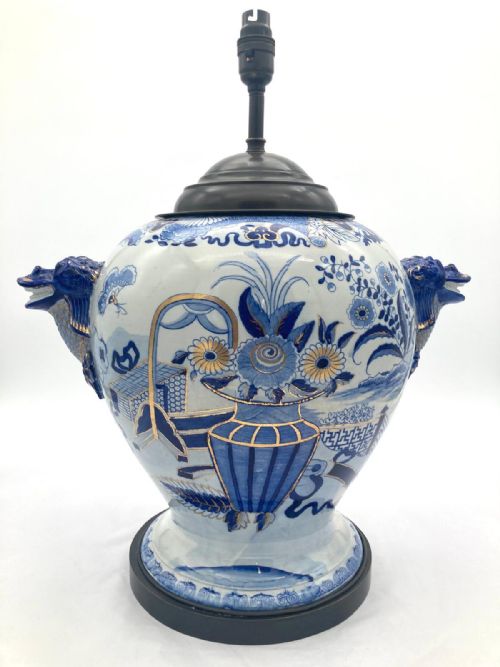
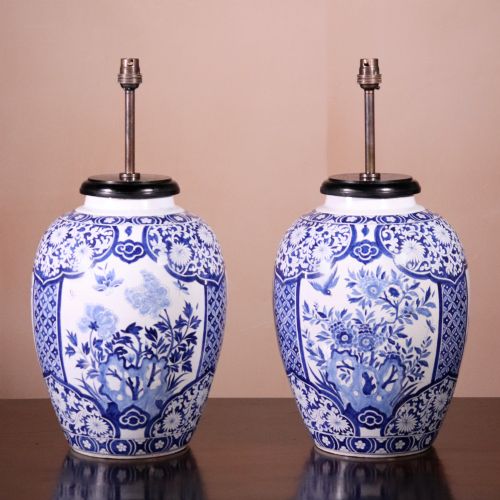
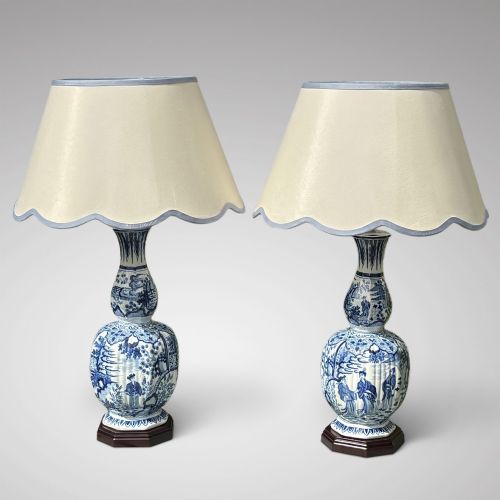
A blue chinoiserie lamp brings together decorative ceramics and converted wooden standards with distinct Asian and European design influences. Buyers encounter table lamps, floor lamps, and standard lamps shaped from earlier vases, ginger jars, and torchere columns.
The pieces span several periods, drawing heavily on eighteenth-century, nineteenth-century, and early twentieth-century production. Many items originate from conversions where historic vases or lacquered columns receive electrical fittings and handmade shades.
Table lamps dominate the selection, frequently appearing in pairs formed from Dutch Delftware, Chinese porcelain, and Japanese Imari vessels. Floor lamps and standard lamps provide taller options, often utilising blue lacquered wood with painted chinoiserie motifs.
What varies in quality
The standard of the underlying ceramic vessel or wooden standard dictates the overall character of the piece. Fine porcelain bodies with crisp blue and white hand-painting sit above simpler earthenware or decalcomania applications.
The quality of the metal mounts, such as cast ormolu or gilt bronze, alters the presence of the lamp. Finely chased metalwork and tailored silk shades demonstrate higher craftsmanship than standard brass fittings.
Materials span porcelain, earthenware, brass, ormolu, and wood, reflecting both Asian export wares and European conversions.
Hicks and Meigh
The Blue Chinoiserie Lamp Glossary
- Chinoiserie
- European decorative style reflecting Chinese artistic influences. Artisans applied these painted motifs to lacquered furniture and ceramics.
- Ormolu
- Gilt bronze mounts applied to furniture and ceramics. Makers cast and finished these decorative metal fittings by hand.
- Imari
- Japanese export porcelain decorated in underglaze blue and iron red. These pieces often incorporate gilt highlights over the ceramic body.
- Torchere
- Tall wooden standard lamp or candle stand. Makers turned these timber columns to support lighting fixtures.
Blue Chinoiserie Lamp: Frequently Asked Questions
What periods do these lamps come from?
The selection includes pieces originating from the eighteenth century, the nineteenth century, and the early twentieth century. Makers converted older vessels and lacquered standards during these later eras.
Examples span specific dates including the Regency and Edwardian periods. Each item reflects the manufacturing techniques of its original era combined with later electrical adaptation.
Are these lamps converted from old vases?
Many table lamps begin life as historic porcelain vases, ginger jars, or Delftware vessels. Workshops adapt these ceramic pieces by adding electrical wiring and compatible fittings.
Floor lamps and standard lamps typically utilise turned wooden columns rather than ceramic vases. Both types preserve historic decorative elements within a functional lighting piece.
What materials are used in these lamps?
Ceramic and porcelain form the primary bodies of the table lamps, alongside earthenware and ironstone. Metal additions include brass, ormolu, and gilt bronze mounts.
Standard lamps and floor lamps employ wood finished with blue lacquer. Fabric and silk elements complete the lampshades.
How do I style a blue chinoiserie lamp?
These lamps function as focal points on side tables, desks, or living room surfaces. Their blue and white palettes coordinate with neutral interiors and traditional room schemes.
Taller floor lamps suit corners and larger spaces where vertical height is required. The handmade shades diffuse light while highlighting the painted ceramic or lacquered details.