
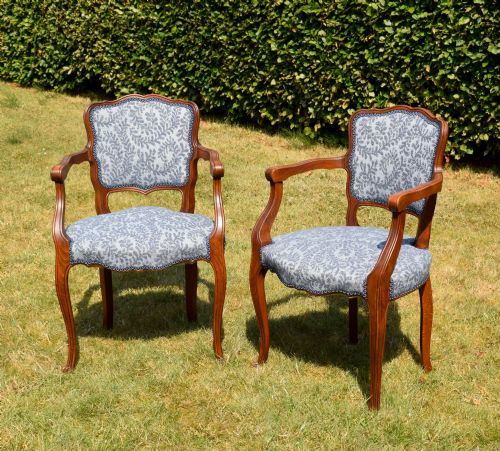
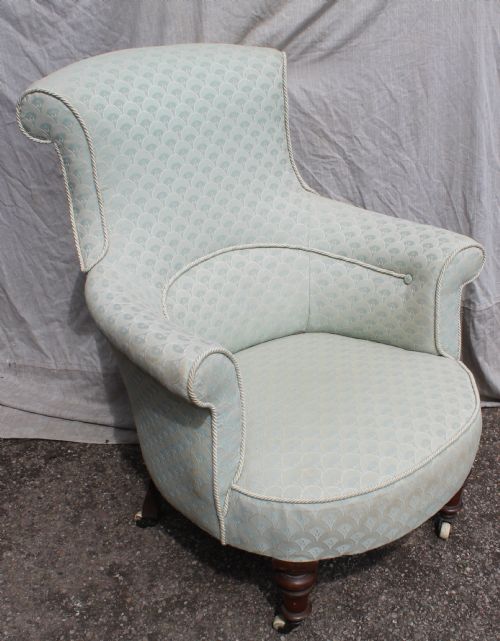
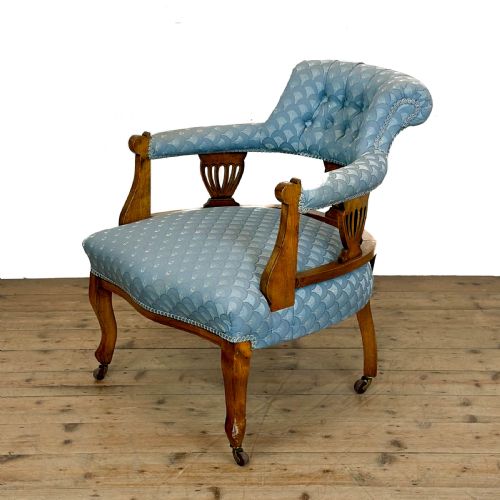


Blue Bedroom Armchair
A blue bedroom armchair brings softness and colour to a private space, offering a comfortable seat shaped by Victorian, Edwardian and later traditions.
Blue Bedroom Armchair
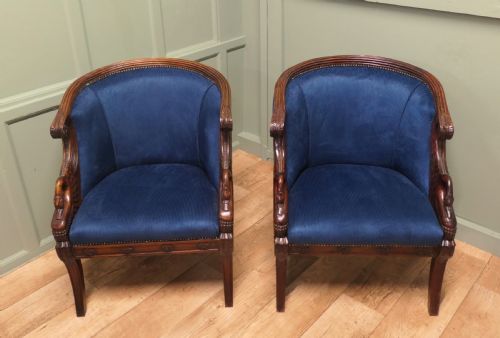
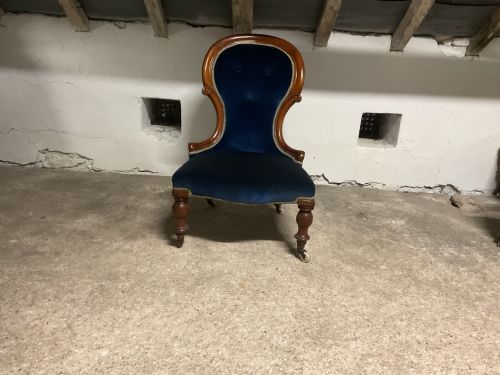
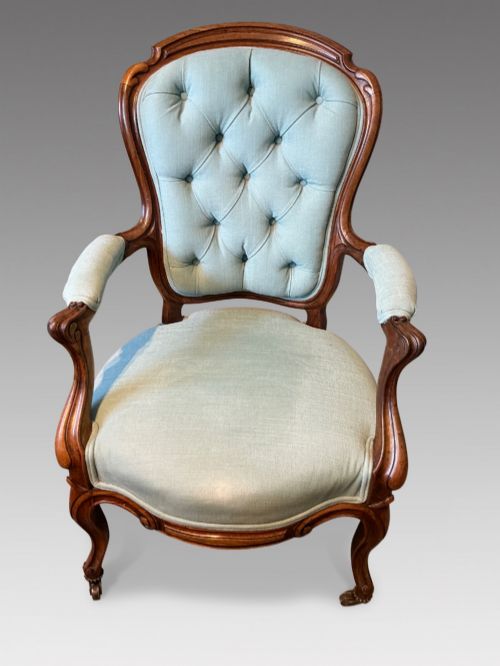
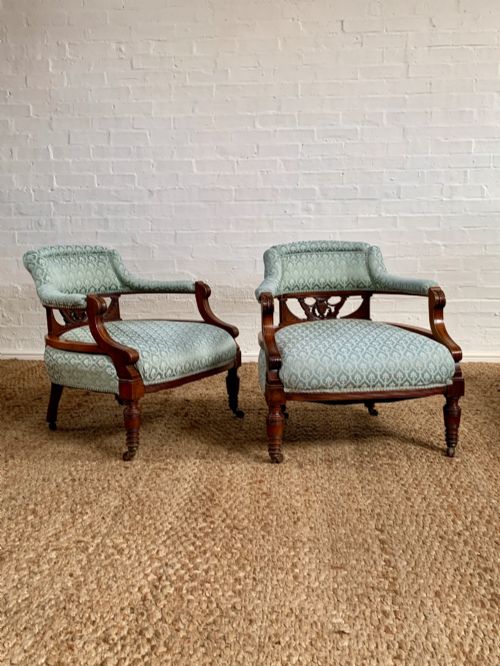
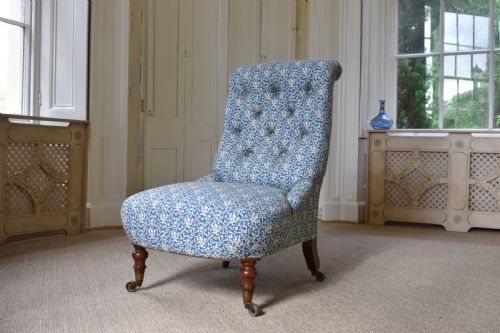
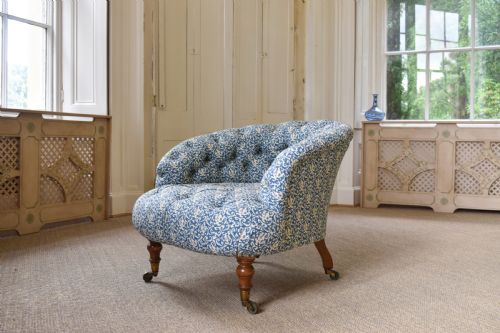
A blue bedroom armchair is a compact seat designed for private chambers, dressing rooms and firesides, appearing frequently as a nursing chair, slipper chair or tub chair. These pieces emerge from the nineteenth century through the Edwardian era and into the early twentieth century, taking forms such as low-slung occasional chairs and button-backed fireside seats.
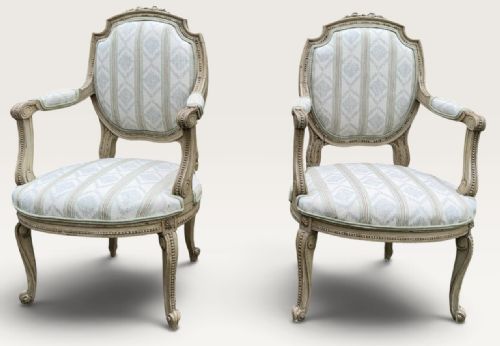
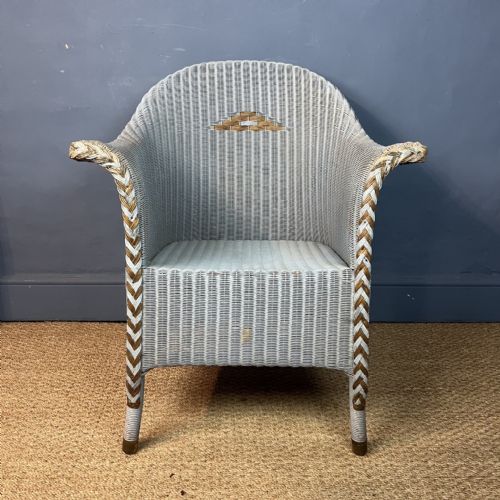
The selections on this page span Victorian and Edwardian work alongside French styles like Louis XV and Louis XVI, as well as later Art Deco and Lloyd Loom pieces. Materials range from mahogany, walnut, rosewood and timber frames to brass fittings and upholstered texturing in velvet and fabric.
How they were made
Frames are constructed from hardwoods including mahogany, walnut, rosewood and general timber, occasionally accented with carved detail, giltwood or inlaid mahogany. Iron and brass also feature in structural elements and castors.
Upholstery relies on traditional textiles, notably velvet and fabric, often finished with button backs, pleating or piping. Lloyd Loom construction employs twisted paper wire weaves over sturdy frames for a lighter aesthetic.
Periods represented span the nineteenth century, Victorian era, Edwardian period, Regency and early twentieth-century Art Deco.
What varies in quality
The standard of a blue bedroom armchair rests on the integrity of its wooden frame and the precision of its carved or inlaid details, from Edwardian mahogany inlay to Victorian walnut carving. Finer pieces demonstrate careful joinery and well-balanced proportions designed for comfortable private use.
Upholstery execution distinguishes workshop output, particularly in pieces by makers such as Howard and Sons where structured comfort meets enduring textile choices like velvet. Original paint finishes and retained period fabric further elevate the character of these seating forms.
Howard and Sons
The Blue Bedroom Armchair Glossary
- Nursing chair
- A low-seated armchair originally designed for feeding infants or assisting with personal grooming in Victorian bedrooms. They often feature generous padding and an absence of high arms.
- Slipper chair
- A low-framed, deep-seated bedroom chair traditionally used while putting on shoes or stockings. These items sit close to the floor for ease of movement.
- Tub chair
- An armchair characterised by a continuous curved back and arms forming a single semi-circular enclosure. They provide snug support in small rooms.
- Giltwood
- Timber coated with a thin layer of gold leaf or gilt pigment. This finish appears on French style framework.
- Button back
- An upholstery technique where buttons are pulled deep into the padding to create a quilted diamond pattern. This method provides firm tension across the backrest.
Blue Bedroom Armchair: Frequently Asked Questions
Where should I place a bedroom armchair?
These compact chairs suit dressing rooms, reading corners or beside a fireplace where space is limited. Their low profiles allow them to sit comfortably beneath windows or at the foot of a bed.
Because they originate in Victorian and Edwardian chambers, they fit naturally into private residential spaces requiring an accessible seat.
What is the difference between a nursing chair and a slipper chair?
Nursing chairs are typically constructed with low seats and supportive high backs to assist with infant care or dressing. Slipper chairs focus on a low, deep-seated design originally intended for changing footwear.
Both forms belong to the bedroom chair family and share modest proportions compared to standard parlour armchairs.
How do I identify a Victorian bedroom armchair?
Victorian examples frequently utilise mahogany, walnut or rosewood frames with button-backed upholstery, turned legs and occasionally brass castors. They often take the form of tub chairs, nursing chairs or open armchairs.
Stylistic influences range from plain wood structures to ornate carved walnut or Rococo Revival details.
Are these chairs suitable for daily seating?
Period bedroom armchairs are built for lighter domestic use in private chambers rather than heavy living room traffic. Their smaller frames and deep upholstery provide comfortable resting places for reading or dressing.
Evaluating the internal webbing and padding helps determine their comfort level for contemporary daily use.