


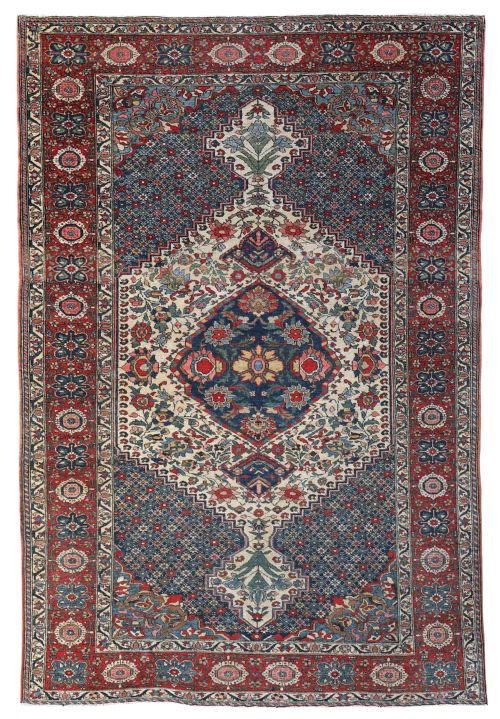


Blue Bakhtiari Rug
A blue bakhtiari rug brings the rich nomadic and village weaving traditions of western Persia straight to your floor.
Blue Bakhtiari Rug
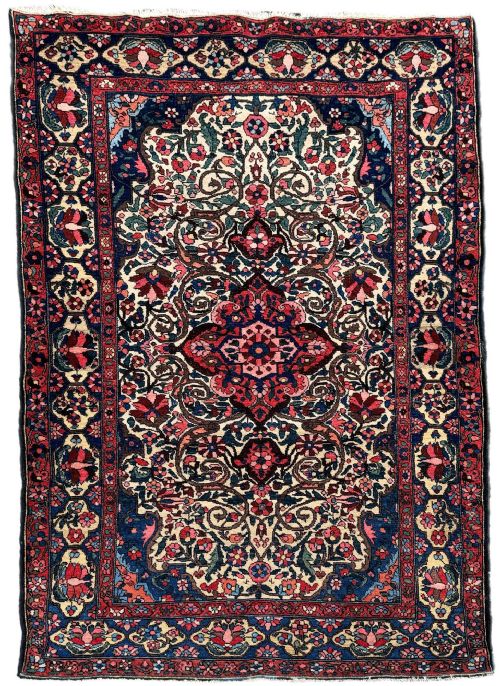
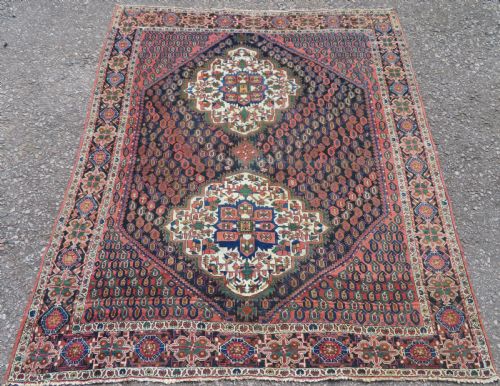
A blue bakhtiari rug represents the textile heritage of the Chahar Mahal region in western Persia. Buyers searching for a blue bakhtiari rug encounter woven works produced by tribal and village makers across several decades.
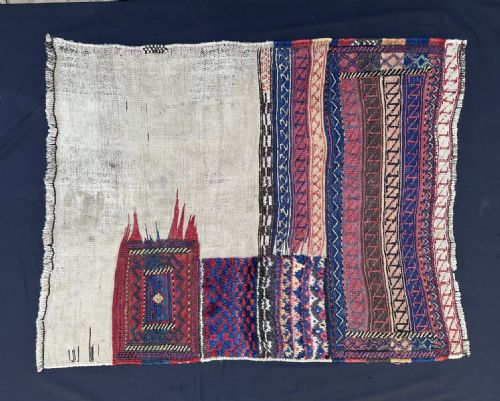
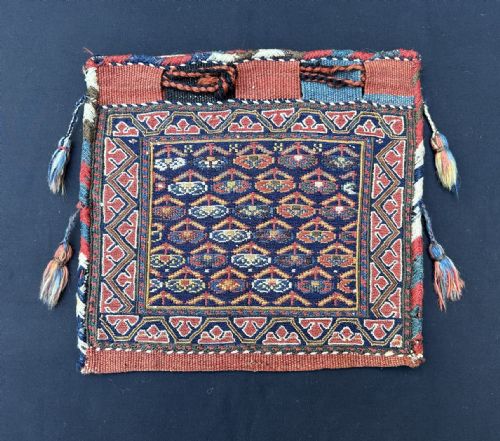
The pieces appearing on this page span the late nineteenth century through to the early decades of the twentieth century. These textile formats include area rugs, corridor carpets, runners, and specialised tribal objects such as grain sacks and saddle bags.
Persian tribal and traditional styles dominate the selection, often taking the form of village rugs carrying floral medallion designs. Each rug connects the modern interior to the historic weaving centres of western Persia.
Materials and construction methods
Makers utilised wool and hand-spun wool for the pile, pairing these soft fibres with cotton foundations for structural stability. Certain nomadic pieces also incorporate goat hair along the edges for added durability.
Weavers employed natural dyes to colour the wool, producing deep blue fields and intricate multicoloured motifs. The combination of hand-spun yarn and natural colourants gives each surface its distinct tactile depth.
Nomadic weavers stored their grain and bread inside functional textiles that now grace modern floors as fine art.
Judging the quality of the weave
Quality rests upon the fineness of the knotting and the crispness of the geometric or floral design. Tighter structures yield greater longevity under foot.
The subtlety and depth of the natural dyes separate standard village pieces from exceptional tribal examples. Variations in wool preparation also influence the handle and resilience of the pile.
The Blue Bakhtiari Rug Glossary
- Chahar Mahal
- The high mountain valley region in western Persia where Bakhtiari tribes and village weavers produced these textiles. This geographic area is renowned for distinct tribal designs.
- Tacheh
- A woven wheat sack or storage bag made by nomadic groups. These functional textiles often display remarkable tribal iconography.
- Sofreh
- A flatwoven spread used for kneading dough or serving meals in nomadic and village households. They demonstrate utility combined with traditional artistry.
- Runner
- A long, narrow carpet format designed for corridors or narrow spaces. Bakhtiari runners provide dramatic linear presence.
- Natural Dyes
- Colourants derived from plants, roots, and minerals rather than synthetic compounds. They age gracefully over decades of light exposure.
Blue Bakhtiari Rug: Frequently Asked Questions
How do I care for my rug?
Protect the wool pile by vacuuming gently without a rotating brush roll. Keep the textile away from direct, harsh sunlight to preserve the natural dyes.
Rotate the rug periodically to ensure even wear across high-traffic areas and consult a specialist in antique textiles for professional cleaning.
What is a tribal saddle bag?
Nomadic weavers constructed heavy-duty bags to carry possessions during seasonal migrations. Only half faces or fragments survive from these functional objects.
These pieces showcase dense village knotting and concentrated patterns in a compact format, making them ideal for wall display.
How do I distinguish village from tribal pieces?
Village pieces often follow more structured floral medallion layouts developed for broader commerce. Nomadic works display freer, highly geometric tribal motifs.
Materials also offer clues, as nomadic items frequently integrate sturdy goat hair alongside the standard wool and cotton.