


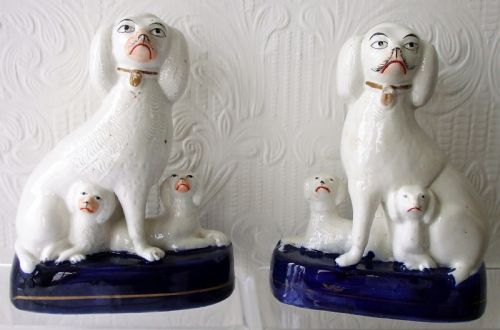


Blue and White Figurine
A blue and white figurine brings hand-painted cobalt detail to your shelf, ranging from Staffordshire dogs to Continental portrait groups.
Blue and White Figurine
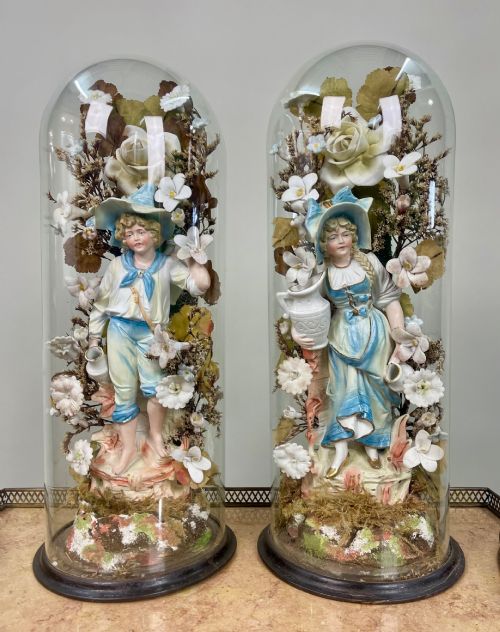
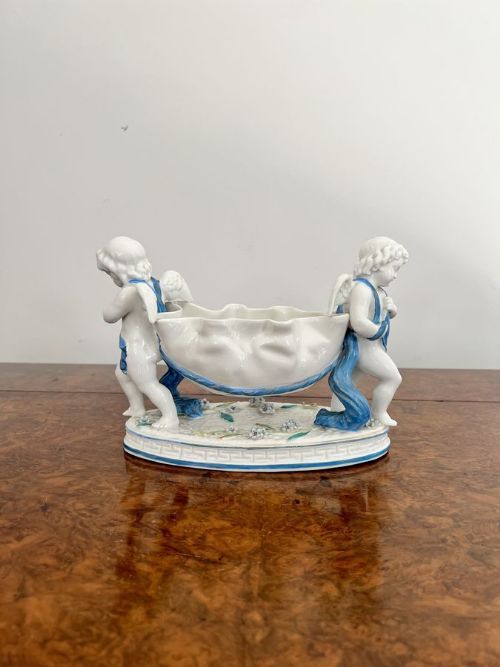
A blue and white figurine encompasses a wide spectrum of ceramic sculpture, from Victorian Staffordshire flatbacks to Continental porcelain groups. These pieces depict animals, historical figures, mythological scenes, and literary characters rendered in cobalt pigments.
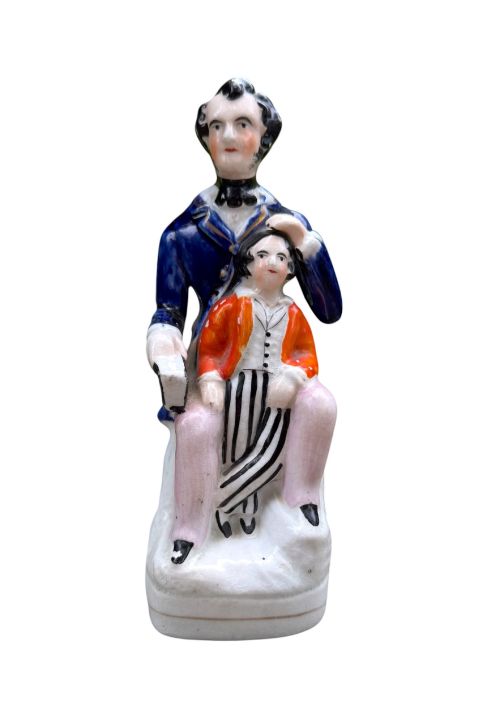
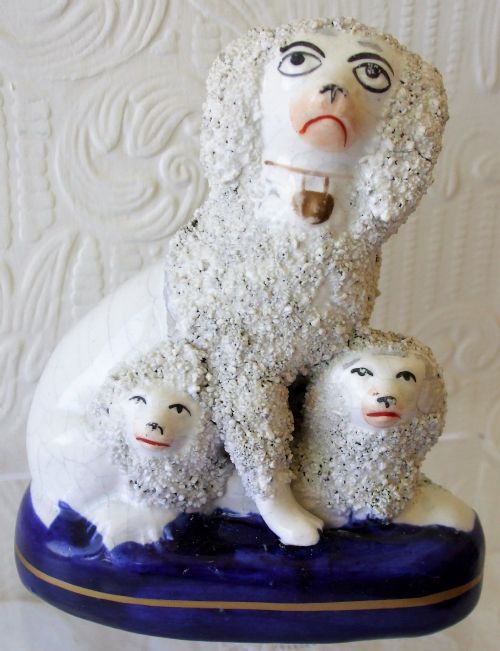
Staffordshire pottery figures form a large part of what you will encounter here, often modelled as pairs of poodles, spaniels, or portrait groups of political figures. Alongside these English earthenware pieces sit Continental porcelain figures and Japanese porcelain examples from the nineteenth century.
Forms extend beyond standalone shelf ornaments to include functional objects such as inkwells, watch-holders, quill holders, and table lamps. Each category reflects the domestic tastes of its period, whether produced in Staffordshire potteries or European porcelain manufactories.
Materials and production methods
Potters and modellers utilised earthenware, porcelain, and biscuit porcelain, applying cobalt blue underglazes and enamel paints before kiln firing. Earthenware figures like those from Staffordshire received lead glazes to achieve a glossy surface, whilst French and German porcelain pieces often favoured unglazed biscuit finishes.
Moulds shaped the bodies of these figures, followed by hand-finishing details such as applied clay encrusting, gold leaf highlights, and delicate lace effects. Cobalt oxide provided the primary blue pigment for the painted garments, decorative bases, and floral motifs.
Blue and White Figurine Retail Price Guide 2026
Typical asking prices for blue and white figurine among the pieces listed under this phrase on Sellingantiques today, from the lower quarter to the upper quarter. They describe what is for sale here now, not the wider market.
Listings feature earthenware, porcelain, and biscuit porcelain across the nineteenth and early twentieth centuries.
Distinctions in quality
Quality rests upon the crispness of the moulding and the skill of the brushwork in the cobalt pigment. Superior pieces exhibit precise facial expressions, clean lines, and careful application of enamel and gold leaf.
Vion et Baury·Ernst Bohne Söhne·Chantilly·Meissen·Royal Worcester
The Blue and White Figurine Glossary
- Staffordshire flatback
- A pottery figure designed to be viewed from the front, with an unpainted or minimally glazed flat reverse intended for placement against a wall.
- Biscuit porcelain
- Unglazed ceramic fired to a hard, matte finish that resembles fine marble and highlights sculptural detail.
- Underglaze
- Pigment applied to the ceramic body before the application of a clear glaze and subsequent firing, protecting the colour from wear.
- Enamel
- Opaque glass-fired paint applied over the glaze to add secondary colours like gold, red, or green to the blue base.
- Earthenware
- Porous pottery fired at lower temperatures than porcelain, forming the heavy body typical of nineteenth-century English animal figures.
Blue and White Figurine: Frequently Asked Questions
What periods do these figures come from?
The listings span the eighteenth, nineteenth, and early twentieth centuries, with a strong concentration of Victorian Staffordshire pieces from the middle decades of the nineteenth century.
Alongside English earthenware, you will find Continental porcelain from the nineteenth century and Japanese ceramics from the Edo and Meiji periods.
How were these figures used in period homes?
Many served purely as decorative mantelpiece ornaments, often arranged in pairs on either side of a clock or centrepiece.
Others combined ornament with function, serving as inkwells, watch-holders, quill holders, table lamps, and cigarette strikers.
How do I distinguish Staffordshire pottery from porcelain?
Staffordshire pottery has a heavier earthenware body, often finished with a glossy lead glaze and a flat, unpainted back designed to face a wall.
Porcelain pieces, whether English, French, or German, are whiter, harder, fully glazed on all sides, or finished in matte biscuit porcelain.
Are these figures usually found as pairs?
Many animal figures, particularly Staffordshire poodles, spaniels, and cows, were manufactured and sold as symmetrical pairs for mantelpiece display.
Human figures and portrait groups more commonly appear as single pieces, though matched groupings of musicians or allegorical figures also occur.