




Blue and White Drainer
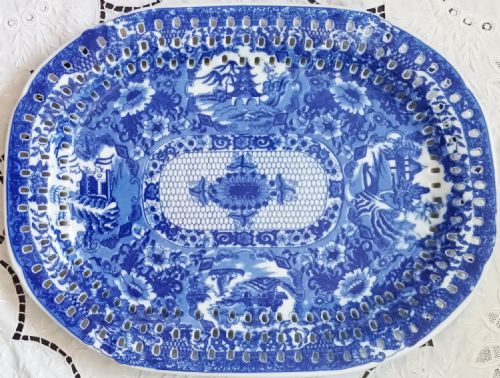
A blue and white drainer is a ceramic insert designed to sit inside a meat platter, and these pieces are sought after for their intricate transfer-printed scenes and practical history at the dining table.

Blue and White Drainer
A blue and white drainer is a table accessory designed to fit snugly inside a serving dish, lifting joints of meat above their juices. You will most frequently encounter nineteenth-century English earthenware and ironstone examples on this page, often featuring printed patterns.
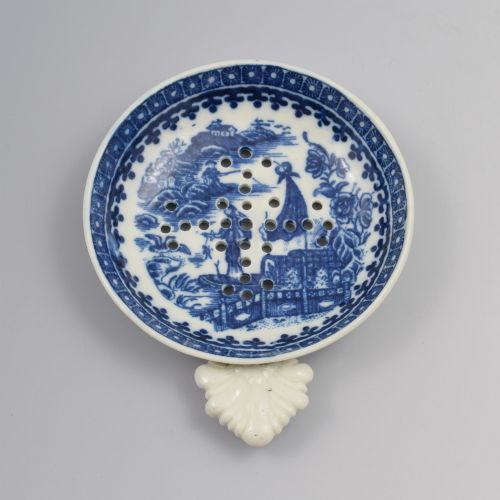
The selection ranges from eighteenth-century soft-paste porcelain and Chinese export pieces to sturdy Regency ironstone drainers. Forms include dedicated platter drainers, egg drainers, and complete sets comprising a meat platter and drainer together.
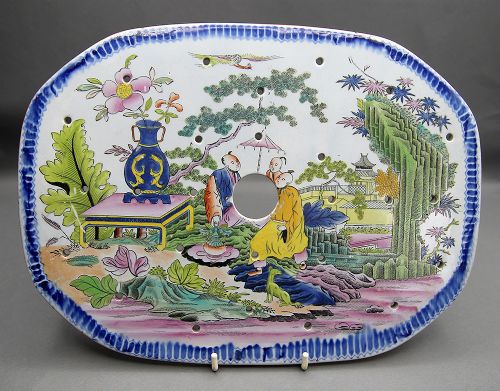
Designs draw heavily on Chinoiserie motifs, willow patterns, and classical English country scenes rendered in cobalt blue. These ceramics bridge the gap between utility and display, serving as functional tableware that doubles as decorative art.
How they were made
Makers fashioned these pieces from earthenware, pearlware, ironstone, and porcelain, applying the blue decoration either by hand painting or via transfer printing. Potters pierced the damp clay bodies with geometric patterns, slots, or net designs before firing to ensure liquid could drain freely beneath the meat.
Glaze was applied over the ceramic body and cobalt pigment, sealing the surface and producing the characteristic glossy finish seen across eighteenth and nineteenth-century examples. Ironstone provided a heavier, more durable body suitable for large serving platters, while soft-paste porcelain suited smaller items like egg drainers.
Listings feature items spanning the eighteenth and nineteenth centuries, incorporating periods such as the Regency and Georgian eras alongside Chinese export and Victorian styles.
What varies in quality
Quality in a blue and white drainer lies in the crispness of the transfer print and the precision of the piercing through the ceramic body. Finer pieces display sharp cobalt details without blurring or running in the glaze, alongside cleanly cut drainage holes that form deliberate geometric or net patterns.
The choice of body material also marks a distinction, with translucent porcelain and early soft-paste pieces sitting at the finer end of the scale, while robust ironstone and earthenware cater to heavier dining service. Maker attribution, such as works bearing recognizable factory marks or coats of arms, elevates the standing of an individual piece.
Caughley·Mason·Minton·Davenport·Worcester
The Blue and White Drainer Glossary
- Transfer printing
- A method of applying a design to pottery by engraving a copper plate, pulling the image on tissue paper, and pressing it onto the ceramic biscuit before glazing. This technique allowed for repeatable, intricate blue patterns on mass-produced tableware.
- Ironstone
- A heavy, durable type of earthenware patented in the nineteenth century to rival true porcelain. It resists chipping and staining well, making it a common material for large meat platters and drainers.
- Pearlware
- A refined earthenware developed in the late eighteenth century featuring a clear glaze with a slight bluish tinge that pooled in crevices. It bridged the gap between creamware and later white ironstone.
- Soft-paste porcelain
- A ceramic composition made from clay mixed with glass frit and other materials, fired at lower temperatures than true hard-paste porcelain. Eighteenth-century factories utilised it extensively for delicate items before standard porcelain formulas took over.
Blue and White Drainer: Frequently Asked Questions
What is a blue and white drainer used for?
These ceramic inserts sat inside large serving platters during meals to elevate roast meats above their accumulated juices and fat. This kept the meatpresentable and made carving at the table cleaner.
Over time, culinary habits changed and these pieces transitioned from active kitchenware to decorative display items collected for their blue and white transfer-printed patterns.
How do I display a meat drainer?
Because these items are flat and pierced with intricate patterns, they mount well on walls using specialised plate hangers or stand upright on dressers and sideboards. Displaying them allows the blue and white transfer designs to be fully appreciated.
Many collectors pair a drainer with its matching platter, though displaying the pierced insert on its own highlights the geometric craftsmanship of the piercing.
How do I tell an 18th-century drainer from a 19th-century one?
Eighteenth-century examples often employ soft-paste porcelain or pearlware bodies with hand-painted or early transfer-printed motifs such as Caughley or Chinese export designs. They tend to feel lighter and more delicate in the hand.
Nineteenth-century pieces frequently utilise heavier ironstone or dense earthenware, bearing crisp transfer prints in patterns like willow, pheasant, or Chinoiserie ruins from makers such as Minton and Davenport.
Are all drainers made of ironstone?
No, material selection varied across different periods and factories. Earlier pieces from the eighteenth century were often formed from soft-paste porcelain or pearlware.
Heavier ironstone and earthenware became dominant in the nineteenth century as demand grew for durable, large-scale meat platters and matching drainers suitable for heavy family dinners.