






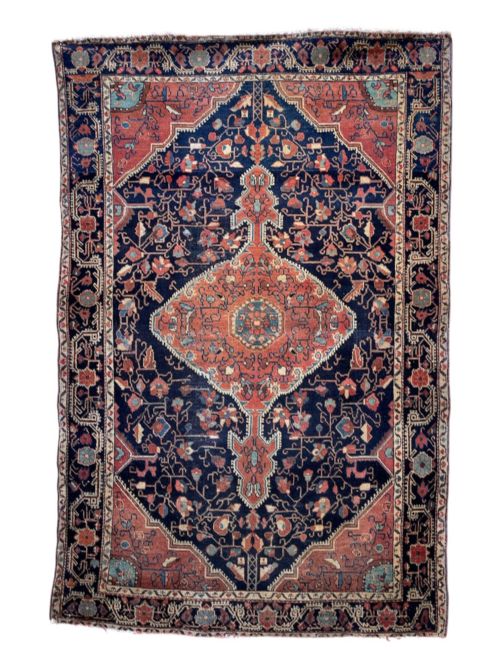


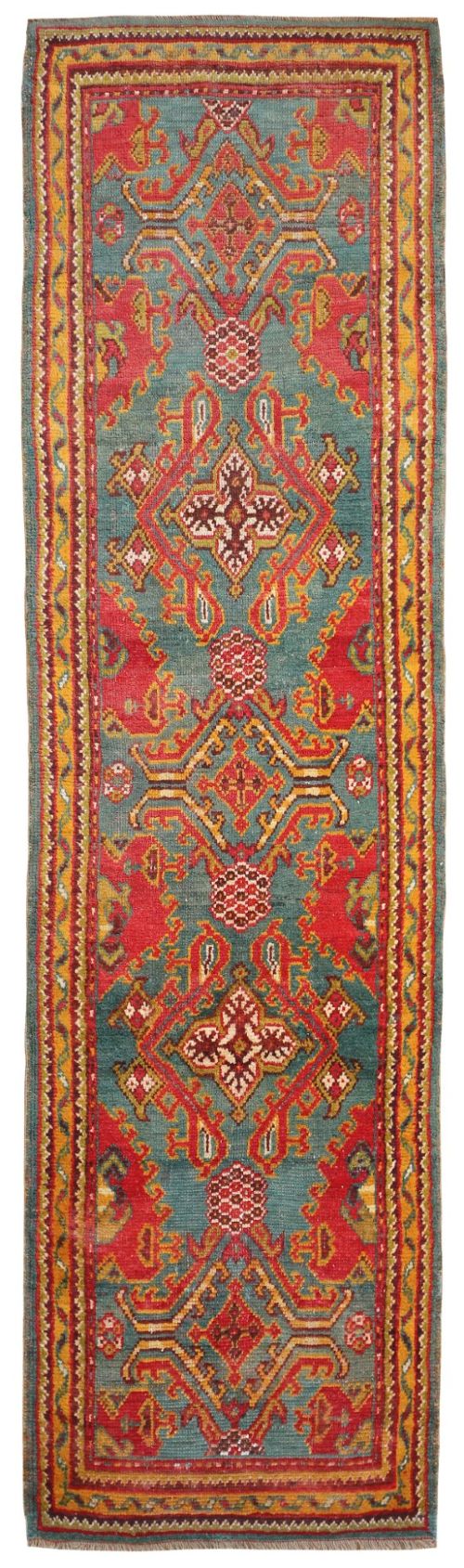
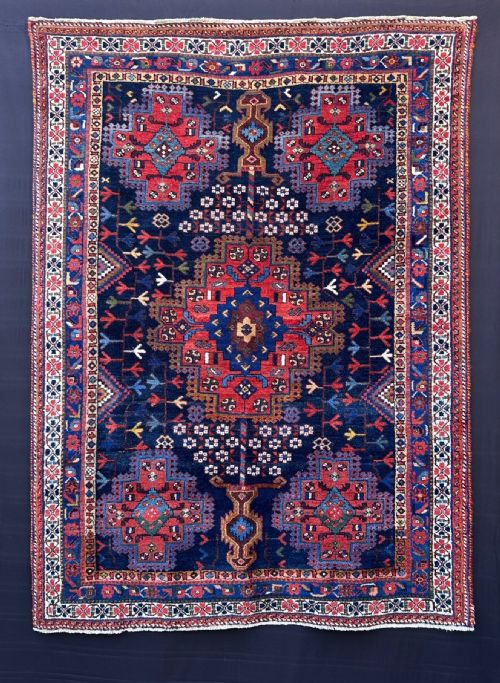
Blue and Red Wool Rug
A blue and red wool rug grounds a room with deep madder dyes and rich indigo tones woven by nomadic and village hands.
Blue and Red Wool Rug
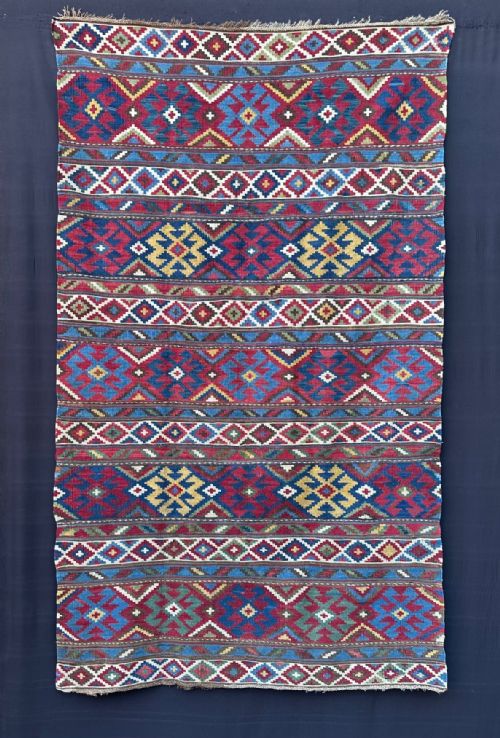
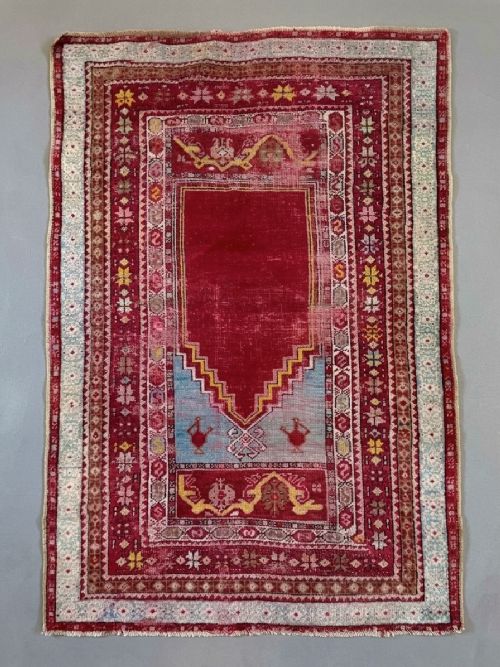
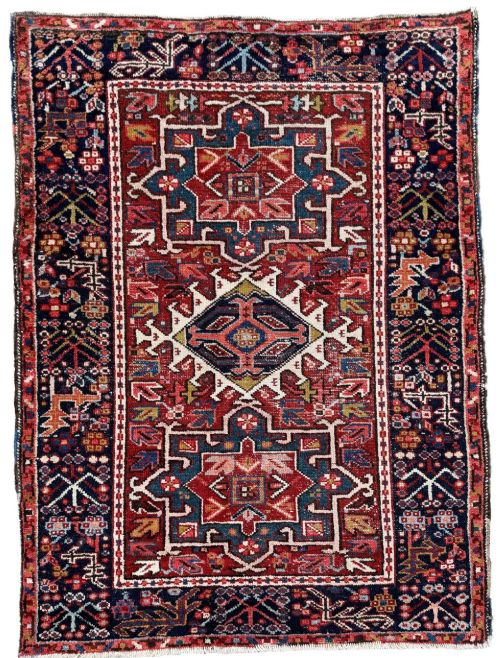
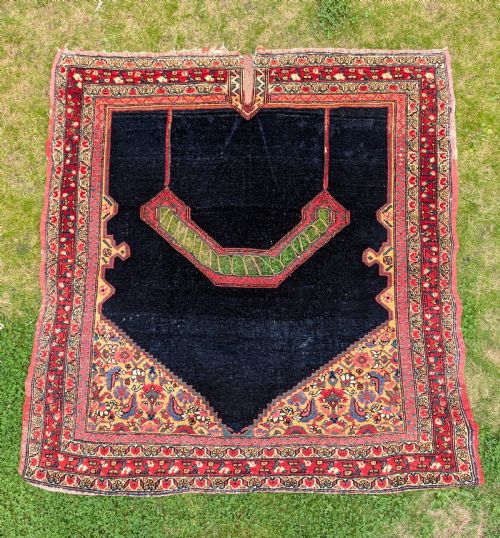
A blue and red wool rug encompasses hand-knotted and flat-woven textile pieces originating from Persian, Caucasian, Anatolian, and Turkmen regions. These floor coverings and tribal textiles arrive in formats ranging from small hearth-sized mats and saddle covers to large carpets and long runners.
Buyers seeking a blue and red wool rug most frequently encounter examples spanning the late nineteenth century through the mid-twentieth century. The selection includes specific regional types such as Heriz carpets, Kazak prayer rugs, Bakhtiar room-sized rugs, and Afshar village weaves.
The aesthetic of a blue and red wool rug relies heavily on traditional geometric medallions, repeating lattice patterns, and prayer niches. These motifs reflect the distinctive weaving traditions of specific tribal confederations and village workshops across Western and Central Asia.
Materials and construction methods
The primary material foundation of a blue and red wool rug involves hand-spun sheep wool, frequently combined with cotton foundations and occasional silk highlights. Spinners prepared the wool by hand before dyers introduced traditional natural colours derived from plants and minerals, yielding deep reds and saturated blues.
Weavers utilised traditional hand-knotting and flat-weaving techniques on vertical looms to produce these textiles. The resulting structures range from dense pile carpets to pileless kilims and specialised utilitarian pieces such as salt bags and spindle bags.
Nomadic weavers occasionally wove tiny personal amulets directly into the borders of utilitarian salt and spindle bags.
Evaluating the standard of weaving
The quality of a blue and red wool rug depends primarily on the integrity of the materials and the precision of the hand-spinning process. Lustrous, high-grade wool retains its resilience and allows natural dyes to age with greater depth and variation across the surface.
Structural execution dictates the durability and longevity of each piece. Tightly packed knots, straight margins, and secure selvedges separate robust village and tribal examples from looser, less disciplined commercial output.
The Blue and Red Wool Rug Glossary
- Medallion
- A central ornamental motif dominating the field of the rug. This symmetrical design element often anchors the entire composition of village and tribal carpets.
- Prayer Rug
- A textile featuring a mihrab or niche design indicating the direction of prayer. These smaller formats were traditionally utilised for daily devotions.
- Runner
- A long, narrow carpet format designed for hallways, corridors, and staircases. These pieces balance extended length with narrow widths.
- Kilim
- A flat-woven textile produced without a pile. These pieces rely on interlocking weft threads to create sharp geometric patterns.
- Selvedge
- The finished side edges of a rug formed by wrapping the weft threads. Secure selvedges protect the structural integrity of the pile knots.
Blue and Red Wool Rug: Frequently Asked Questions
How do I clean a wool rug?
Maintenance requires gentle regular vacuuming without a rotating brush to protect the hand-spun pile. Professional hand washing remains essential for deep cleaning to prevent dye bleeding.
Harsh chemical detergents and high heat must be avoided entirely. Allowing the wool to dry flat helps preserve the structural integrity of the foundation.
Where were these rugs made?
Production centres span traditional weaving regions across Persia, the Caucasus, Anatolia, and Turkmenistan. Specific towns, nomadic tribes, and mountain villages developed distinct visual vocabularies.
Local access to specific dye plants and sheep breeds shaped the distinct palette of each region. Village workshops and nomadic tents utilised portable upright looms for their craft.
Are these rugs suitable for high traffic?
Traditional hand-knotted wool rugs possess natural durability suited for everyday domestic use. Dense pile construction and lanolin-rich wool resist crushing and dirt accumulation effectively.
Placing a quality underlay beneath the textile prevents slipping and reduces friction against hard floors. Lighter traffic areas suit delicate flat weaves or silk highlight pieces best.
How do I tell regional styles apart?
Distinguishing regional origins involves examining the specific geometric vocabulary, knotting density, and colour palette. Caucasian pieces often display sharp, angular polygons and primary blues, while Heriz carpets favour large geometric medallions.
Structural details such as wool texture and end finishes provide further clues to provenance. Comparing border arrangements helps clarify whether a piece originates from Persian village workshops or nomadic Caucasian tribes.