



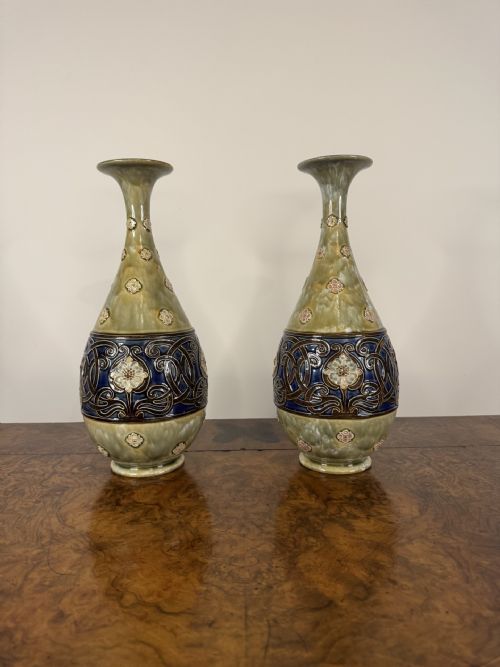


Blue and Green Vases
Blue and green vases bring together cobalt tones and rich verdigris in ceramic and glass, offering a striking display for any interior.
Blue and Green Vases
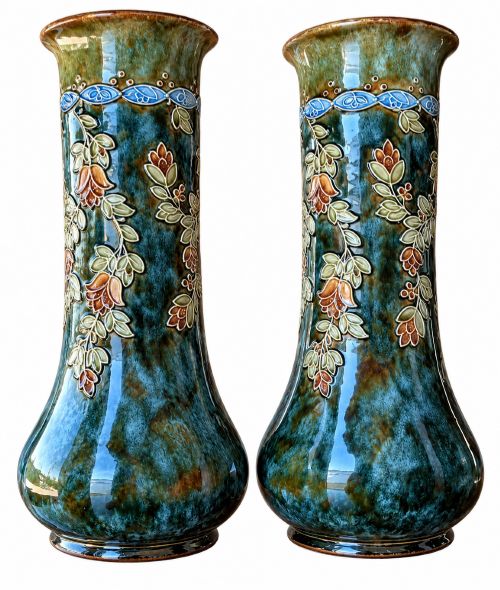
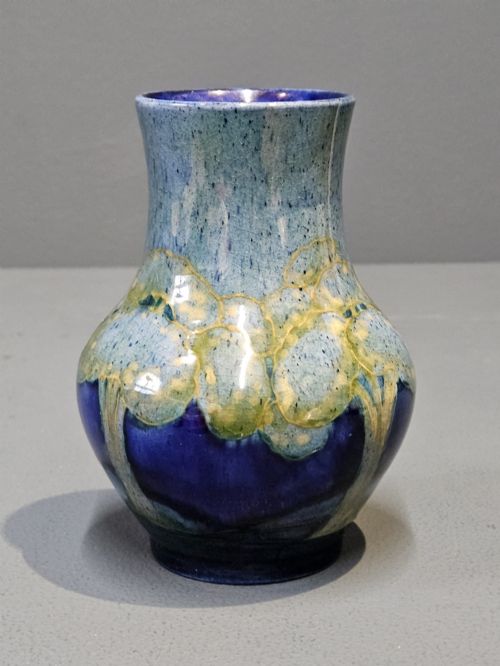
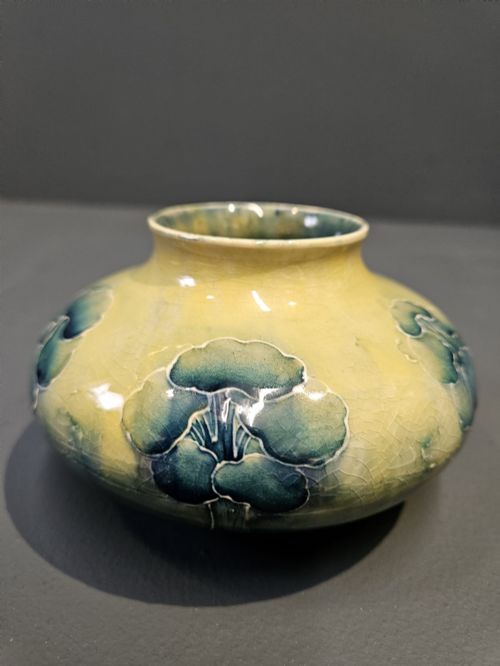
When you search for blue and green vases, you encounter an array of ceramic, stoneware, and glass vessels spanning multiple centuries and global traditions. These objects range from nineteenth-century earthenware ewers to early twentieth-century art glass, reflecting shifts in taste across distinct decorative movements.
You are most likely to meet stoneware pieces from the early twentieth century, alongside cameo glass and porcelain forms originating from European workshops and Asian dynasties. The selection encompasses cabinet pieces and large palace vessels, each displaying the dual palette through glazes, enamels, or glass layers.
Materials and construction
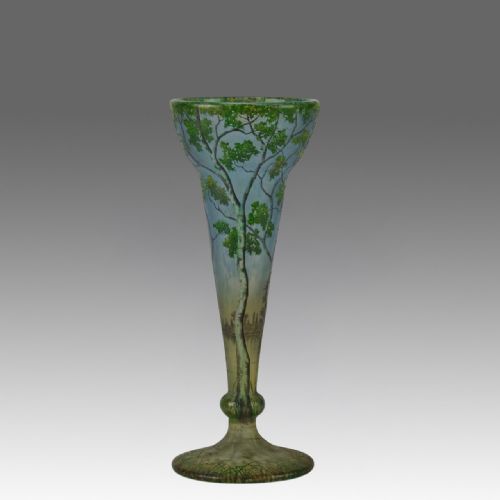
Makers utilised ceramic, stoneware, and porcelain bodies as foundations for rich cobalt and copper green glazes, often firing pieces at high temperatures to achieve permanence. Glass artists layered contrasting coloured gathers or utilised cameo techniques, acid-etching or carving through outer layers to reveal the contrasting shades beneath.
Cloisonné pieces rely on soldered wire cells filled with enamel pastes, while painted earthenware and ironstone employ mineral pigments fixed beneath or above the glaze. Each technique determines how light interacts with the blue and green surfaces, from the deep absorption of matte stoneware to the luminescence of iridescent glass.
Blue and Green Vases Retail Price Guide 2026
Typical asking prices for blue and green vases among the pieces listed under this phrase on Sellingantiques today, from the lower quarter to the upper quarter. They describe what is for sale here now, not the wider market.
One recorded oil painting depicts lily of the valley as a lucky charm, painted by a Franco-British artist as a token of friendship.
Assessing quality and execution
The distinction between standard production and exceptional work rests on the precision of the form and the depth of the colour application. Skilled modellers and artists achieved harmonious transitions between cobalt blue and vibrant green, avoiding muddy overlaps or uneven firing faults.
Provenance and attribution elevate certain pieces, particularly when identified with specific designers or renowned potteries. The crispness of carved cameo glass details, the intricacy of enamel cloisonné work, and the balance of the silhouette ultimately determine the standing of each vessel.
Royal Doulton Lambeth·Moorcroft·Daum Frères·Emile Galle·Monart Glass
The Blue and Green Vases Glossary
- Baluster
- A vertical vessel form characterised by a rounded body that tapers toward a narrow neck and flares at the base. This shape provides a stable foundation for complex glaze effects.
- Cameo Glass
- Glass vessels created by fusing two or more distinct layers of colour, allowing the outer layer to be carved away to reveal the contrasting background.
- Cloisonné
- A metalwork technique where thin wire partitions are affixed to a base to form compartments, which are then filled with coloured enamel pastes before firing.
- Ironstone
- A heavy, durable type of earthenware developed in the nineteenth century as a robust alternative to porcelain, frequently decorated with colourful enamel designs.
- Secessionist
- A stylistic movement from the late nineteenth and early twentieth centuries that emphasised geometric forms and natural motifs, breaking away from traditional academic art.
Blue and Green Vases: Frequently Asked Questions
Can I display these vessels in direct sunlight?
Intense sunlight can fade certain enamel pigments and alter the appearance of sensitive glass formulations over extended periods of exposure. Position your pieces away from south-facing windows to preserve the original saturation of the blue and green tones.
Rotating items periodically within a cabinet helps ensure even environmental conditions and protects vulnerable surfaces from localized heat buildup.
What is the difference between earthenware and stoneware?
Earthenware is fired at lower temperatures, resulting in a porous body that requires an impermeable glaze to hold liquids. Stoneware uses denser clay fired at higher heats until vitrified, making it naturally waterproof and highly durable.
Stoneware pieces often feature heavier, more robust walls suited to rich salt-glaze or slip decoration, while earthenware accepts brighter painted enamels.
How were blue and green glazes achieved?
Potters relied on metallic oxides mixed into liquid glazes or glass batches to create these specific chromatic results. Cobalt compounds produced deep blues, while copper oxides generated rich greens depending on the kiln atmosphere.
Controlling the firing temperature and oxygen levels allowed artisans to manipulate these minerals into striking, variegated colour combinations across the surface.