






Blue and Green Glass
Blue and green glass pieces bring rich colour and historic character to a room, ranging from 19th-century decanters to striking Art Nouveau vases.
Blue and Green Glass
When you search for blue and green glass, you encounter a diverse selection of decorative and functional objects spanning from the 18th century through to the 1930s. The most common forms on this page include vases, decanters, decorative bowls, and leaded glass windows, reflecting both domestic utility and artistic ambition.
The objects stem from distinct periods, with Victorian and 1930s pieces appearing frequently alongside earlier Georgian and Edwardian examples. Buyers typically find items that showcase the vibrant interplay of these two primary colours across different decorative styles.
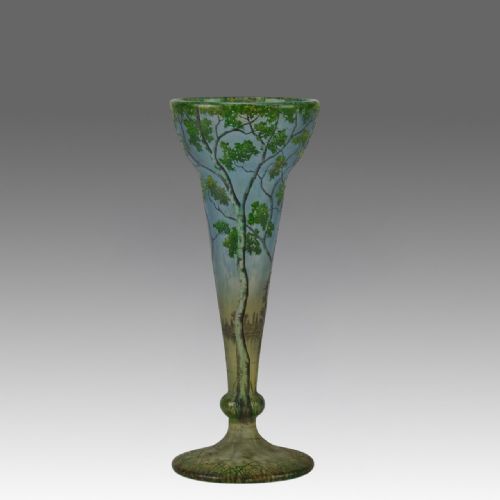
Vessels range from hand-blown glass bottles and hock decanters to cameo glass and pate de verre pendants. Each era brings specific manufacturing methods and aesthetic priorities to the use of blue and green pigments.
How they were made
Makers utilised traditional techniques such as hand-blowing and cameo carving to shape the glass, often layering contrasting colours to achieve depth. Enamel work and hand-painted details frequently appear on Victorian and later pieces.
Lead and sterling silver mountings sometimes accompany the glass, as seen on sugar baskets and Secessionist vases. Leaded windows incorporate cut glass held together by lead cames, uniting structural strength with decorative design.
Blue and Green Glass Retail Price Guide 2026
Typical asking prices for blue and green glass among the pieces listed under this phrase on Sellingantiques today, from the lower quarter to the upper quarter. They describe what is for sale here now, not the wider market.
Witches balls appear alongside elegant decanters, offering a historic folk charm designed to ward off malevolent spirits.
What varies in quality
The depth and complexity of the colour distribution set apart finer pieces from simpler items, particularly in layered cameo and colour over crystal glass. Mastery of the blowing technique determines the elegance of the silhouette and the uniformity of the vessel walls.
The integration of metalwork, such as silver plate or lead framing, indicates the overall standard of craftsmanship. Pieces signed by established makers or associated with specific design movements carry greater artistic distinction.
Daum Frères·Emile Galle·Amalric Walter·Loetz
The Blue and Green Glass Glossary
- Cameo Glass
- Glass vessels created by fusing layers of different coloured glass and carving away the outer layer to produce a raised design. This technique requires considerable skill from the glassmaker.
- Pate de Verre
- A form of kiln-cast glass created by packing finely crushed glass into a mould and heating it until the particles fuse. The resulting pieces display a characteristic textured opacity.
- Monart Glass
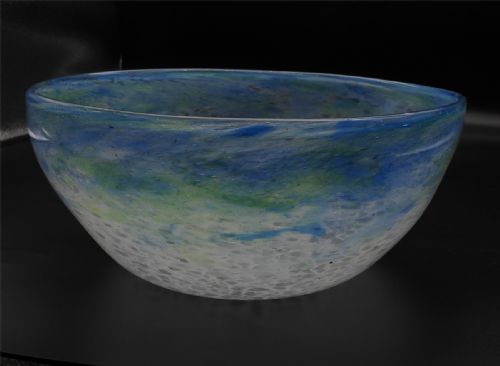
- A type of mottled art glass produced in Scotland during the 20th century, known for its distinctive swirls and rich colour combinations. These pieces often feature abstract patterns within the glass body.
- Secessionist
- An artistic movement from the late 19th and early 20th centuries that rejected traditional academic styles in favour of geometric forms and stylized motifs. Secessionist glass frequently pairs with metal mounts.
- Hock Decanter
- A tall, slender wine bottle traditionally used for hock or white Rhine wine, often produced in coloured or layered glass during the 19th century.
Blue and Green Glass: Frequently Asked Questions
How do I identify a Victorian piece?
Victorian items often display heavy hand-blown forms, rich Bristol blue or green hues, and occasionally enamel decoration. The manufacturing techniques reflect the industrial expansion and decorative tastes of the 19th century.
Examining the pontil mark on the base helps confirm the hand-blown nature of these older vessels, separating them from later machine-made reproductions.
What is cameo glass?
Cameo glass is made by layering two or more contrasting colours of glass and carving the outer layer away to reveal the design beneath. This method creates a pronounced relief effect.
Master artisans spent weeks carving these pieces by hand, resulting in intricate floral or landscape motifs that catch the light.
How should I display coloured glass?
Placing blue and green glass near a window allows natural light to pass through and activate the deep pigments. Shelving with backlighting can also enhance the tonal variations of decanters and vases.
Keep pieces away from direct, intense sunlight for prolonged periods to protect any delicate hand-painted enamel details.
Are leaded glass windows heavy?
Leaded windows combine glass panes with structural lead cames, making them substantial objects that require secure framing for display. They function effectively as hanging panels or architectural inserts.
Support the weight evenly across the edges rather than relying on hanging loops alone to maintain the stability of the lead framework.