





Blue and Brown Rug
A blue and brown rug brings rich tribal warmth to a floor, offering durable wool and grounding earth tones.
Blue and Brown Rug
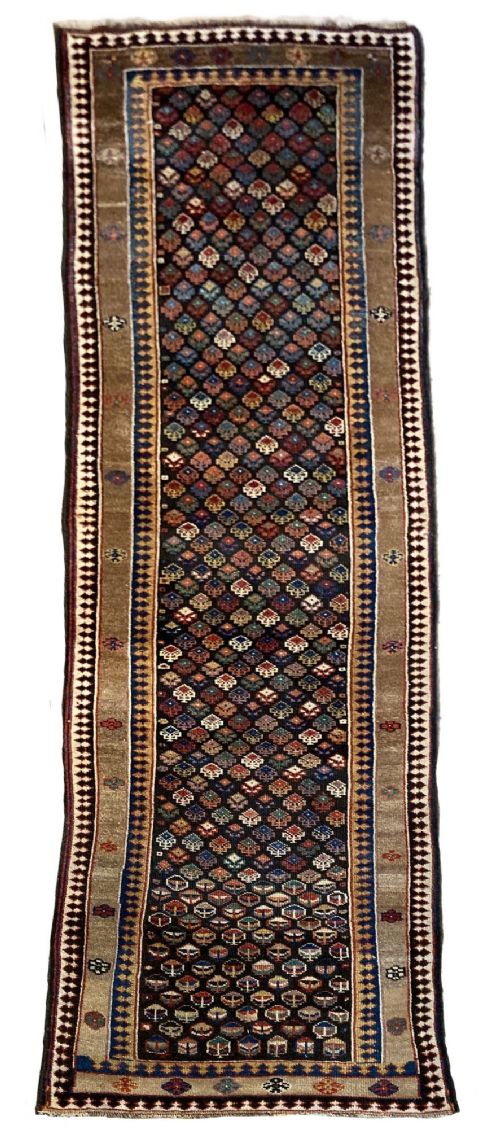
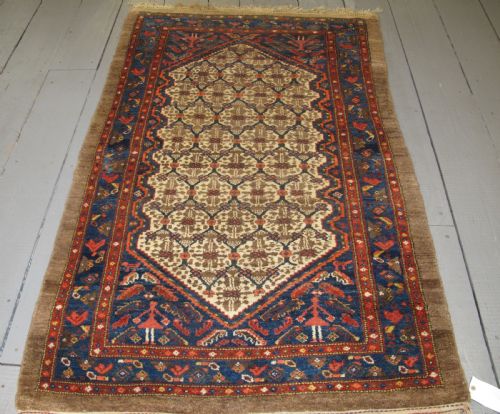
The pieces appearing here lean heavily toward Baluch tribal work, alongside Kurdish, Caucasian, Bijar, and Central Asian Karakalpak examples. Buyers encounter formats ranging from compact prayer formats to larger room carpets featuring geometric and gul designs.
Materials and construction
These textiles rely on wool as the primary fibre, prized for its natural resilience and capacity to hold deep colour. Weavers utilised natural dyes to achieve the characteristic blue and brown palettes found across these tribal floors and prayer mats.
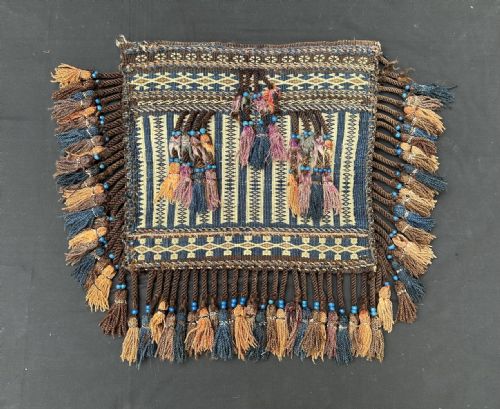
Nomadic workshops employed traditional hand-knotting and flatweaving techniques suited to portable looms. Certain pieces incorporate details like glass beads alongside sturdy wool foundations.
Blue and Brown Rug Retail Price Guide 2026
Typical asking prices for blue and brown rug among the pieces listed under this phrase on Sellingantiques today, from the lower quarter to the upper quarter. They describe what is for sale here now, not the wider market.
Nomadic weavers occasionally stitched tiny glass beads directly into the weave to ward off misfortune.
Assessing quality
Quality rests upon the handle and density of the wool, alongside the clarity of the natural dye palette. Superior examples display tightly packed knots and crisp execution of motifs such as the seh mihrab or lotus leaf design.
The integrity of the structural edges and the balance of the tribal design division separate standard utility pieces from exceptional weaving achievements.
The Blue and Brown Rug Glossary
- Baluch Tribal
- A designation for rugs woven by nomadic and semi-nomadic Baluchi groups originating across regions of Iran and Afghanistan. These often feature rich dark wool and characteristic prayer designs.
- Seh Mihrab
- A triple arch motif frequently encountered on prayer rugs from specific tribal groups. It frames the directional focus of the rug.
- Gul
- A repeating octagonal medallion motif common in Central Asian and tribal carpet design. Each tribe traditionally utilised distinct variations of this emblem.
- Kilim
- A flatwoven textile produced without a pile, resulting in a lightweight structure suitable for floors or coverings. These rely entirely on the warp and weft threads for their pattern.
Blue and Brown Rug: Frequently Asked Questions
How do I care for an old tribal rug?
Vacuum gently without rotating brush heads to protect the fragile wool pile and historic flatwoven ends.
Keep the textile out of direct sunlight to prevent the natural dyes from fading over time.
Where were these rugs originally made?
Production centres span the tribal territories of Persia, Afghanistan, and the Caucasus during the late nineteenth and early twentieth centuries.
Nomadic weavers created these pieces for domestic use, travel, and storage within tribal communities.
How do I identify a Baluch piece?
Baluch rugs typically employ deep indigo blues, dark browns, and warm red tones spun from resilient local wool.
Motifs often incorporate geometric prayer arches, lotus leaf patterns, or repeating gul medallions.