



Blown Glass Stemware
Blown glass stemware brings tactile history to the table, pairing centuries-old vessel forms with the varied hues of lead and flint glass.
Blown Glass Stemware
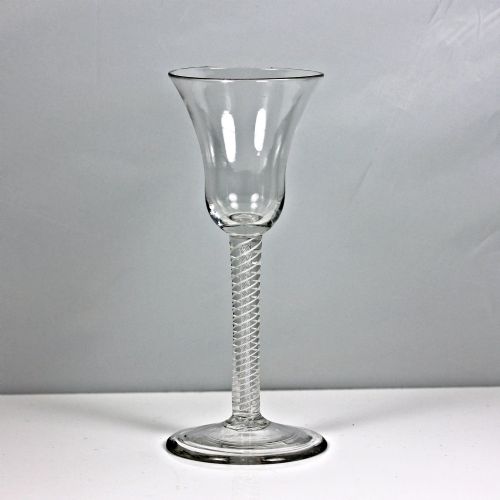
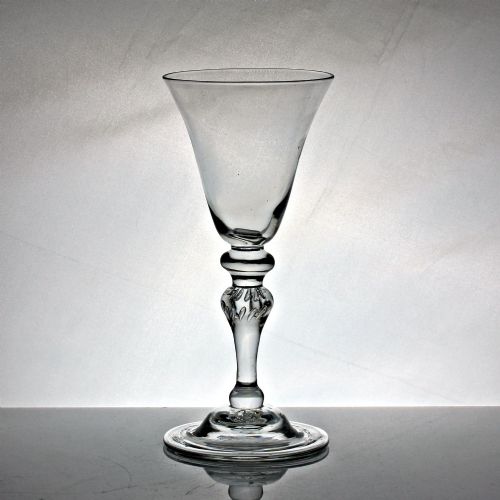
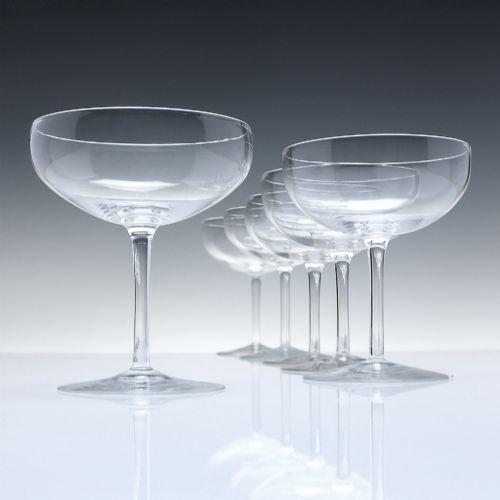
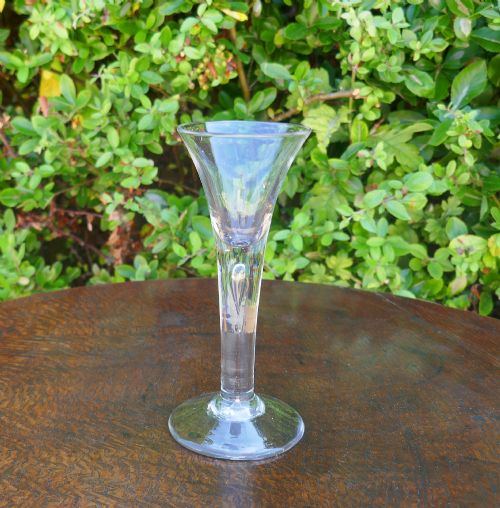
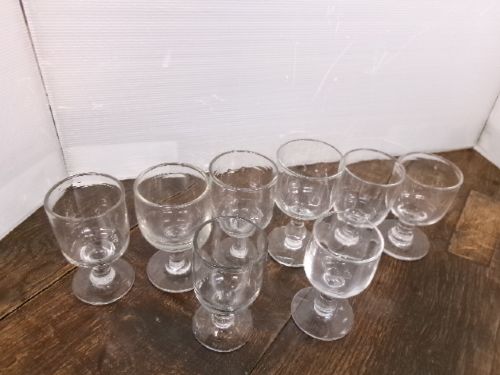
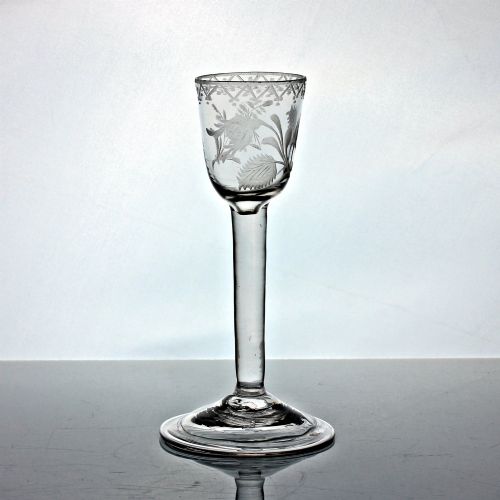
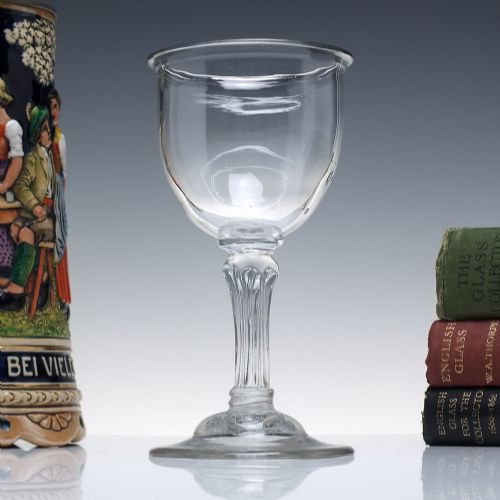
When searching for blown glass stemware, collectors encounter drinking vessels spanning the Georgian, Victorian and Edwardian eras, alongside pieces attributed to the early eighteenth century. The selection ranges from robust rummers and dwarf ale glasses to delicate cordial vessels and champagne coupes.
Georgian examples often display characteristic air tears, baluster stems or folded feet, while later Victorian and Edwardian pieces frequently showcase rich cranberry, turquoise or Bristol green colour palettes. These vessels reflect shifts in dining customs, moving from tavern drams and toasts to formal nineteenth-century table settings.
Distinctions across the range
Superior quality in these drinking vessels shows in the balance of the bowl relative to the stem, the clarity of the metal, and the dexterity required to form complex air-teared or twisted interiors. Hand-finished pontil marks on the base indicate individual attention during manufacture.
Consistency across sets, particularly in matched Victorian cranberry or Georgian blue wine glasses, elevates the desirability of the grouping. Subtle variations in hue and wall thickness point directly to the individual hand-blown origins of each piece.
Early eighteenth-century makers occasionally left random air bubbles trapped inside stems, turning accidental gas pockets into treasured collector hallmarks.
Harry Powell·James Powell·Salviati
The Blown Glass Stemware Glossary
- Baluster stem
- A heavy, thick stem shaped with prominent rounded nodes reminiscent of architectural balustrades. This form dominated English drinking vessels during the early eighteenth century.
- Pontil mark
- A rough scar left on the underside of the base where the holding rod was snapped away after shaping. Its presence confirms hand-blown production.
- Rummer
- A large, sturdy drinking glass featuring a capacious bowl and a short, thick stem. These vessels served for ale, wine or punch in Georgian and Victorian households.
- Opaque twist
- A decorative spiral filament of white or coloured glass enclosed within a clear stem. Makers formed these intricate patterns using rods of varying composition.
Blown Glass Stemware: Frequently Asked Questions
What periods do these glasses cover?
The listings span from the early eighteenth century through the Georgian and Victorian periods, extending into Edwardian and early twentieth-century designs.
Collectors will find distinct stylistic shifts, moving from plain stems with air tears to richly coloured Victorian services and Venetian-inspired forms.
How do I care for antique stemware?
These hand-blown vessels require gentle hand washing in warm water using mild soap, avoiding extreme temperature shifts that stress old glass.
Store them upright on a stable surface and avoid stacking delicate bowls to prevent rim chips and structural strain.
Are these glasses safe for drinking?
Most antique drinking vessels remain entirely suitable for occasional toasts and formal dining use, provided they lack structural cracks.
Lead glass compositions require standard care regarding acidic contents, though short durations of use present no practical difficulties.
How are twisted stems made?
Makers laid down rods of coloured or opaque glass inside a mould, twisted the hot material, and encased it within clear metal during the pulling of the stem.
This technique produced optical spirals like opaque twists that define the interior of many eighteenth and nineteenth-century pieces.