
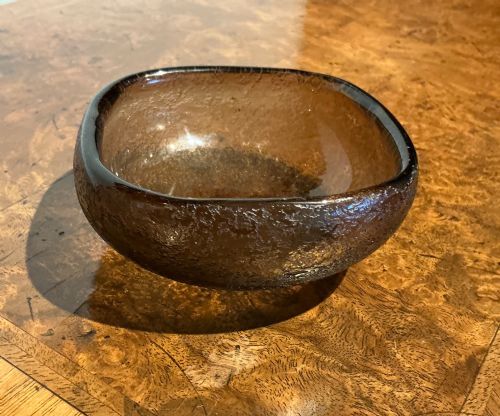
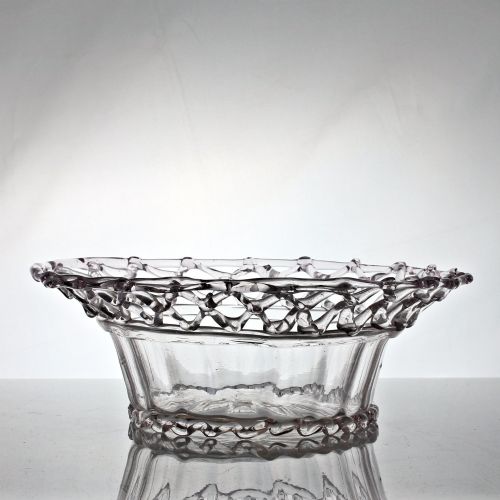


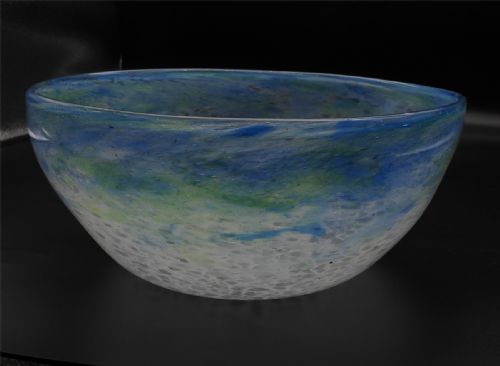


Blown Glass Centrepiece Bowl
A blown glass centrepiece bowl anchors a table with colour and weight, drawing the eye through its organic curves and light-catching depth.
Blown Glass Centrepiece Bowl
When you search for a blown glass centrepiece bowl, you are looking at table vessels shaped by breath and iron across several centuries. These pieces range from Georgian tablewares to mid-century studio works.
The versions you are most likely to meet on this page include Victorian pedestal bowls and epergnes alongside 1930s Monart glass bowls. Forms vary from simple decorative bowls to tall comports and baskets.
Origins stretch from English and Scottish workshops to continental centres in Belgium and Murano. Each piece reflects the dominant decorative style of its period, from Georgian pierced work to Art Deco and Arts and Crafts designs.
How they were made
Makers shaped these vessels using traditional hot-glass techniques, gathering molten material on a blowpipe and manipulating it with hand tools. Lead crystal and hand-blown glass provided the clear or coloured body for subsequent cutting and enamelling.
Pedestal bowls and comports required the fusion of a separately blown bowl to a stem and foot. Epergnes and baskets incorporated applied elements and thermal manipulation while the glass remained malleable.
Listings span the eighteenth, nineteenth, and twentieth centuries, featuring Victorian, Art Deco, and Arts and Crafts styles.
What varies in quality
The division between standard production and exceptional work rests on the control of the metal and the precision of the form. Heavy lead crystal and complex cased glass demand greater technical skill from the blower than simple utility vessels.
Design attribution also separates the output, as seen in pieces linked to named makers like Stuart for Liberty or Carlo Scarpa for Venini. The integration of decorative elements, such as cut facets or controlled colour swirls, determines the standing of the piece.
Venini·Stuart for Liberty·Monart
The Blown Glass Centrepiece Bowl Glossary
- Comport
- A shallow bowl raised on a high foot or pedestal, traditionally used for serving fruit or sweets at the table. These pieces often feature heavy cut crystal or coloured glass.
- Epergne
- An elaborate table centrepiece featuring a central dish surrounded by multiple smaller hanging baskets or vases. Victorian examples in cranberry glass are typical of this form.
- Monart
- A style of Scottish art glass developed in the twentieth century, characterised by mottled coloured glass encased in clear layers. These bowls often display organic, rounded silhouettes.
- A traforato
- A term describing glass or ceramic work featuring pierced or openwork decoration. Georgian examples from Liege demonstrate this intricate technique.
Blown Glass Centrepiece Bowl: Frequently Asked Questions
What is a blown glass centrepiece bowl?
A blown glass centrepiece bowl is a large decorative vessel shaped by hand on a blowpipe for display on a table or sideboard.
These objects include pedestal bowls, comports, and baskets originating from periods spanning the eighteenth to the twentieth century.
How were these bowls used?
Historically, these vessels held fruit, sweetmeats, or floral displays to decorate dining tables during formal meals.
Today, they function primarily as decorative interior objects that catch and refract natural light.
How do I tell Victorian bowls apart from later ones?
Victorian pieces often feature rich coloured glass, such as cranberry, combined with heavy pedestal bases or complex epergne structures.
Twentieth-century examples, such as those from the 1930s, tend to show modernist silhouettes and studio glass techniques like the mottled finishes seen in Monart pieces.
What materials should I expect to find?
The listings feature vessels made from hand-blown glass, lead crystal, and specialised studio glass.
Some pieces incorporate additional decorative treatments like enamel work or surface cutting.