
Blonde Chest
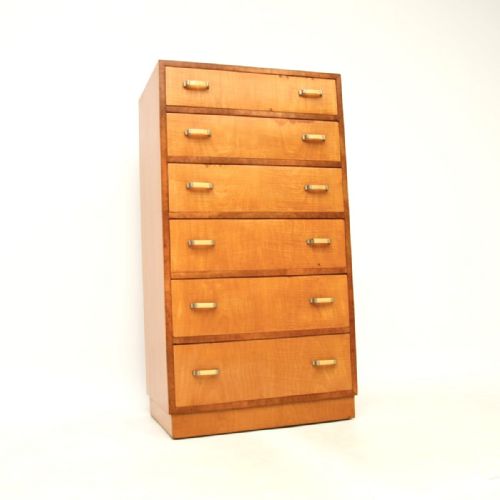
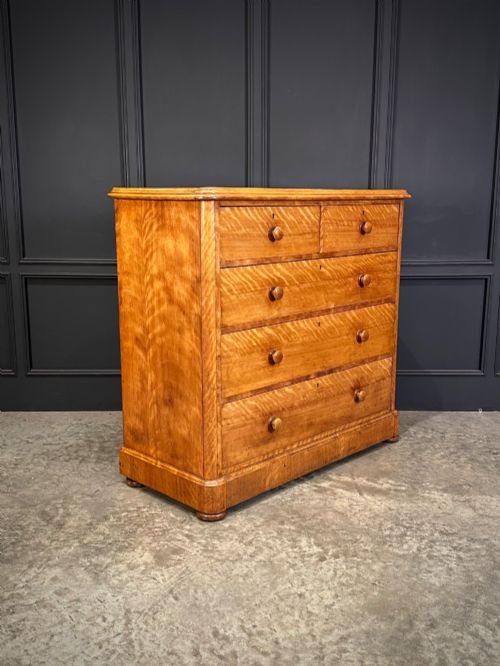
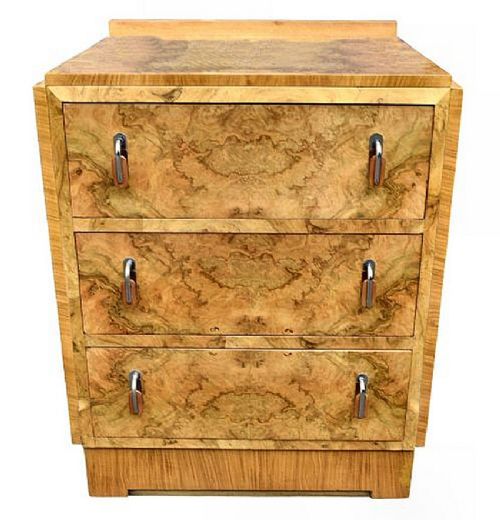
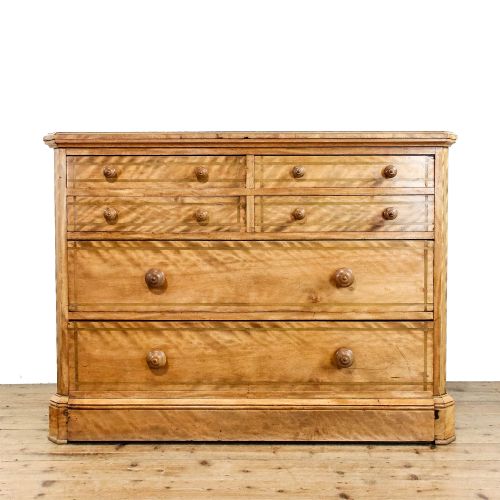
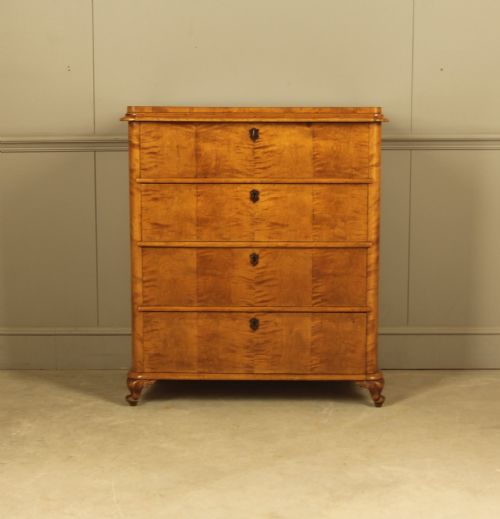
A blonde antique chest brings warmth and lighter grain to a room through timbers like birch, satinwood and maple.
Blonde Chest
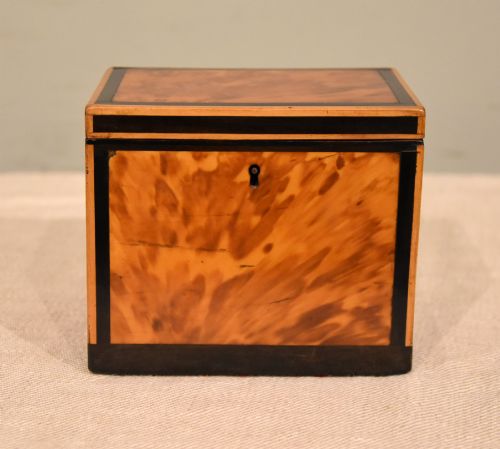
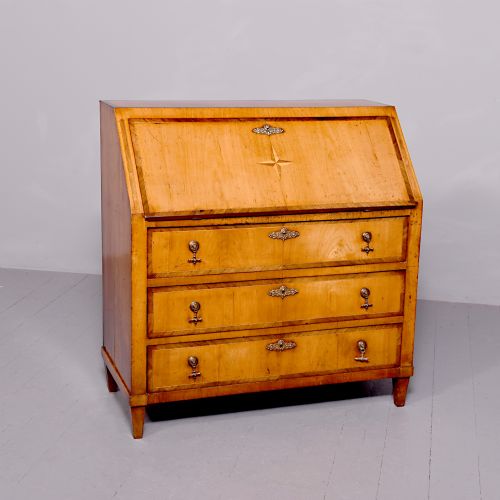
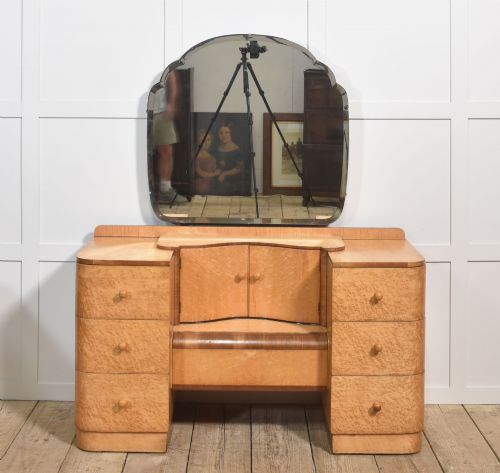
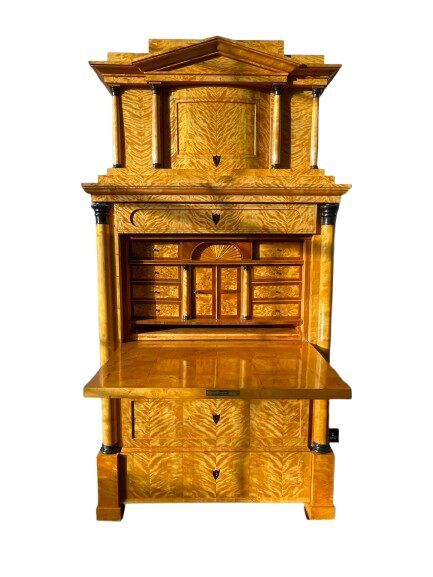
The selection extends beyond standard chests of drawers to include secretaires, dressing tables, and commodes spanning the Georgian, Victorian, and Art Deco periods. These pieces bridge traditional storage requirements with lighter aesthetic tones derived from natural timber selections rather than applied paint.
Materials and construction methods
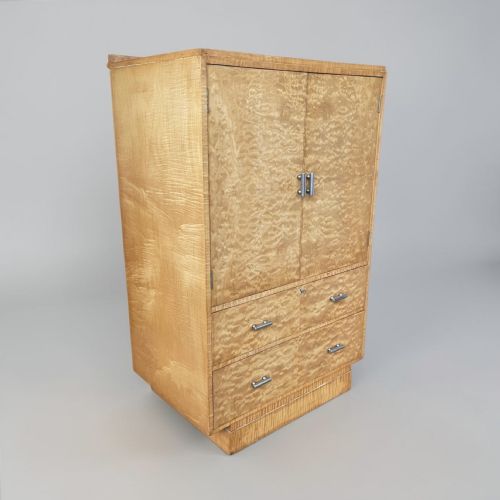
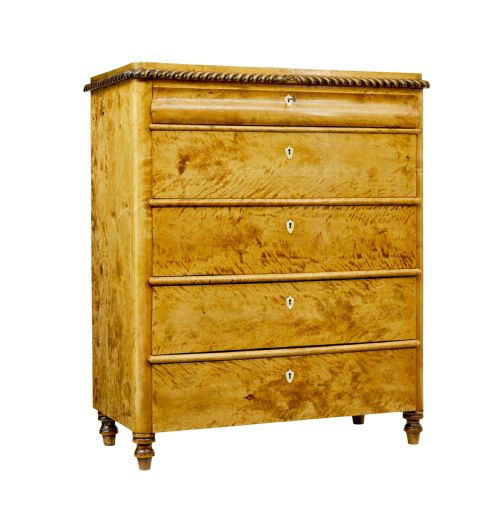
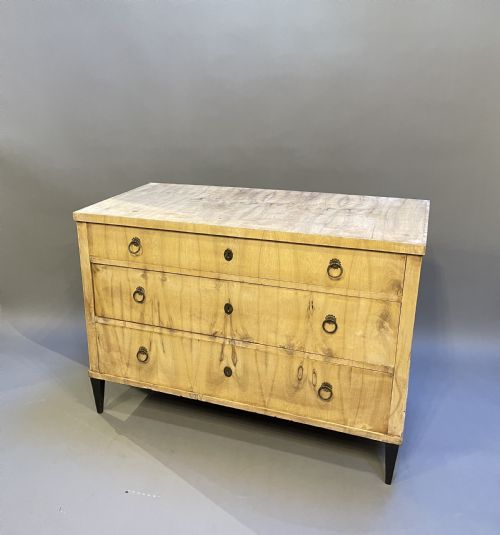
Makers utilised native and exotic pale woods, predominantly birch, satin birch, birds eye maple, satinwood, and blonde walnut, often chosen for distinct grain patterns such as flame and masur figures. Surface enrichment relied on natural timber properties or subtle inlay work in ebony and rosewood rather than heavy pigmentation.
Cabinetmakers constructed carcases using traditional joinery, incorporating brass hardware and occasionally hand-painted simulations where specific finishes were desired by the maker or workshop.
Listings feature nineteenth-century Swedish birch alongside twentieth-century Art Deco maple and walnut forms.
Markers of distinction
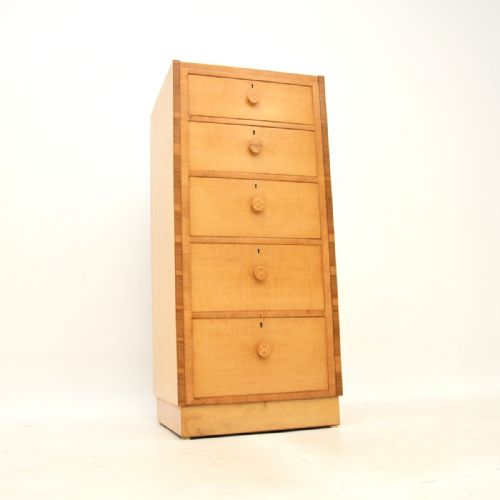
Quality rests in the selection of the timber figure, where highly figured flame birch, masur birch, and birds eye maple elevate a piece above plain surfaces. The harmony of the grain across drawer fronts and the precision of structural joinery distinguish superior cabinetmaking.
Proportion and restraint define the finer examples, particularly within Biedermeier and Art Deco pieces where clean lines allow the natural blonde tones of the wood to remain the primary focus.
Maple and Co.·Gemla Fabrikers·Betty Joel·Holland and Sons·John Taylor of Edinburgh
The Blonde Chest Glossary
- Masur birch
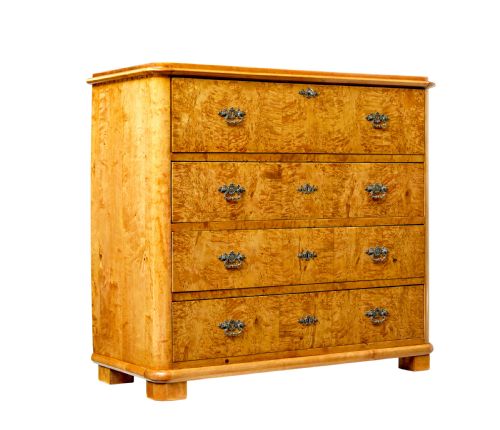
- A decorative form of birch timber featuring characteristic dark swirls and markings across the pale surface. This grain variety appears frequently in nineteenth-century Scandinavian furniture.
- Birds eye maple
- North American maple wood showing small, circular eye formations in the grain pattern. It provides a highly decorative surface utilised in twentieth-century Art Deco pieces.
- Biedermeier
- A Central European style dating from the nineteenth century prioritising utilitarian comfort and clean lines. Pieces in this style rely on rich wood grains without excessive ornamentation.
- Secretaire
- A cabinet or chest incorporating a pull-down writing flap revealing internal compartments and small drawers. This form combines desk functionality with standard chest storage.
- Tallboy
- A tall chest of drawers, often constructed in two sections with a smaller set of drawers positioned above a larger bank. These provide substantial vertical storage capacity.
Blonde Chest: Frequently Asked Questions
What woods make up a blonde antique chest?
These pieces utilise pale timbers including birch, satin birch, birds eye maple, satinwood, blonde oak, and blonde walnut. Each wood offers distinct grain patterns ranging from subtle uniformity to pronounced figures like flame and masur.
Makers selected these light materials to brighten interiors, frequently pairing them with minimal hardware to showcase the natural characteristics of the timber.
How do I identify a Biedermeier chest?
Biedermeier pieces date primarily from the nineteenth century and feature restrained architectural lines that emphasise the natural figure of woods such as birch and walnut. They avoid superfluous ornamentation in favour of balanced proportions and smooth surfaces.
The aesthetic focuses on utility combined with elegance, allowing the grain of the timber to serve as the main decorative element.
Where were nineteenth-century birch chests made?
A significant portion of nineteenth-century birch furniture originates from Sweden and broader Scandinavian regions where local birch forests provided abundant material for skilled cabinetmakers.
These pieces often display exceptional timber selection, utilising flame and masur grain variations typical of northern European workshops of the period.
How do Art Deco chests differ from Victorian ones?
Art Deco chests from the twentieth century lean into streamlined modernism, utilising blonde woods like birds eye maple and bleached walnut with geometric symmetry and minimalist hardware. Victorian pieces tend toward more traditional proportions and may employ satinwood or satin birch within classic silhouettes.
The later twentieth-century designs favour sleek surfaces and unadorned planes, whereas Victorian iterations often retain historical revival details.