
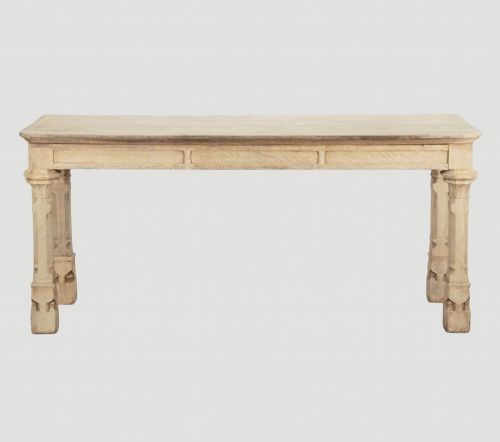


Bleached Wood Server
A bleached wood server offers a calm, pale surface and practical storage, bringing understated utility and warmth to a dining room or hallway.
Bleached Wood Server
A bleached wood server encompasses a range of utilitarian and formal forms, including serving tables, sideboards, credenzas, and dresser bases designed for food service and storage. When searching for a bleached wood server, buyers encounter diverse regional interpretations spanning several centuries and countries.
The selection on this page centres primarily on pieces from the eighteenth and nineteenth centuries, alongside a few twentieth-century examples. Oak dominates the material record, appearing in solid forms alongside walnut and pine.
Regional styles shape these items significantly, with French provincial, French country, English country, and Spanish traditional aesthetics appearing alongside Scottish and Georgian pieces. Forms range from console tables and hall tables to drapers tables, potboard dressers, and dresser bases.
How they were made
Makers constructed these servers using solid timber, predominantly oak and walnut, with pine appearing in secondary elements. Joinery techniques reflect traditional cabinetmaking practices appropriate to each period and regional workshop.
A versatile table from nineteenth-century France quietly waits to find out what its next owner will actually use it for.
What varies in quality
Quality in a bleached wood server rests on the integrity of the timber selection and the restraint of the finishing process. Superior examples display harmonious grain patterns across the primary surfaces without excessive chemical alteration to the wood fibres.
Construction details differentiate standard utility items from finer formal furniture. The presence of well-executed structural joinery, original brass hardware, and thoughtful proportions elevates a piece above simpler regional equivalents.
The Bleached Wood Server Glossary
- Bleached wood
- Timber treated to lighten its natural tone, revealing the grain while removing darker historic finishes. This process creates the pale, neutral surface favoured in contemporary interiors.
- Dresser base
- The lower section of a traditional kitchen or dining room storage unit, typically featuring cupboards and drawers beneath a broad top surface. These serve well as standalone servers.
- Potboard
- A lower open shelf built into the base of a dresser or table, originally designed for storing heavy pots and pans. It provides structural stability and practical display space.
- Trestle table
- A table supported by two or more vertical frames connected by a horizontal beam. This form provides robust support without obstructing legroom.
- Console table
- A table designed to stand against a wall, historically supported by brackets or legs. These items offer a shallow profile suitable for narrow hallways and dining rooms.
Bleached Wood Server: Frequently Asked Questions
What is a bleached wood server used for?
These tables provide a surface for serving food and drinks during meals. They also function as display furniture in hallways and living spaces.
The lower shelves and drawers offer storage for dining linen, tableware, and household items. Their shallow depth suits narrow transitional spaces where standard cabinetry takes up too much room.
How do I care for bleached wood furniture?
Keep the wood away from direct sunlight and heat sources to prevent the timber from drying out or splitting. Use coasters and placemats to protect the pale surface from moisture and heat marks.
Dust regularly with a dry cloth and avoid harsh chemical cleaners that can strip the pale finish. A mild beeswax can maintain the surface if the timber begins to look dry.
Are these servers historic or modern pieces?
The items listed here date from the eighteenth, nineteenth, and early twentieth centuries. They originate from various European regions including France, Spain, and Britain.
The bleaching process on older items may be a later intervention to lighten dark historic polishes, while the underlying frames retain their original period construction.
How do I tell French and English servers apart?
French regional pieces often feature softer fruitwood or oak tones, cabriole legs, or rustic provincial carving. They lean towards decorative console and drapers table forms.
English and Scottish examples tend to show more rectilinear proportions, sturdy oak construction, and utilitarian potboard or drawer arrangements associated with country houses.