
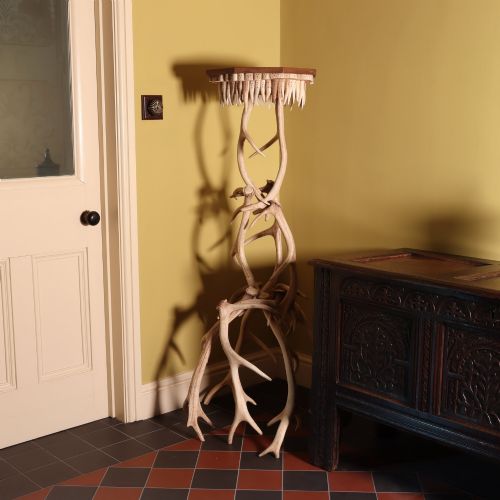


Black Wooden Occasional Table
A black wooden occasional table brings deep contrast and practical surface space to a room, drawing on Victorian and later design traditions.
Black Wooden Occasional Table
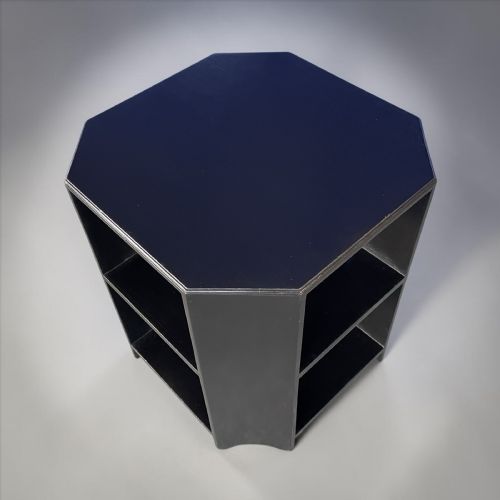
A black wooden occasional table encompasses compact side pieces, two-tier tiers, and low stands originating primarily from the nineteenth and early twentieth centuries. These forms reflect diverse stylistic influences ranging from Victorian domestic utility to Anglo-Indian and Japanese aesthetic movements.
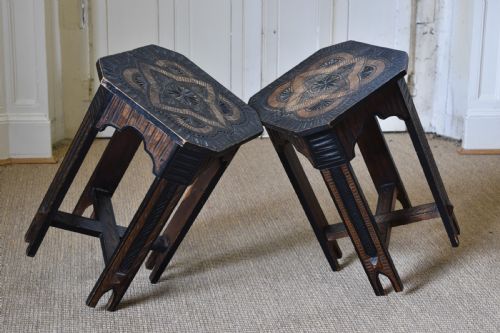
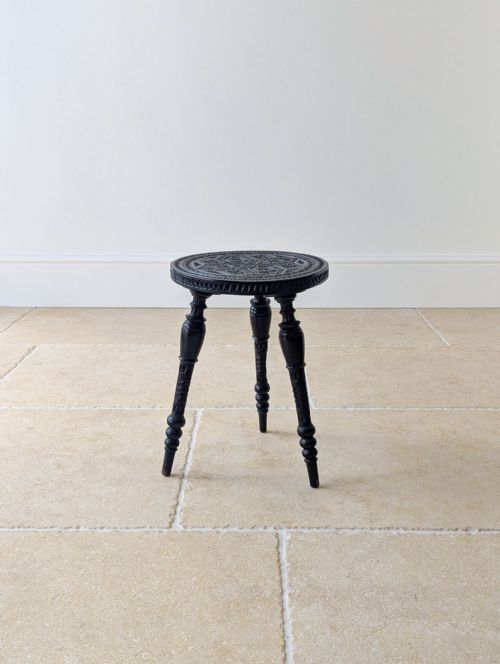
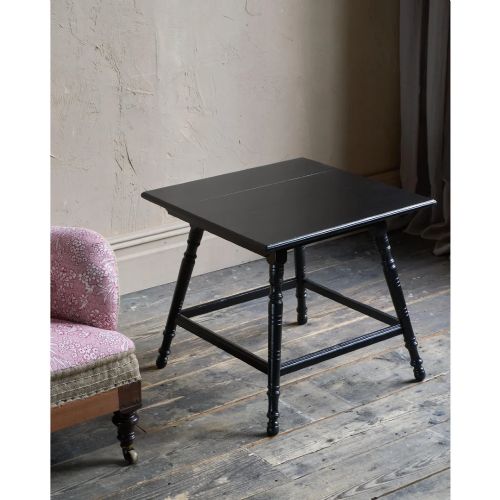
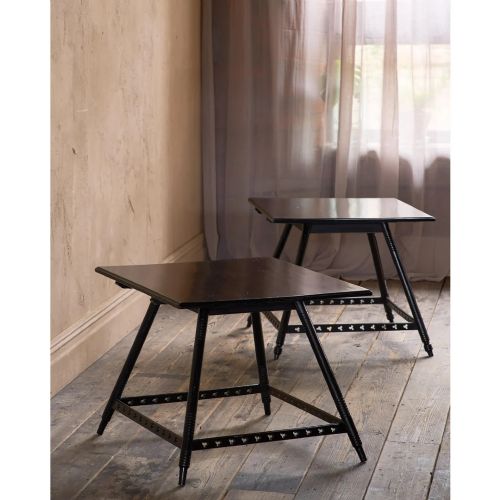
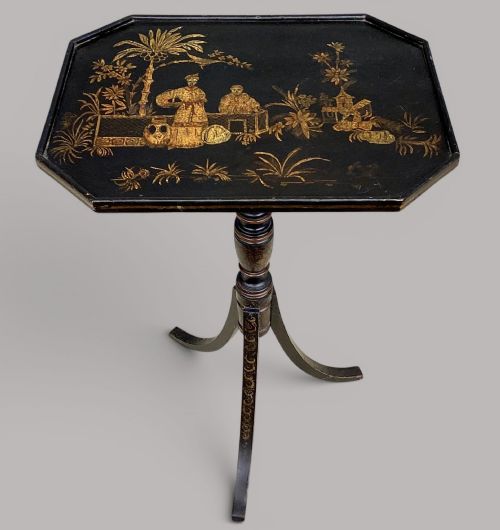
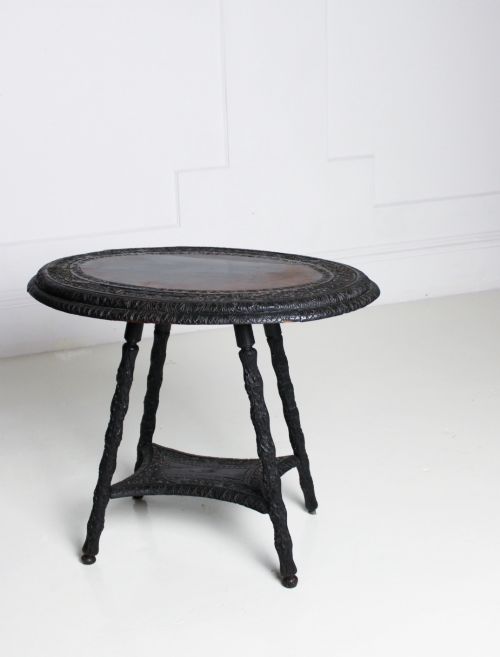
The version most commonly encountered on this page is the ebonised occasional table from the Victorian era, often featuring carved details or tiered shelves. Alongside these are painted and lacquered examples from various international workshops.
Makers and designers from these periods utilised dark finishes to highlight intricate carving and geometric turning. Buyers select these tables for placement beside seating or as lamp supports in traditional and modern interiors alike.
Materials and Construction
Makers constructed these tables using hardwoods, elm, and burr walnut, applying ebonised finishes, paint, or dark lacquer to achieve a uniform black surface. Gold leaf and painted highlights sometimes accent the carved motifs.
Techniques range from chip carving and hand-carving to folding frames and inset marble tops. Ebonisation simulates the appearance of expensive ebony through chemical staining or pigmented varnishes on standard timber.
Elephant tables and camel tables bring an unexpected zoological silhouette to nineteenth-century occasional furniture.
Distinctions in Execution
Quality rests upon the depth of the finish and the crispness of the carving, distinguishing workshop-produced pieces from simpler utilitarian items. The integrity of the timber and the precision of joinery determine the overall stability of each frame.
Examples associated with documented designers or specific artistic movements display superior proportion and refined decorative detailing. The application of lacquer and gold leaf also varies, with finer items retaining intricate hand-painted or carved elements.
Hindley and Sons·Liberty of London·Archibald Knox·EW Godwin
The Black Wooden Occasional Table Glossary
- Ebonisation
- The process of treating timber to resemble ebony. This dark finish gained popularity during the nineteenth century for furniture mimicking more costly exotic woods.
- Aesthetic Movement
- A late nineteenth-century design current promoting art for art's sake. Pieces from this style often feature ebonised surfaces and Japanese-inspired motifs.
- Chinoiserie
- European artistic interpretation of Chinese and East Asian decorative traditions. Tables in this style incorporate lacquerwork and painted scenes.
- Occasional table
- A small, movable table designed for specific, intermittent use within a room. Common forms include side tables, lamp tables, and wine tables.
- Chip carving
- A method of removing small chips from a wooden surface to create geometric patterns. This technique appears on various nineteenth-century side tables.
Black Wooden Occasional Table: Frequently Asked Questions
What is a black wooden occasional table?
A black wooden occasional table is a small, movable surface finished in ebonised wood, paint, or lacquer. These pieces date primarily from the nineteenth and early twentieth centuries.
They function as side tables, lamp stands, or display surfaces, incorporating styles from the Aesthetic Movement to Anglo-Indian design.
How do I identify an Aesthetic Movement table?
Aesthetic Movement tables typically feature ebonised hardwood, geometric lines, and sometimes two-tier configurations. They reflect late nineteenth-century artistic preferences.
Look for refined craftsmanship and details influenced by Japanese design principles popular during the period.
Where should I place an occasional table?
An occasional table suits placement beside a sofa, armchair, or in a hallway for lamps and small decorative objects. Their compact size allows flexible positioning.
Ensure the height matches nearby seating for practical daily use.
What is ebonised wood?
Ebonised wood is timber treated with stain, paint, or chemical processes to produce a deep black finish resembling ebony. This technique was widely utilised by Victorian cabinet makers.
It provides a uniform dark surface that highlights carved details and contrasting gold leaf.
Are these tables sturdy enough for daily use?
Most antique occasional tables are structurally sound for holding lamps, books, and drinks. Solid hardwood construction ensures durability.
Avoid placing excessive weight on folding or intricately carved variants to preserve the original joinery.