



Black Wooden Jewellery Box
A black wooden jewellery box organises small valuables with dark timber finishes that range from ebonised pine to solid exotic ebony.
Black Wooden Jewellery Box
A black wooden jewellery box brings together small caskets, table cabinets, and trinket receptacles fashioned in deep, dark timber or ebonised surfaces. These containers appear across various periods from the seventeenth century through to the early twentieth century, serving as secure depositories for keepsakes and rings.
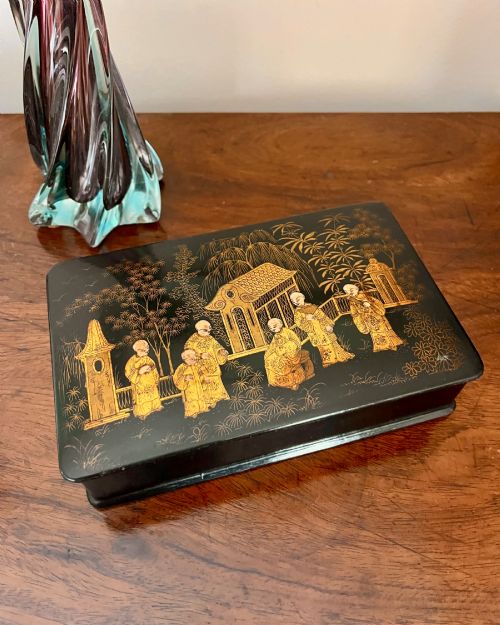
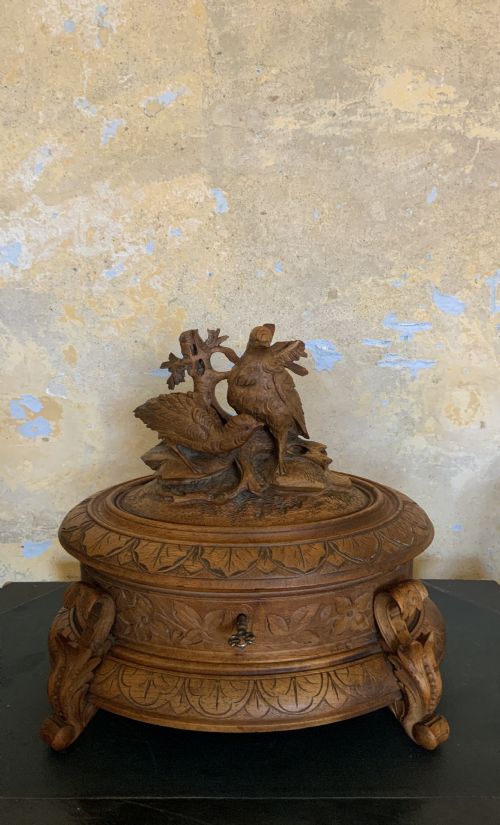
The examples gathered here encompass distinct regional traditions, including carved Black Forest Lindenwood, intricate Regency penwork, Japanese lacquer, and Anglo-Indian solid ebony work. Buyers meet everything from dome-topped caskets to fitted table cabinets, each displaying the specific decorative vocabulary of its origin.
How they were made
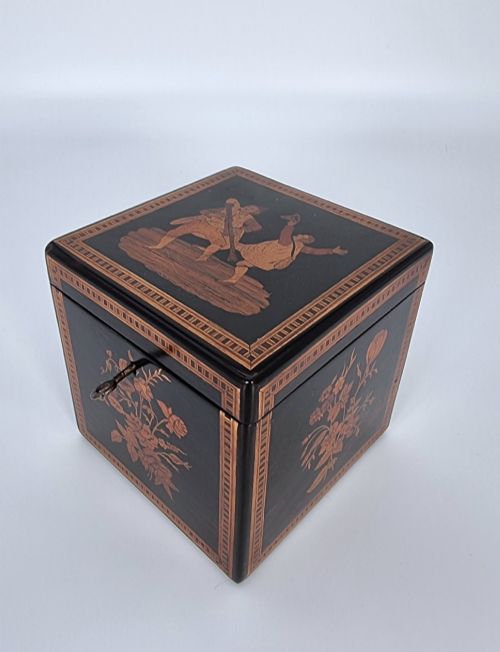
Craftsmen utilised both solid exotic timbers and native woods that were subsequently ebonised to mimic denser dark materials. Surfaces received intricate treatments such as penwork in ink, inlaid parquetry, or layered lacquer applications.
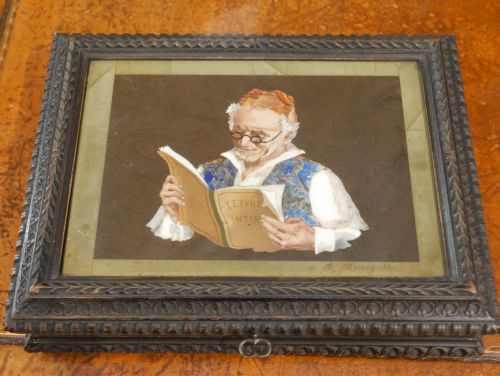
Carved structural elements and applied mounts in brass or stone, such as Pietra Dura, required specialised joinery and mounting techniques. Interior compartments often featured fitted trays and paper or fabric linings tailored for delicate items.
Black Wooden Jewellery Box Retail Price Guide 2026
Typical asking prices for black wooden jewellery box among the pieces listed under this phrase on Sellingantiques today, from the lower quarter to the upper quarter. They describe what is for sale here now, not the wider market.
One box guards its contents with an intricate penwork depiction of the Brighton Chain Pier, recording Regency seaside architecture.
What varies in quality
The calibre of a black wooden jewellery box rests upon the precision of its decorative execution, whether through deep relief carving, delicate penwork lines, or flawless lacquer layers. Pieces featuring solid ebony or intricate marquetry demonstrate a higher degree of artisan skill than simpler ebonised softwood alternatives.
Internal arrangements and original hardware also dictate the standing of a piece, with fitted trays, functional locks, and intact metal mounts distinguishing finer cabinetwork from more utilitarian containers.
The Black Wooden Jewellery Box Glossary
- Ebonised
- Timber treated with stain or paint to imitate the dark appearance of true ebony. This finish appears frequently on nineteenth-century pieces.
- Penwork
- A decorative technique using fine ink lines to draw intricate patterns onto light wood backgrounds before sealing. It is characteristic of Regency boxes.
- Pietra Dura
- Inlay work composed of polished, cut coloured stones fitted together to form pictorial or geometric designs. It is often mounted onto wooden caskets.
- Parquetry
- Geometric mosaic woodwork formed by small veneer pieces applied to a structure. It creates patterned surfaces on table caskets.
- Black Forest
- A nineteenth-century Swiss and German style defined by naturalistic carved animal and foliage motifs in wood. These items often take the form of caskets.
Black Wooden Jewellery Box: Frequently Asked Questions
What periods do these boxes come from?
The selection includes pieces spanning from the seventeenth century up to the early twentieth century. Styles range from Georgian and Regency eras through to Victorian and Edwardian periods.
Each era brought distinct decorative techniques, allowing buyers to find items representing specific historical craftsmanship and regional workshops.
How were these wooden boxes used?
These containers served to safeguard jewellery, correspondence, and small personal valuables on dressing tables or writing desks. Many incorporate internal trays and divided compartments to keep items organised.
Larger table cabinets functioned as miniature storage chests for prized keepsakes, documents, and trinkets within domestic interiors.
How do I care for a wooden box?
Maintain these objects by keeping them away from direct sunlight and extreme humidity fluctuations to protect the timber and delicate inlays. Gentle dusting with a dry, soft cloth preserves the polished surface.
Avoid liquid cleaners and harsh chemicals, particularly on ebonised finishes, penwork, or lacquered areas where moisture can cause damage.
Are these boxes made of solid ebony?
Materials vary significantly across the range, with some examples fashioned from solid exotic ebony while others utilise ebonised wood or pine. Various pieces also employ walnut, coromandel, and fruitwoods as structural bases.
Surface treatments like lacquer and paint further distinguish the underlying timber from the finished dark exterior appearance.