



Black Wooden Inkstand
A black wooden inkstand brings a touch of carved Victorian personality to a desk.
Black Wooden Inkstand
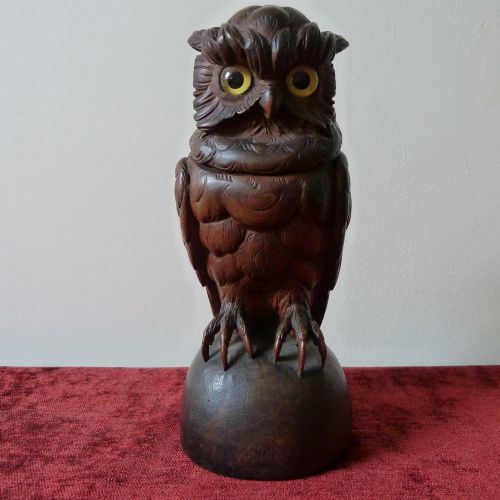
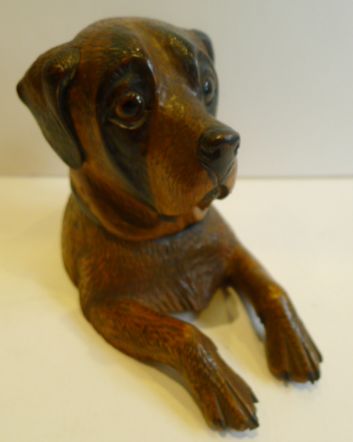
A black wooden inkstand combines practical desk organisation with sculptural animal carving, most commonly taking the form of figural desk accessories. These pieces date predominantly from the Victorian era and the late nineteenth century, spanning periods such as 1880, 1890, and 1900. When searching for a black wooden inkstand, buyers encounter expressive desk pieces shaped as owls, bears, dogs, cats, and eagles.
The dominant style found across these items is Black Forest, characterised by detailed animal representations and naturalistic scenes involving logs, boots, or prey figures. Makers produced these items from woods such as oak, ebony, linden wood, lime wood, and general carved wood, often paired with fitted glass inkwells and metal accents. These desk items function as both stationary holders and decorative Victorian ornaments.
Materials and construction
Carvers utilised native European and exotic timbers, working primarily with linden wood, lime wood, oak, and ebony to shape the figural bodies. Artisans applied dark stains or utilised naturally dark woods to achieve the characteristic black appearance of the timber. Hand carving defined the surface, creating fur, feathers, and anatomical details on animals such as St. Bernards, terriers, cats, and owls.
Makers integrated brass elements and glass inkwells into the carved wooden structures to form usable desk accessories. Artisans constructed hinged lids, collars, and small trays using metalwork that complemented the dark wood bodies. The combination of carved wood, fitted glass inserts, and metal hardware created sturdy desk tidies meant for daily nineteenth-century use.
Cats emerge wearing boots while keeping watch over nineteenth-century writing desks.
Assessing quality in carved inkstands
The distinction between standard pieces and superior examples lies in the depth and naturalism of the hand carving. Artisans who spent more time on anatomical accuracy rendered fur, facial expressions, and feather patterns with greater precision. Superior pieces display crisp details around the eyes, paws, and carved props such as logs or prey.
Integration of materials also sets pieces apart, with higher quality stands featuring well-fitted glass inserts and sturdy brass hinges that align seamlessly with the timber. The choice of wood influences the finish, as dense timbers like ebony or finely worked linden wood retain sharper edges than softer woods. The complexity of the figural subject, such as paired animals or multi-part desk tidy boxes, indicates the ambition of the original workshop.
Maison F. Mack
The Black Wooden Inkstand Glossary
- Black Forest
- A style of wood carving originating from the mountain region of central Europe during the nineteenth century. It is known for realistic depictions of animals and natural forms.
- Desk Tidy
- A multifunctional desk accessory designed to hold writing instruments, ink, and small stationery items in one consolidated station. These often incorporated boxes or open trays alongside the inkwell.
- Figural
- A description for objects moulded or carved in the likeness of human or animal forms. In desk accessories, this usually refers to dogs, bears, cats, or birds incorporated into the design.
- Inkwell
- A small container holding writing ink, usually featuring a hinged lid to prevent evaporation. In these stands, glass inserts sat directly inside the carved wooden housing.
Black Wooden Inkstand: Frequently Asked Questions
What animals appear most often on these stands?
Dogs represent the most common animal form, including St. Bernards, terriers, and general hound figures. Bears, owls, cats, and eagles also frequently shape the carved wooden bodies.
Carvers often placed these animals interacting with natural objects like logs or boots, creating distinct novelty scenes.
How do you date a wooden inkstand?
Dating relies on stylistic markers from the Victorian period, particularly the transition of carving techniques between 1880 and 1900. Makers often incorporated specific motifs and material combinations typical of late nineteenth-century Black Forest workshops.
Examining the wear on the wood, the type of glass in the inkwell, and any metal hinges provides further chronological context.
Were these pieces meant for daily writing?
Victorian users placed these stands on desks to hold liquid ink and writing implements during a time when correspondence relied entirely on dip pens. The integrated glass liners held the ink safely within the carved wooden housings.
Today, collectors use them as decorative desk accessories or functional pen stands in home studies.
What woods were used for these carvings?
Artisans selected linden wood, lime wood, oak, and ebony to construct the bodies of the stands. The choice of timber depended on the desired finish, with dark ebony or stained woods providing the characteristic black tone.
Carvers favoured woods that accepted fine detail work without splintering.