







Black Tray Table
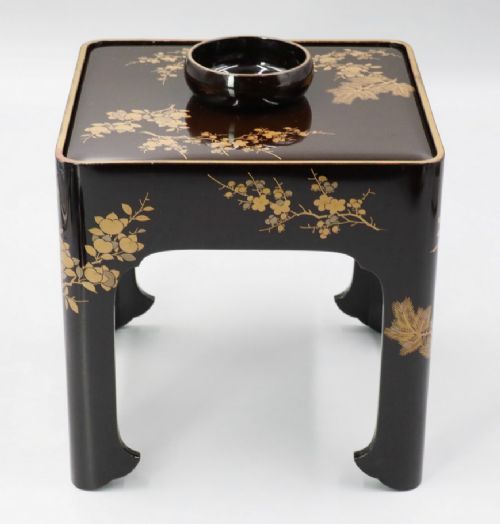
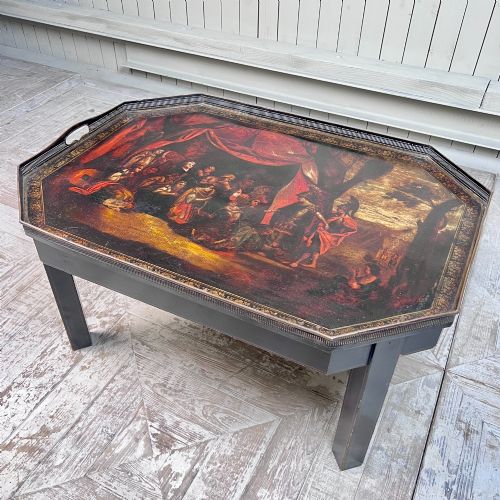
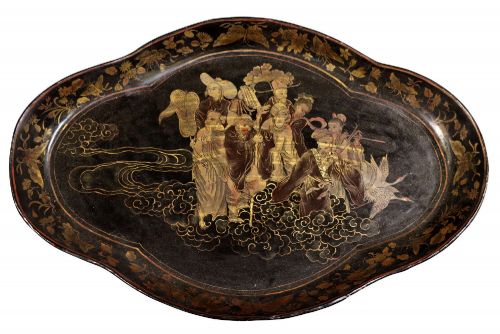
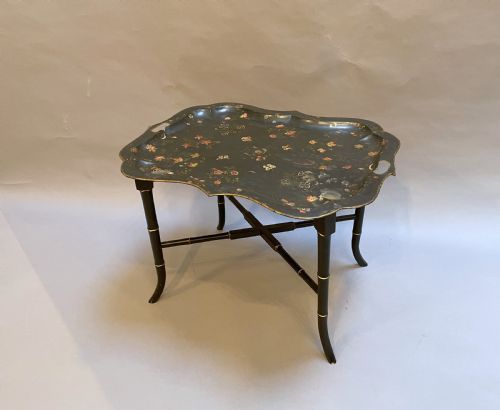
A black tray table brings dark lacquer, painted decoration and folding stands together to serve as a versatile piece for a modern interior.
Black Tray Table
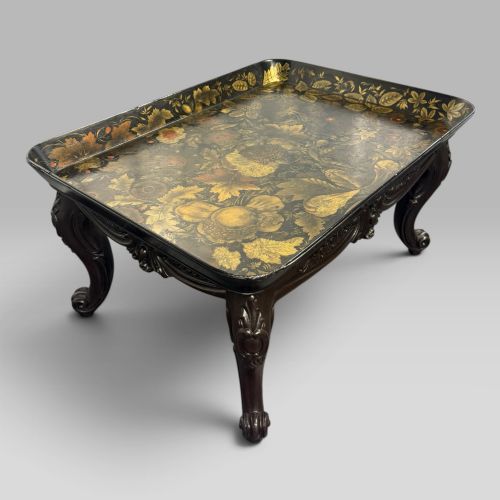
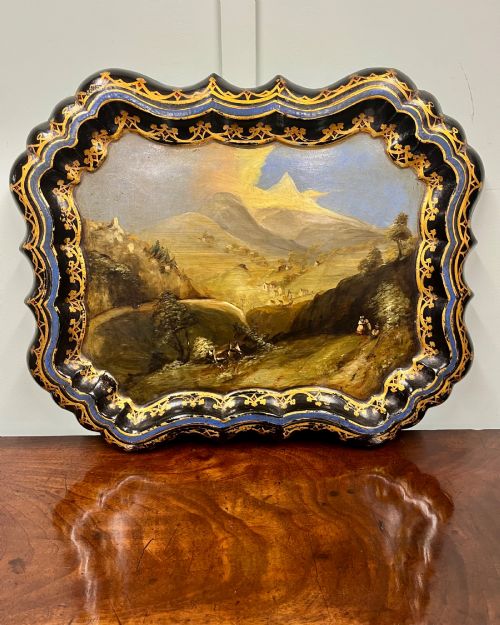
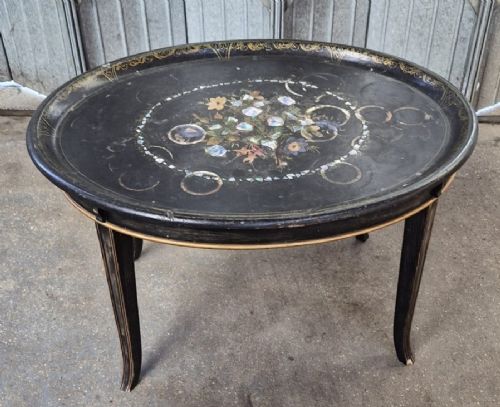
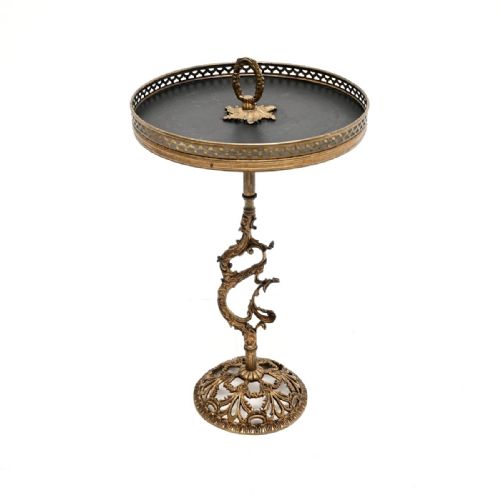
A black tray table combines a portable serving surface with a separate or folding stand, creating an adaptable piece of furniture for display or entertaining. When you search for a black tray table, you encounter diverse forms ranging from large serving trays mounted on later bases to purpose-built occasional and coffee tables.
The pieces appearing on this page span the eighteenth century, the Regency era, the Victorian period, and the early twentieth century. Victorian and Edwardian examples frequently feature Chinoiserie ornamentation, while earlier periods draw on Regency and French Rococo Revival influences.
Papier-mâché, wood, lacquer, and toleware dominate the construction of the trays themselves. These surfaces sit upon stands made of wood, brass, or cast iron, creating functional low tables that work well as coffee tables or side tables.
How they were made
The foundational materials rely heavily on papier-mâché, lacquered wood, and metal toleware, which provide smooth, durable surfaces for painting. Craftsmen applied multiple layers of black lacquer or ebonised finishes to achieve deep, reflective grounds.
Decoration often involved hand-painted Chinoiserie motifs, floral designs, and gilding with gold leaf. Specialised makers built robust wooden or metal stands, sometimes utilising folding mechanisms to allow the serving tray to be lifted off independently.
Black Tray Table Retail Price Guide 2026
Typical asking prices for black tray table among the pieces listed under this phrase on Sellingantiques today, from the lower quarter to the upper quarter. They describe what is for sale here now, not the wider market.
Periods represented include the eighteenth century, the Regency era, the Victorian period, and the early twentieth century up to the Art Deco era.
What varies in quality
Quality reveals itself in the depth of the lacquer work and the intricacy of the hand-painted or gilt details on the tray surface. Superior examples demonstrate refined brushwork and crisp execution in figurative or floral scenes.
The relationship between the tray and its stand also dictates standard; period-matching stands or pieces bearing maker attribution represent a higher tier than later marriages of antique trays to replacement bases.
Jennens And Bettridge·Henry Clay
The Black Tray Table Glossary
- Papier-mâché
- A composite material made of paper pulp or layers of paper reinforced with glue, pressed and dried to form a rigid, smooth base for lacquer and painting. It was widely utilised in the nineteenth century for lightweight yet strong serving trays.
- Toleware
- Painted or lacquered sheet metal utensils and decorative objects, often made in tinplate. This material provided a durable surface for colourful hand-painted designs on trays and tables.
- Ebonised
- Wood finished with a dark stain or black paint to imitate expensive ebony. This treatment was common in Victorian furniture to create a sleek, uniform dark ground.
- Japanned
- A European form of decorative lacquer finish that imitated East Asian lacquerware through layered varnishes and metallic dust. The technique was widely applied to eighteenth and nineteenth-century furniture and trays.
Black Tray Table: Frequently Asked Questions
Are the trays removable from the stands?
Many traditional examples feature a detachable tray resting on a folding or rigid support frame. This design allowed servants to carry the tray independently before placing it onto the stand for service.
Some later or adapted pieces are permanently fixed together, so examining the construction beneath the surface clarifies whether the tray lifts off.
How do I identify a papier-mâché tray?
Papier-mâché feels surprisingly light yet rigid, with a smooth surface that takes dark lacquer and paint exceptionally well. It lacks the grain of natural timber and often displays a slightly concave shape from the pressing process.
When tapped gently, it produces a solid, dull sound rather than the resonance associated with metal or solid wood.
What is Chinoiserie decoration?
Chinoiserie is a European style reflecting imaginative views of Asian art, featuring motifs such as figures in gardens, pagodas, birds, and delicate foliage. On these tables, artists typically rendered these scenes in gold leaf or contrasting colours against a black lacquer background.
The style experienced revivals during the Regency, Victorian, and Edwardian periods.
Can I use a tray table for daily drinks?
These tables function well for serving drinks or displaying decorative objects, provided you protect the antique lacquer surface from moisture and heat. Using coasters and avoiding standing water preserves the original painted and gilt finish.
Careful placement away from direct sunlight also protects the dark lacquer and hand-painted details from fading over time.