



Black Profile Painting
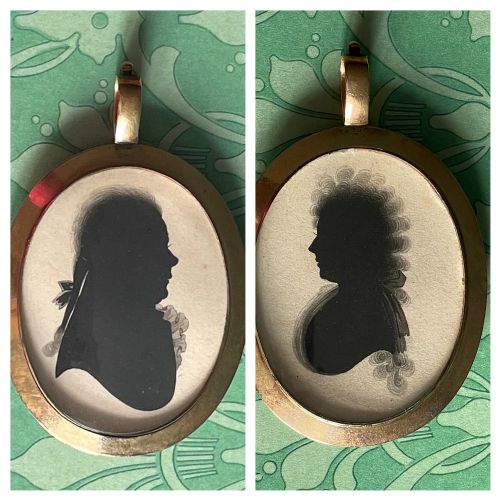
These black profile painting examples capture likenesses in silhouette and monochrome, offering a direct window into Georgian and Victorian drawing rooms.
Black Profile Painting
A black profile painting records the exact contour of a sitter's face, usually executed in ink, paint, or watercolour. You will most frequently encounter Georgian and Regency examples, where artists rendered shadow likenesses with precise brushwork.
The form spans centuries, moving from the eighteenth century into the Victorian era and early twentieth century. Works appear on various grounds including glass, paper, card, and plaster.
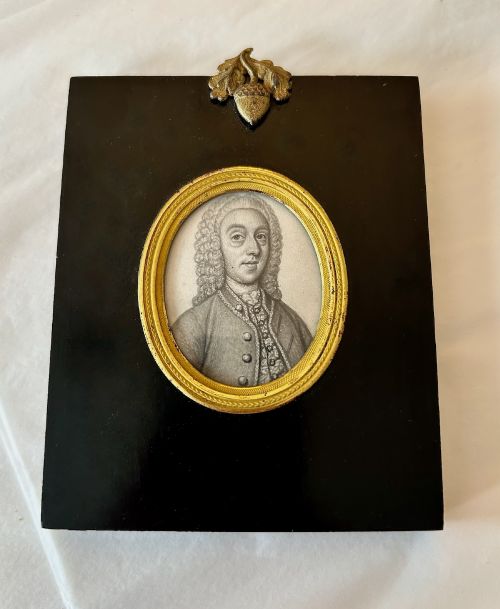
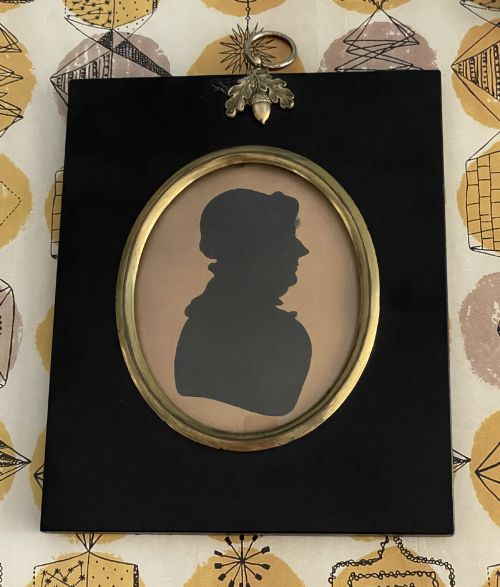
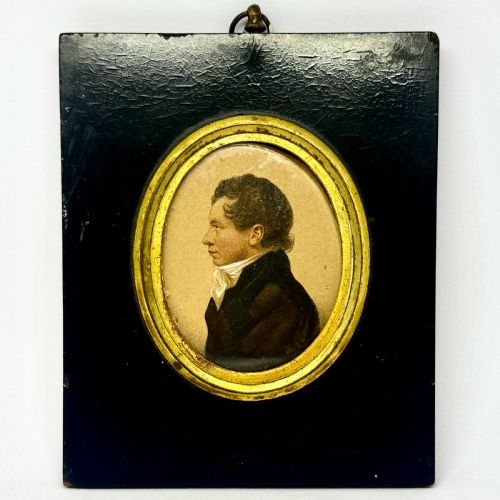
Framing is integral to these pieces, with ebonised wood and rosewood cases housing the miniature portraits. Some pieces incorporate gilded highlights to define collars, hair, and lace against the dark profile.
Materials and Technique
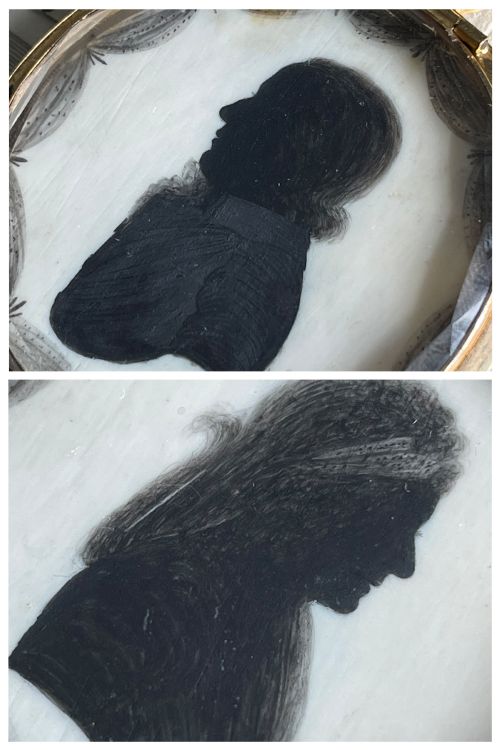
Artists painted directly onto convex glass or prepared paper, often applying pigment from the reverse side to create a deep, glossy finish. Glass pieces required steady brushwork in reverse, as any error was immediately visible from the front.
Other works utilise ink and watercolour on card, or fine paint applied to plaster grounds. Gilding was frequently added by hand to accent jewellery, buttons, and clothing details within the dark silhouette.
Black Profile Painting Retail Price Guide 2026
Typical asking prices for black profile painting among the pieces listed under this phrase on Sellingantiques today, from the lower quarter to the upper quarter. They describe what is for sale here now, not the wider market.
Listings span the eighteenth century through the Regency and Victorian eras to the early twentieth century, utilising glass, paper, brass, wood, ebonised wood, ink, watercolour, and paint.
Assessing Quality
The refinement of the facial contour dictates the standard of the piece, separating rapid street work from master studio portraiture. A superior profile captures bone structure and expression with minimal brushstrokes.
Condition of the ground material matters significantly, particularly on glass where flaking paint or cracked panels diminish the work. Original frames in rosewood or ebonised wood with intact brass hangers preserve the integrity of the object.
Frith·James Gillespie·J. Deacon·John Miers·John Smith of Edinburgh·Leo Klin
The Black Profile Painting Glossary
- Silhouette
- A portrait rendered as a solid dark shape, usually in profile. The style gained immense popularity before the invention of photography.
- Reverse painted on glass
- A technique where the artist paints on the back of the glass sheet so the image is viewed through the front. This imparts a lustrous, deep sheen to the black pigment.
- Ebonised wood
- Timber treated to resemble ebony, frequently used for dark framing. It provides a stark contrast that makes the pale background and dark profile stand out.
- Miniature portrait
- A small-scale painting designed for intimate viewing or portable display. These works required exceptional control and fine brushes.
- Plaster ground
- A smooth, chalky surface used as a base for painted profiles, particularly favoured by prominent profile artists of the eighteenth century.
Black Profile Painting: Frequently Asked Questions
How do I hang a silhouette portrait?
These small pieces suit narrow wall spaces, alcoves, or gallery arrangements alongside other framed works. Grouping several profiles together creates a striking display that echoes historic parlour walls.
Keep them away from direct sunlight to protect the paper, card, and painted glass from fading over time.
What is reverse glass painting?
Artists painted the image on the rear side of a glass panel so the viewer looked through the smooth front surface. This method protected the pigment from dust and handling while adding depth.
Cleaning requires care to avoid disturbing the seals at the back of the frame.
How can I tell the period?
Clothing styles, hairstyles, and framing materials offer clear clues to the date of execution. Regency pieces often feature high waistlines and elaborate bonnets, while Victorian examples display stiffer collars and heavier frames.
Backing papers, trade labels, and old handwriting provide further verification of the era.
Are all black profiles handmade?
The pieces recorded here are hand-cut or hand-painted works by named and anonymous artists. They predate mass production and mechanical copying methods.
Brush marks under magnification confirm the individual touch of the artist.