

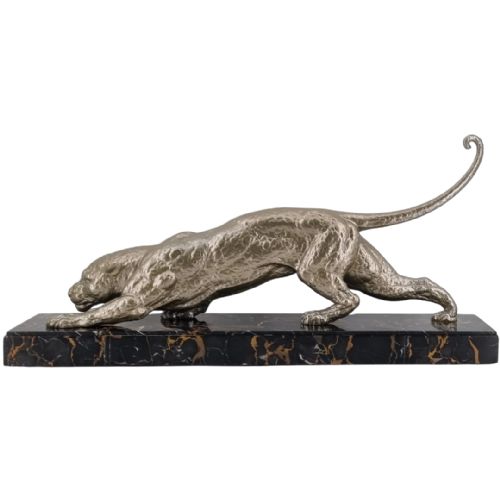
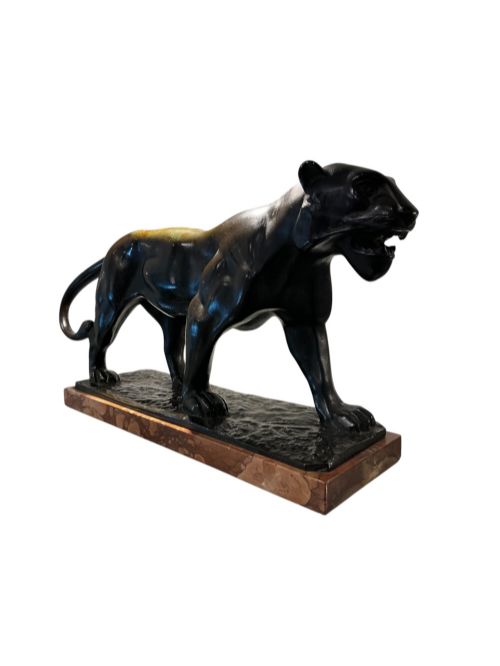
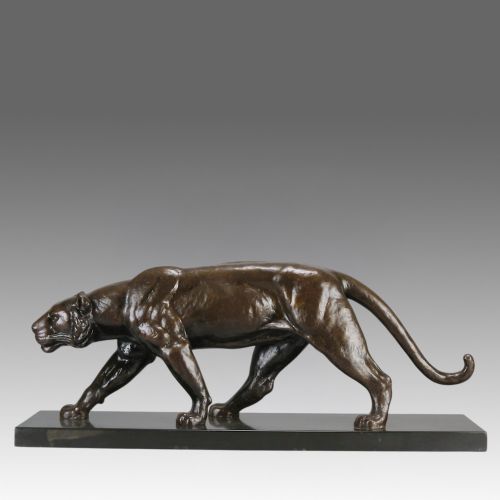


Black Panther Sculpture
A black panther sculpture brings feline menace to a mantelpiece, most often met here in cast bronze or spelter upon a marble base.
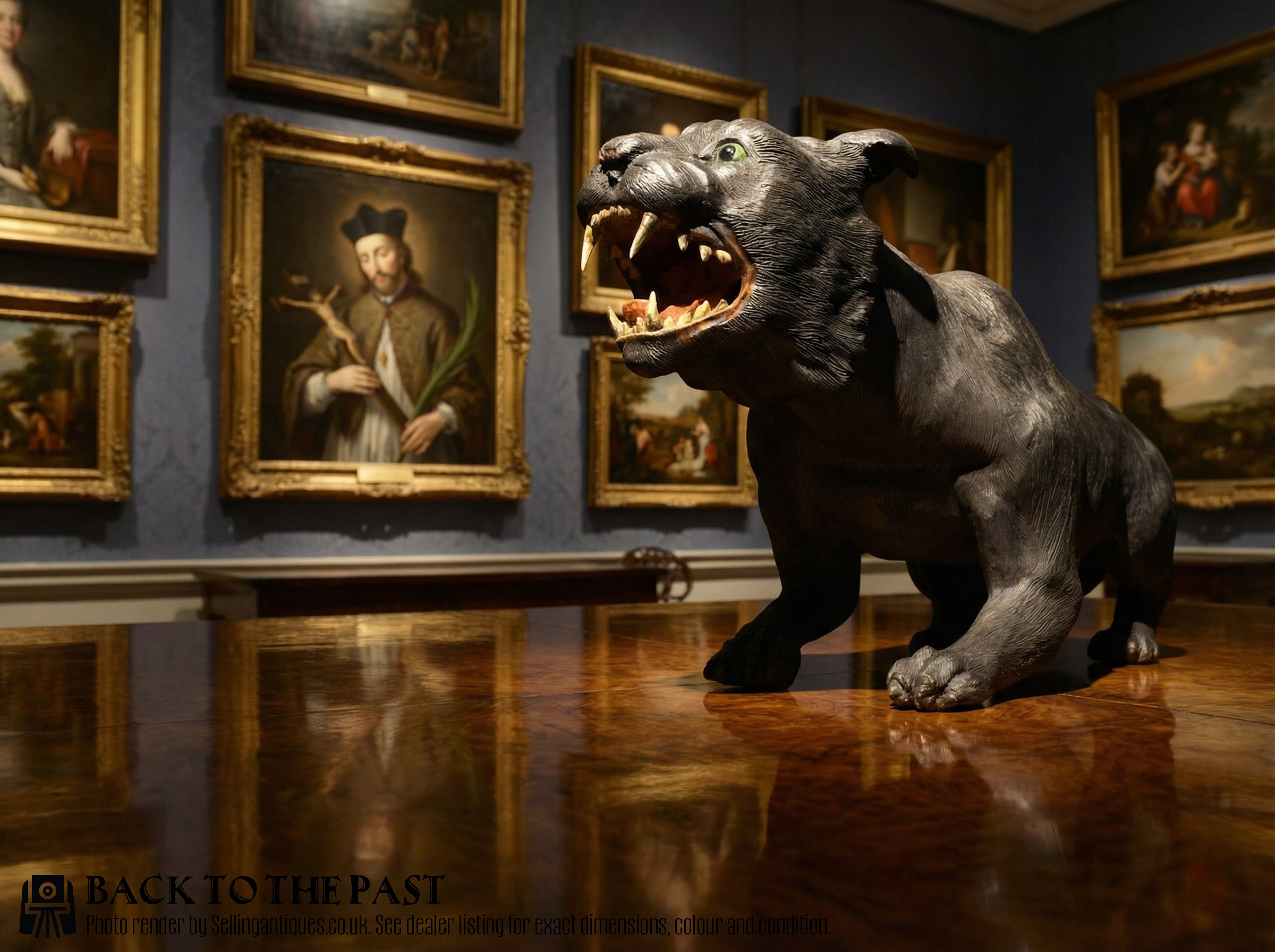
Black Panther Sculpture
When you search for a black panther sculpture, you find predatory cats rendered in metal, stone, and wood across various periods. The pieces on this page span the nineteenth century, the art deco era of the 1920s, 1930s, and 1940s, and later twentieth-century production.
You are most likely to meet art deco examples from France, where sculptors captured the sleek lines and coiled power of the big cat. These twentieth-century animalier figures frequently combine cast metal bodies with contrasting marble plinths.
Earlier nineteenth-century works appear in carved wood or cast bronze, drawing on French animalier traditions established by academic sculptors. Later post-nineteenth-century interpretations continue the theme in hot cast bronze.
How they were made
Makers shaped these animals using metal casting techniques such as the lost-wax process for bronze or pressure casting for spelter. Spelter, a zinc alloy, provided a more economical alternative to bronze and often received patination or paint to resemble darker metals.
Foundries and studios mounted these metal cats on bases of black or veined marble, anchoring the heavy figures securely. Artisans also carved feline forms directly from blocks of wood or timber, sometimes applying paint for surface finish.
Black Panther Sculpture Retail Price Guide 2026
Typical asking prices for black panther sculpture among the pieces listed under this phrase on Sellingantiques today, from the lower quarter to the upper quarter. They describe what is for sale here now, not the wider market.
Listings feature works in bronze, spelter, wood, and glass, spanning from the nineteenth century through the 1940s and beyond.
What varies in quality
Quality rests upon the fidelity of the casting and the crispness of the chisel work on the metal surface. Finer sculptures show careful attention to muscle tension, facial expression, and paw detail rather than soft outlines.
The choice of base material and the harmony between the cat and its plinth distinguish superior studio pieces from standard decorative wares. Heavier cast metals and dense, polished marble bases indicate more ambitious manufacturing standards.
Alexandre Ouline·Eugene Emile Borga
The Black Panther Sculpture Glossary
- Animalier
- A nineteenth- and twentieth-century sculptural genre dedicated to the realistic portrayal of animals. Practitioners focused heavily on anatomical accuracy and the dynamic movement of beasts.
- Spelter
- A zinc alloy commonly utilised in the twentieth century as a less costly substitute for bronze. It accepts patination and metallic paint finishes readily.
- Lost-wax
- A casting method where a molten metal is poured into a mould that has been created by means of a wax model. This technique permits intricate detail in bronze sculpture.
- Patina
- The surface coloration or sheen developed on metal through age or chemical treatment. It alters the visual depth of a bronze sculpture.
Black Panther Sculpture: Frequently Asked Questions
Are these sculptures solid bronze?
Many examples are cast in bronze, whilst others utilise spelter, a zinc-based alloy, or carved wood. Each listing specifies the primary material used in the construction.
Checking the weight and the method of patination helps determine whether a metal piece is bronze or a cheaper alloy.
What period are most pieces from?
The majority of these sculptures date from the art deco period of the 1920s and 1930s. French ateliers produced a high volume of feline subjects during this era.
Earlier nineteenth-century animalier bronzes and later twentieth-century castings also appear within the selection.
Why are they mounted on marble?
Marble bases provided stability for heavy metal castings and added a geometric contrast to the organic curves of the cat. Black marble was particularly popular during the art deco years.
Some wooden sculptures also utilise marble plinths to elevate the figure and anchor the composition.
How do I clean a bronze panther?
Dust the surface gently with a soft, dry cloth to prevent the accumulation of grit. Avoid using harsh chemical cleaners or polishes that can strip the original patina.
For most metal and wood sculptures, minimal handling and a stable indoor environment preserve the finish best.