



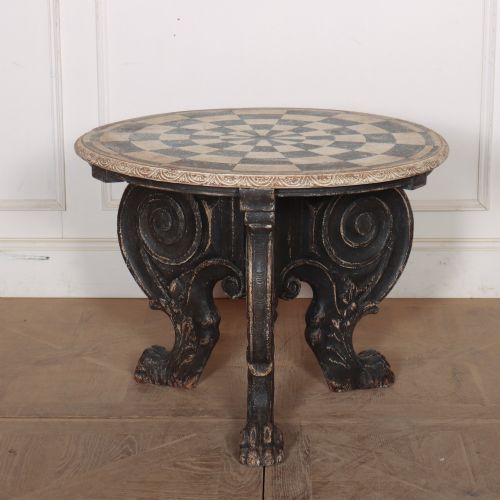
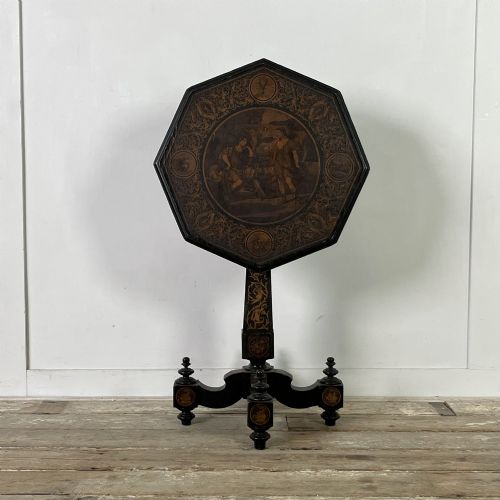


Black Painted Pedestal Table
A black painted pedestal table brings structural presence to a room, offering a sturdy central support beneath a round or square top.
Black Painted Pedestal Table
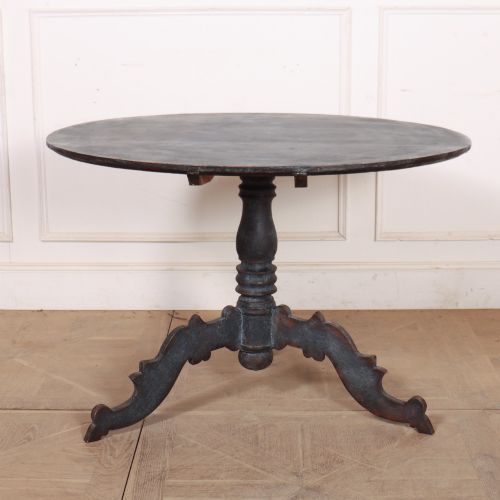
A black painted pedestal table sits firmly on a single central column or base, providing a compact footprint that works easily in sitting rooms and bedrooms. These pieces appear across the nineteenth century and into the early twentieth century, spanning Victorian, Regency, and Empire designs.
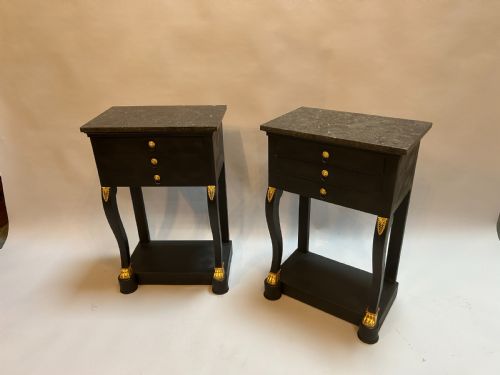
The selection ranges from occasional tables and tilt-top examples to gueridon tables with marble tops and lacquered plant stands. Buyers find both simple pine and oak constructions and more ornate decorated surfaces.
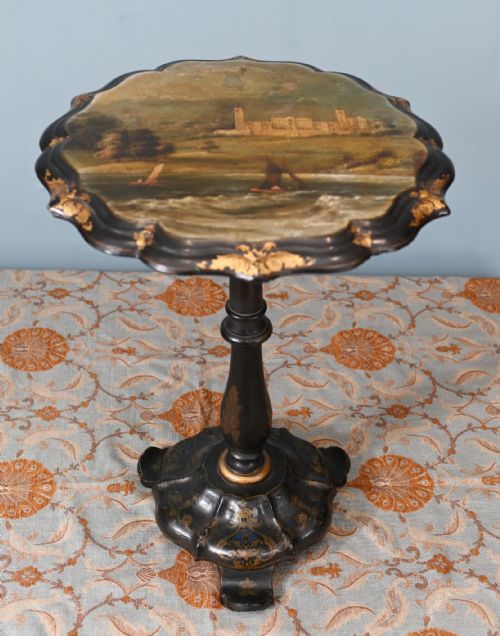
Many examples lean towards specific stylistic revivals, including Chinoiserie decoration, French Empire lines, and Japanned finishes. This variety allows a table to function as a bedside cabinet, a lamp table, or a central display piece.
Materials and construction
Makers utilised a variety of woods including pine, oak, and ebonised timber as a solid foundation for decorative finishes. Surfaces received coats of paint, lacquer, or japanning, sometimes complemented by hand-painted details and parcel silvering.
Support structures frequently involve turned columns and carved pedestals, occasionally accented with brass fittings or topped with fitted marble slabs. Tilt-top mechanisms and drop-leaf designs required precise joinery to ensure stability on a single central pillar.
Current listings demonstrate materials ranging from basic pine and oak to ebonised wood, lacquer, and marble.
Distinguishing quality in the build
Quality rests in the execution of the painted or lacquered surface and the stability of the central pedestal. Pieces with hand-painted decoration, genuine japanning, or original marble tops demonstrate higher craftsmanship than standard utility items.
The structural integrity of the column and its junction with the base determine longevity, particularly on tilt-top tables where the mechanism must hold the top firm. Finer examples show careful carving, balanced proportions, and integrated stylistic details such as parcel silvering or ink work.
The Black Painted Pedestal Table Glossary
- Pedestal table
- A table supported by a single central pillar or column resting on a footed base. This design maximises legroom and floor space.
- Gueridon
- A small French table supported by a column or figures, frequently featuring a round marble top. These originated in the seventeenth century but appear in later revival periods.
- Tilt-top
- A table top hinged to the pedestal so it can be tilted vertically when not in use. This mechanism saved space in smaller historic interiors.
- Torchere
- A tall ornamental stand designed to hold a light, figure, or plant. They typically feature a slender pedestal and small upper surface.
Black Painted Pedestal Table: Frequently Asked Questions
Where should I place a pedestal table?
These tables suit smaller spaces such as beside a bed or chair where a four-legged table takes up too much room. Their central column allows chairs or feet to tuck underneath easily.
They also function effectively as lamp tables or display surfaces in hallways and corners, drawing the eye without blocking pathways.
How do I care for a painted surface?
Dust regularly with a soft, dry cloth to prevent particles from scratching the dark finish. Avoid chemical cleaners that can degrade historic paint or lacquer.
Keep the timber away from direct heat sources and strong sunlight to prevent the painted surface from drying out or fading over time.
What is the difference between japanned and painted?
Japanning involves a specific layered varnish technique designed to emulate Asian lacquer, often with metallic motifs and a glossy sheen. Standard painting relies on pigmented mediums applied directly to wood.
Japanned surfaces generally display more reflective depth and decorative detail than simple black-painted pine or oak.
Are marble tops original to these tables?
Certain forms, particularly French gueridon tables, were built specifically to carry fitted marble slabs from the outset. The stone provides weight and stability to the central pedestal.
Examining the underside and the rebate in the wooden top helps confirm whether the marble sits in its original housing.