




Black Oval Frames
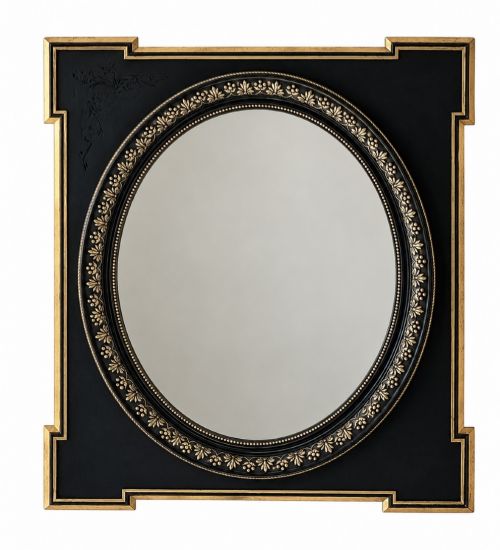
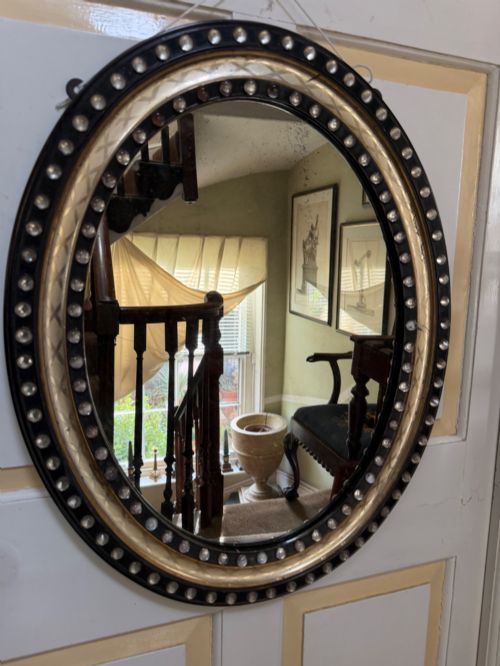
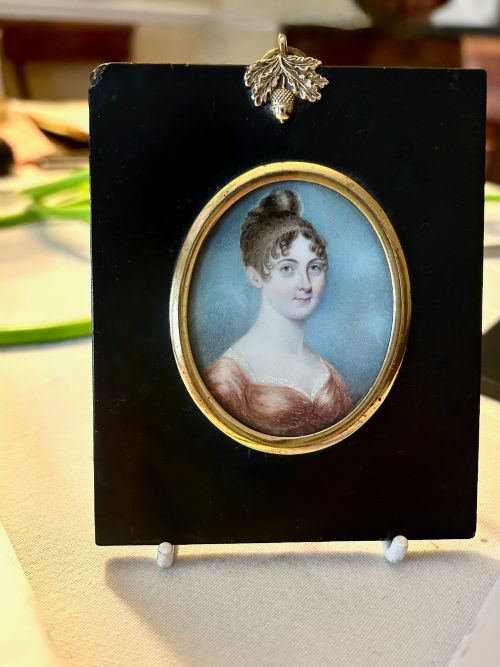
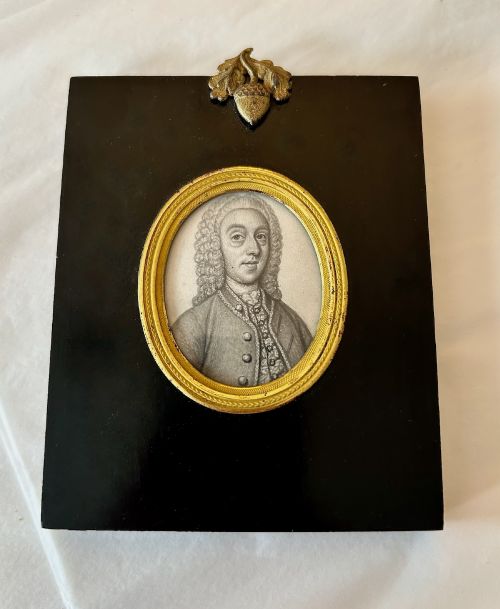
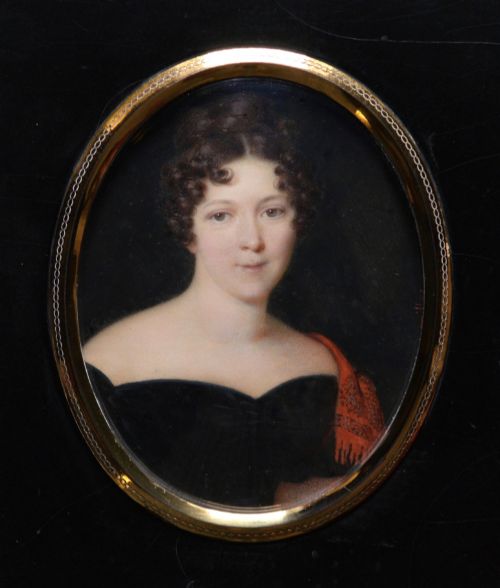
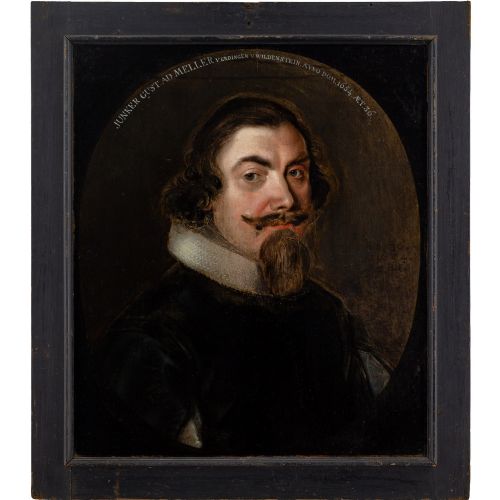
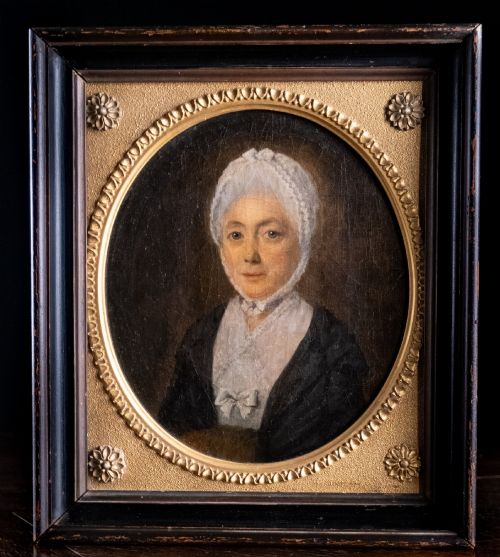
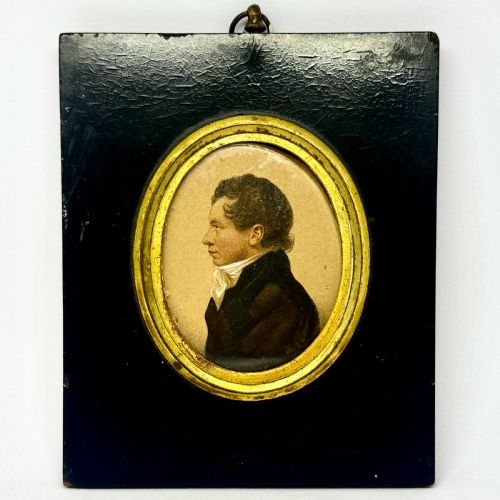
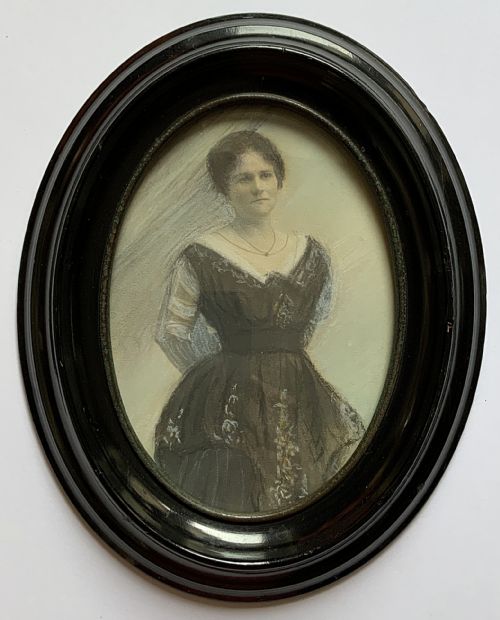
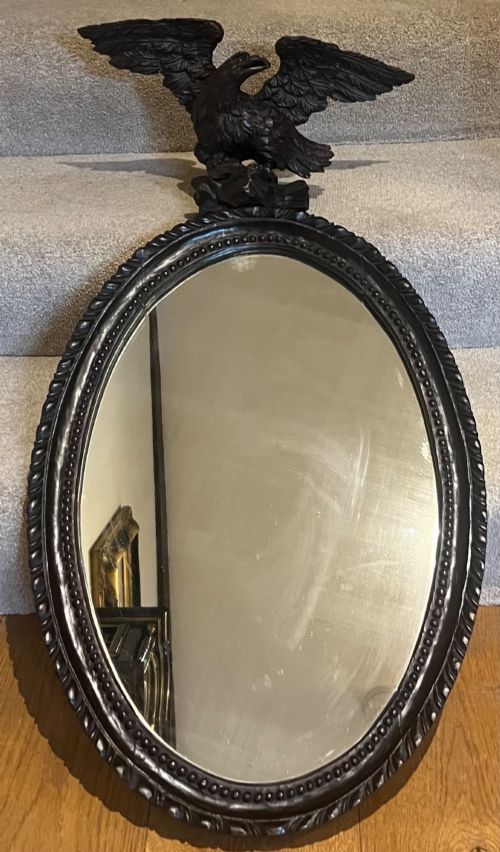
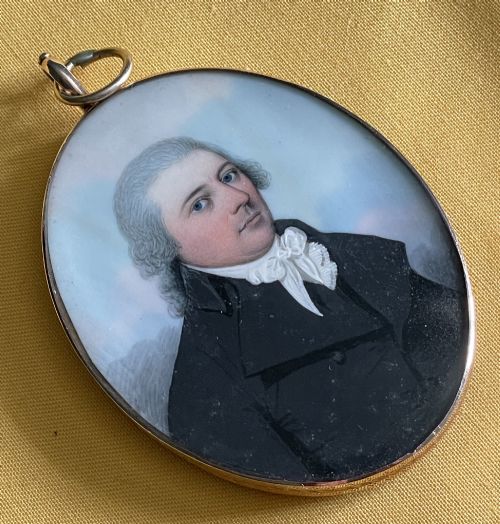
Black oval frames enclose intimate portrait miniatures, silhouettes, oil paintings and mirrors dating from the seventeenth century to the twentieth.
Black Oval Frames
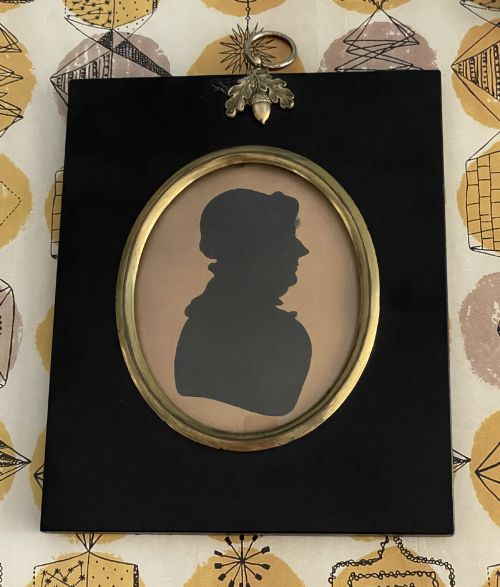
When buyers search for black oval frames, they encounter a diverse selection of historic surrounds housing portrait miniatures, silhouettes, oil paintings and wall mirrors. These items span periods from the seventeenth century through to the 1930s, encompassing Georgian, Regency, Victorian and Edwardian aesthetics.
The most common formats on this page are small, intimate portrait miniatures and silhouettes rendered in watercolour, oil or plumbago, alongside ebonised and parcel-gilt wall mirrors. Works range from naive eighteenth-century panels to detailed nineteenth-century watercolours set within distinct dark oval boundaries.
How they were made
Makers fashioned these pieces primarily using wood, often ebonised to achieve a dense black finish, sometimes accented with gold leaf or parcel-gilding. Glass frequently protects delicate paper, silk woolwork, or reverse-painted silhouettes, while other items utilise brass fittings or mother of pearl.
Techniques varied from carved wooden surrounds and lacquered chinoiserie finishes to delicate verre églomisé glass panels. Artisans also worked directly in oil on canvas or panel, plumbago on vellum, and cut paper to create the artworks housed within these curved borders.
Black Oval Frames Retail Price Guide 2026
Typical asking prices for black oval frames among the pieces listed under this phrase on Sellingantiques today, from the lower quarter to the upper quarter. They describe what is for sale here now, not the wider market.
Listings feature items spanning the 17th Century to 1930, utilising materials such as ebonised wood, glass, brass, gold leaf, and mother of pearl.
What varies in quality
Quality rests upon the harmony between the enclosed artwork and the surrounding frame, noting the depth of the ebonising and the crispness of any parcel-gilt details. Skill in handling wood carving or lacquer work distinguishes standard production from finer artisan pieces.
The preservation of the interior medium, whether oil, watercolour or cut paper, alongside the originality of the glass and backing components, elevates the standing of an individual piece within its period.
John Miers·James Gillespie·Frederick Buck·John Taylor
The Black Oval Frames Glossary
- Ebonised wood
- Timber treated with a dark stain or pigment to imitate heavy, dense ebony. This finish is typical in nineteenth-century frames.
- Verre églomisé
- A cold decoration technique where gilt and silver leaf are applied to the rear face of glass. It provides a reflective, patterned border.
- Plumbago
- A drawing executed in graphite, resembling lead pencil work. These detailed monochrome portraits frequently date from the Georgian era.
- Parcel-gilt
- Wood or metal partially covered with thin gold leaf or gilt paint. This highlights specific carved details against a black ground.
Black Oval Frames: Frequently Asked Questions
What periods do these frames represent?
The listings span from the seventeenth century through the Georgian and Regency eras into the Victorian, Edwardian and early twentieth-century periods.
Craftsmanship and materials shift across these eras, moving from early oil paintings and plumbago portraits to later silhouettes and chinoiserie mirrors.
How were portrait silhouettes displayed?
Silhouettes were painted on paper, card, plaster or glass, then placed inside tight oval surrounds to emphasise the profile.
Many incorporated convex glass and ebonised wooden rims to protect the delicate monochrome image from dust and light.
Are the mirrors original to their era?
Surviving mirrors and framed artworks reflect the prevailing styles of their respective centuries, including French Restoration and German Baroque influences.
Inspect the backboards, fixings and glass characteristics to understand the history of the individual object.
How do I care for antique ebonised wood?
Keep these items away from direct sunlight and excessive moisture to protect the dark wood finish and any underlying gilt.
Dust gently with a dry, soft cloth rather than using liquid polishes that might damage historic surfaces.