








Black Metal Tray
A black metal tray brings both dark elegance and practical utility to a room, offering a surface that spans centuries of craftsmanship.
Black Metal Tray
When you search for a black metal tray, you encounter a selection of serving wares, decorative trays, and occasional tables derived from the toleware and lacquered traditions. These pieces originate from periods ranging through the Regency, Victorian, and Edwardian eras, extending into the early twentieth century.
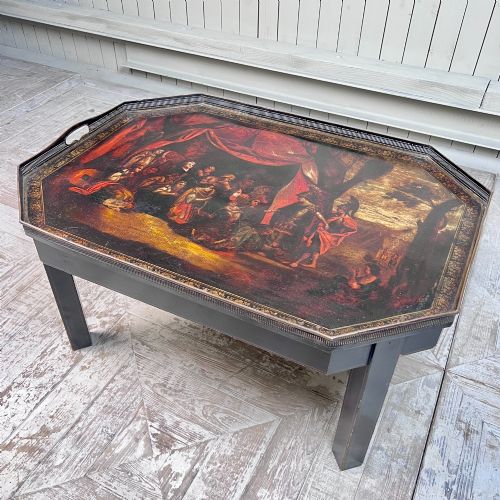
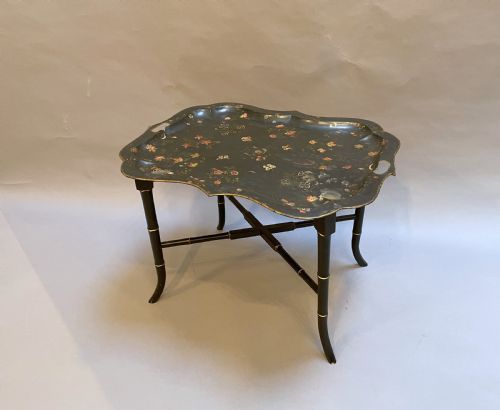
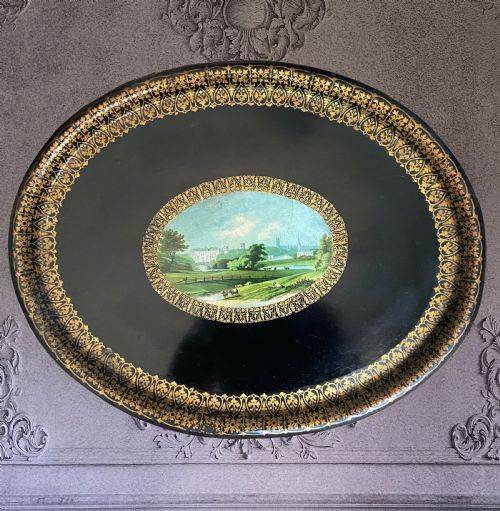
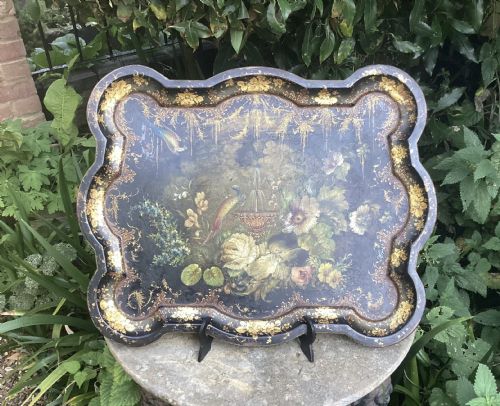
The most frequent examples found in this category include handpainted toleware trays from the nineteenth century, often mounted on later stands to function as coffee tables. Oval and shaped forms dominate, alongside flat rectangular designs bearing gilded or painted decoration.
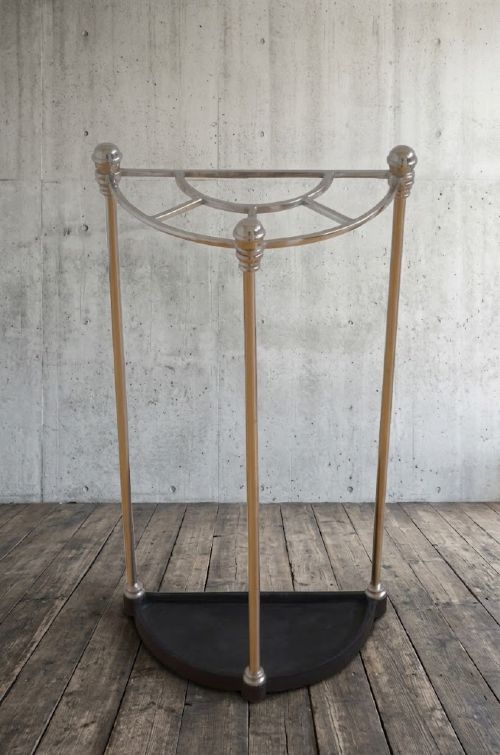
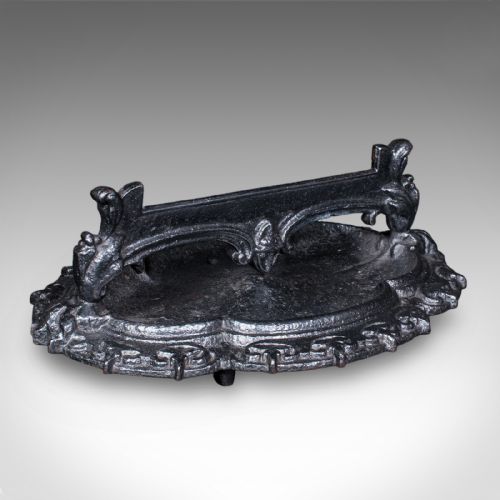
Beyond standard serving pieces, the broader selection encompasses related dark metalware such as cast iron umbrella stands, boot scrapers, and lacquered plaques. These items share a heavy reliance on dark finishes, utilising paint, lacquer, and japanning to achieve their characteristic appearance.
How they were made
Makers constructed these trays using sheet iron, toleware, and papier-mâché, shaping them into oval, octagonal, or rectangular profiles before applying dark grounds. Cast iron serves for heavier hall accessories like umbrella stands and boot scrapers.
Surface decoration relies on paint, lacquer, and gilding, frequently executed in styles such as Chinoiserie or classical motifs. Pontypool workshops and individual makers applied layers of paint and varnish to sheet metal to create durable, lustrous finishes.
Metalworking techniques included pressing, casting, and hand-shaping, while trays often received handpainted details atop black or dark green bases. Gilt embellishments were applied by hand to accent the rims and central scenes.
Black Metal Tray Retail Price Guide 2026
Typical asking prices for black metal tray among the pieces listed under this phrase on Sellingantiques today, from the lower quarter to the upper quarter. They describe what is for sale here now, not the wider market.
Object forms in this category range from flat serving trays and decorative bowls to umbrella stands, boot scrapers, and tray tables.
What varies in quality
The sophistication of the handpainted or gilded decoration determines the distinction between standard production and superior examples. Finer trays exhibit intricate brushwork and well-preserved gilding that withstands close inspection.
The structural integrity of the metal substrate and any accompanying wooden or metal stands dictates durability. Thicker sheet iron and robust cast iron provide greater longevity than thinner, easily dented metals.
Provenance and historical adherence to specific periods, such as Regency or Victorian design canons, elevate certain items. Original integration of trays with their period stands adds notable character compared to later marriages of separate components.
Clay·Zimmermann
The Black Metal Tray Glossary
- Toleware
- Painted or lacquered metalware, typically tin-plated steel or sheet iron, produced extensively in Britain and Europe during the eighteenth and nineteenth centuries. This technique allowed metal to mimic more expensive ceramic and lacquer goods.
- Japanning
- A type of European finish that emulates East Asian lacquerware by applying layers of dark varnishes and resins. Artisans often decorated these surfaces with raised gold motifs in imitation of imported goods.
- Pontypool
- A Welsh town renowned for its eighteenth and nineteenth century production of high-quality lacquered and tinned metalware. Pieces from this centre typically feature distinctive dark grounds and meticulous handpainted floral or landscape details.
- Demi-lune
- A half-moon or semicircular shape commonly found in furniture and decorative accessories designed to sit flush against a wall. This profile appears frequently in hall stands and side tables.
- Papier-mâché
- A composite material consisting of paper pulp or reinforced sheets of paper mixed with glue, oil, and resin, then moulded and lacquered. It provided a lightweight alternative to metal for serving trays.
Black Metal Tray: Frequently Asked Questions
Were these trays used for serving?
Historical examples served primarily for carrying tea, wine, and food in formal households, functioning as portable display surfaces.
Over time, many deep or decorated trays transitioned into decorative room elements or found new life mounted upon custom frames as low tables.
How do I date a black tray?
Dating relies on examining the substrate material, such as early nineteenth century sheet iron versus later twentieth century alloys, alongside the style of handpainted decoration.
Wear patterns on the underside and the specific composition of the lacquer or paint layers offer further clues to the manufacturing decade.
Can I use a tray as a table?
Many nineteenth century trays arrive mounted on folding or fixed wooden stands, designed specifically to function as occasional coffee or tea tables.
Ensuring the stand securely supports the weight of the metal tray guarantees safe daily use in a modern living space.