
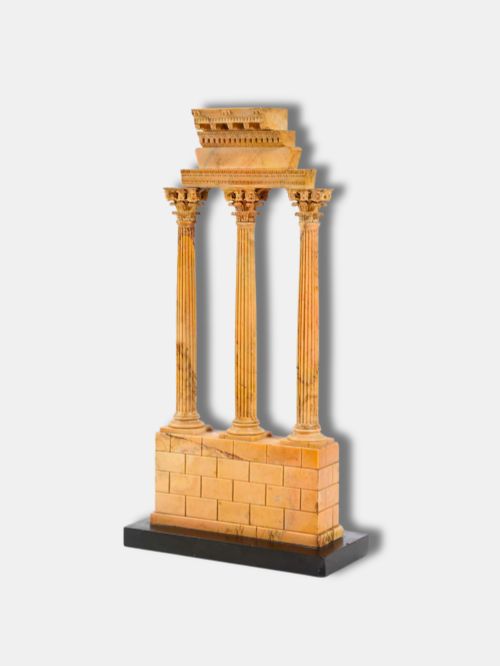
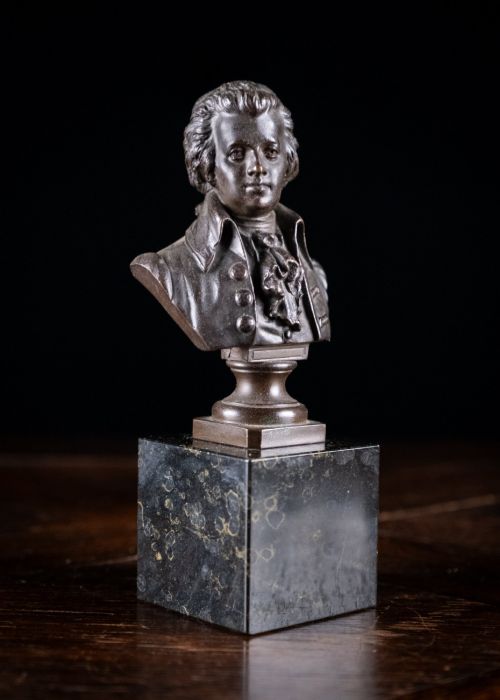
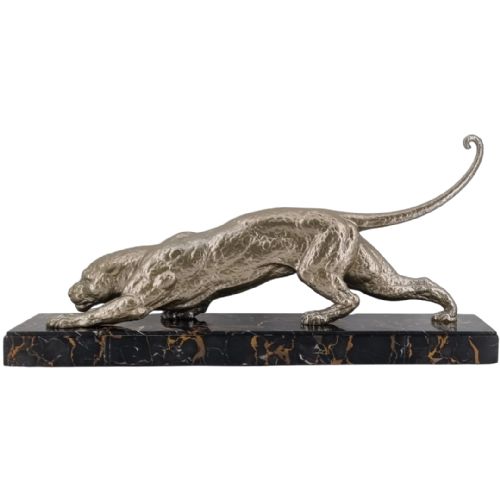
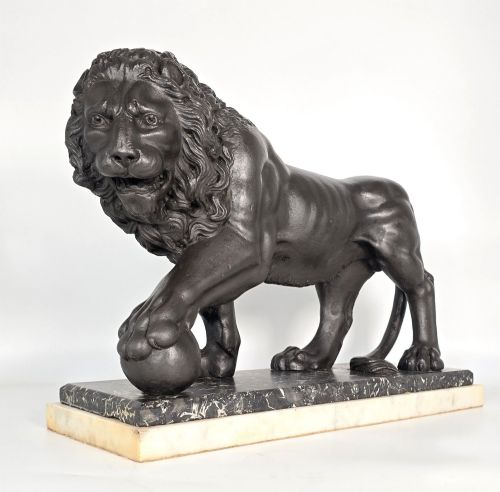
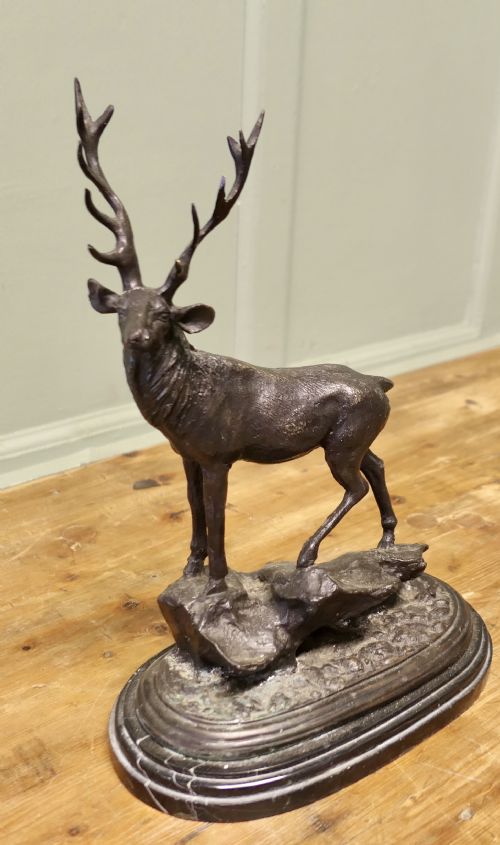



Black Marble Plinth Sculpture
A black marble plinth sculpture elevates figures and artefacts, grounding classical bronzes and animal studies with a dense, dark stone base that brings quiet gravity to a room.
Black Marble Plinth Sculpture
A black marble plinth sculpture combines a figurative subject with a dark stone base, uniting diverse materials such as bronze, spelter, plaster, and scagliola. When searching for a black marble plinth sculpture, buyers encounter 19th Century Victorian and Regency works alongside later 1930 and 1920 examples.
The sculptural subjects range widely across these periods, encompassing Grand Tour lions, mythological sphinxes, literary busts, and avian studies like albatrosses on waves. These pieces function as independent cabinet figures and architectural columns mounted securely on stone foundations.
Origins stretch from classical Grand Tour souvenir traditions to sporting tributes and classical figures in the manner of Hopper. The unifying element remains the dark stone base, which sets off the patinated metal or plaster figure mounted above.
Materials and construction methods
Figures are cast in bronze, spelter, or plaster, utilising patination and gilding to achieve varied surface finishes. Bronze and spelter provide durable bodies for animals and figures, while plaster and scagliola offer alternative sculptural mediums for classical forms.
Bases utilise black marble, onyx, and veined stone, often paired with white socles or brass mounts. These heavy mineral plinths are cut and polished to provide a stable, contrasting platform that anchors the lighter metal or plaster sculpture.
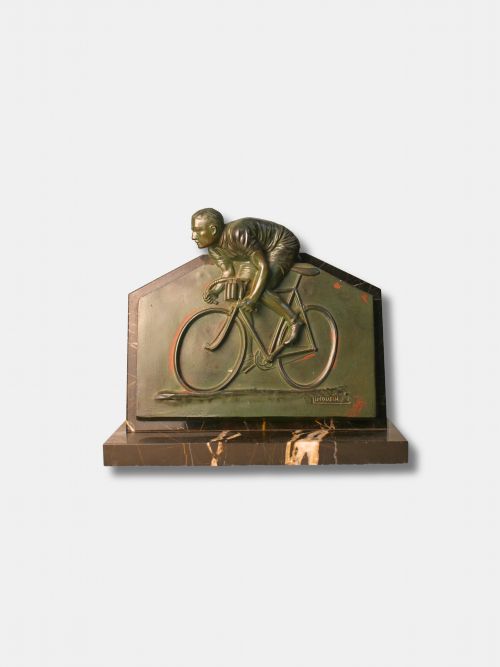
Cycling enthusiasts will find a Tour de France spelter figure from the 1920s mounted upon an onyx plinth.
Judging the range of quality
Quality rests in the crispness of the casting and the depth of the metal patination, where finely chased details on figures like lions or sphinxes distinguish superior works from simpler productions. The integration between the sculpture and its stone base reveals the care taken by the maker.
The mineral selection for the plinth itself dictates visual weight, with dense, uniform black marble and finely veined onyx offering a more satisfying contrast to the metalwork than lesser, flawed stones. The fidelity of the subject, whether an avian study or a literary bust, determines the artistic merit.
The Black Marble Plinth Sculpture Glossary
- Plinth
- A heavy architectural base supporting a statue or column. It provides visual stability and lifts the sculpture above the surface of a table or cabinet.
- Patinated bronze
- Metal treated with chemicals or heat to produce a dark, aged surface finish. This technique highlights anatomical details and protects the metal from oxidation.
- Spelter
- A zinc alloy frequently used as a cost-effective substitute for bronze in decorative figures. It accepts metallic paints and patination to mimic heavier bronzes.
- Scagliola
- A composite material made from pigmented gypsum, glue, and crushed marble to imitate stone. Artisans use it to create columns and decorative architectural elements.
- Grand Tour
- A cultural journey undertaken by wealthy young Europeans to collect antiquities and classical souvenirs. These travels inspired many 19th-century bronze and marble reproductions.
Black Marble Plinth Sculpture: Frequently Asked Questions
What is a black marble plinth sculpture?
It is a decorative figure or bust mounted upon a solid dark stone base. The combination creates a stable display piece that highlights the metal or plaster sculpture above.
The genre spans classical subjects, animal studies, and historical busts from the nineteenth and early twentieth centuries.
How do I care for marble and bronze?
Dust the marble and metal surfaces regularly with a soft, dry cloth to prevent grime accumulation. Avoid chemical cleaners and polishes, which can strip patination from bronze or stain porous stone.
Keep the sculpture away from direct sunlight and excessive humidity to preserve the finish of both the stone plinth and the mounted figure.
How do I date these sculptures?
Dating relies on stylistic clues, the casting technique used for the figure, and the character of the stone base. Victorian and Grand Tour pieces often exhibit heavy patinated bronze and distinct classical motifs.
Later works from the 1920s and 1930s shift toward streamlined subjects and alternative materials like onyx bases paired with spelter figures.
Where should I display these pieces?
Place them on sturdy sideboards, mantels, or dedicated pedestals where their weight is fully supported. Because the stone plinths are heavy, a stable surface ensures the sculpture remains secure.
Positioning them near a light source helps reveal the fine chasing and patination of the bronze or plaster figures.