




Black Marble Desk Clock
These heavy black marble desk clock examples deliver architectural presence and precise mechanical timekeeping to any interior.
Black Marble Desk Clock
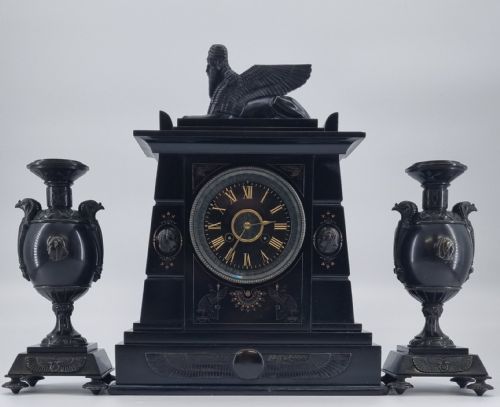
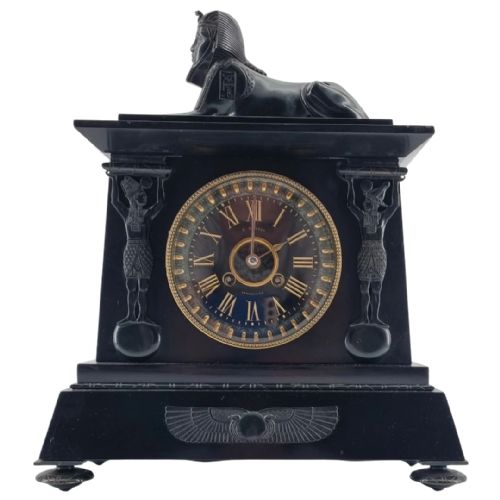
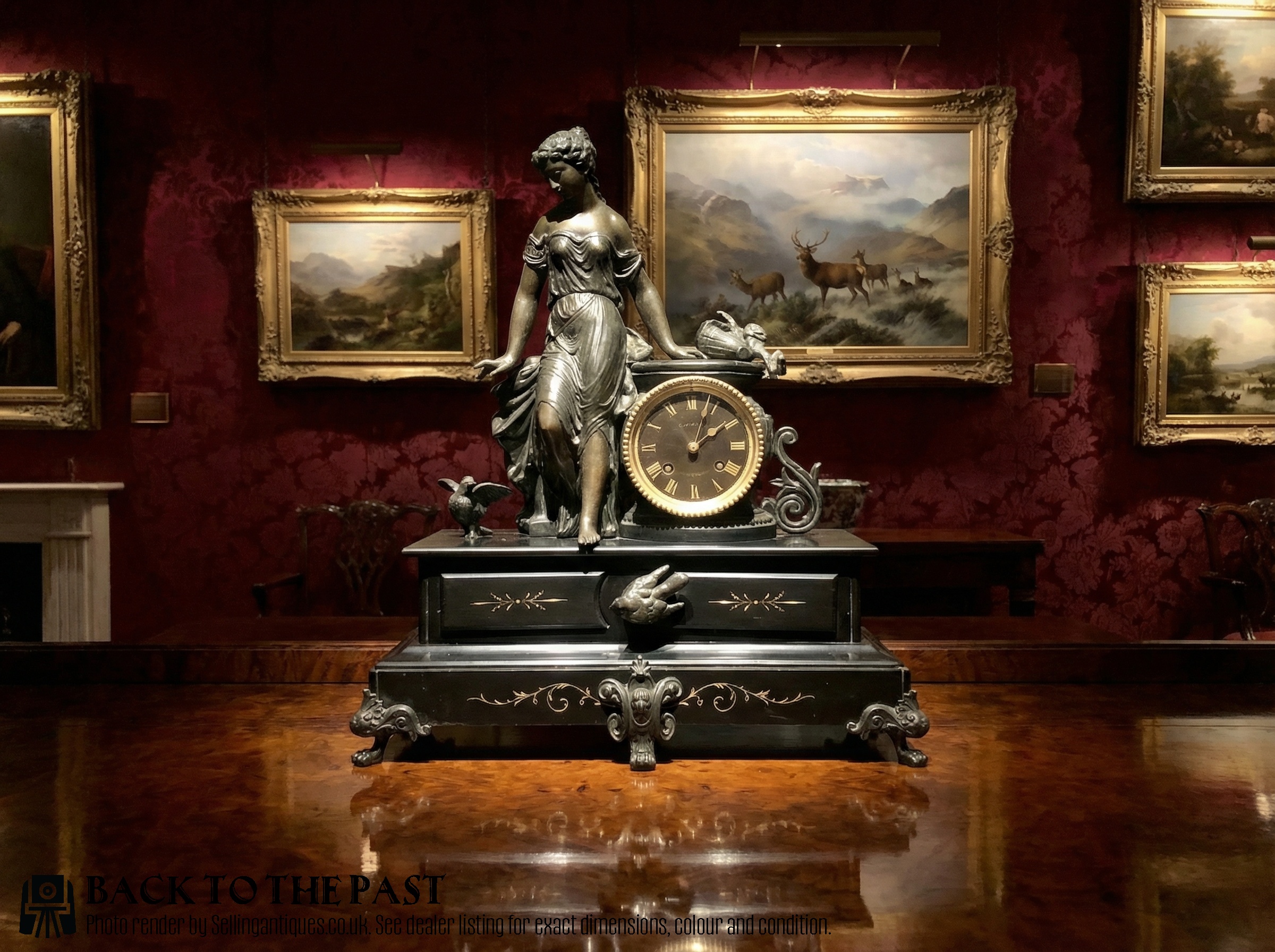
A black marble desk clock is a sturdy timekeeper typically housed in polished stone, slate, or marble, often accompanied by matching side garnitures or urns. You will frequently encounter Victorian and late nineteenth-century examples spanning architectural, Egyptian Revival, and industrial designs.
These heavy objects were built for domestic and professional interiors, serving as substantial centrepieces on desks, mantels, and tables. The selection ranges from severe drumhead clocks to ornate French perpetual calendar movements and sculptural Art Deco pieces.
Makers housed complex eight-day movements within heavy stone cases, sometimes incorporating bronze mounts, enamel dials, and glass bezels. The distinct styles reflect changing nineteenth-century tastes, moving from classical revivalism toward geometric twentieth-century forms.
How they were made
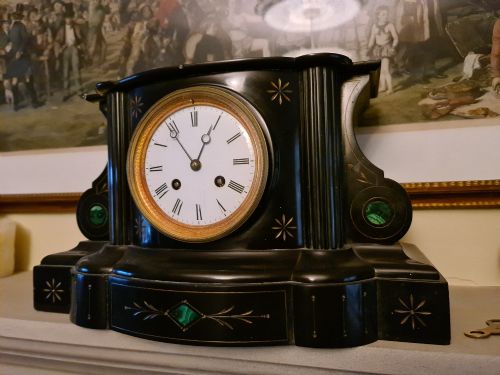
Craftsmen shaped heavy blocks of black marble and slate using sawing and polishing techniques to achieve smooth, reflective geometric surfaces. These stone cases were frequently inlaid with contrasting marbles or mounted with cast bronze and gilt ormolu details.
Mechanical movements featuring brass gears and escapements were fitted directly into the stone housings behind protective glass dial covers. Enamel dials with painted numerals were then secured to the face, often paired with subsidiary calendars or visible pendulum apertures.
Some nineteenth-century desk clocks masquerade as industrial machinery, housing rotating steel pistons beneath glass domes.
What varies in quality
Quality rests in the crispness of the stone cutting, the weight and architectural ambition of the case, and the integration of bronze or ormolu mounts. Superior examples display meticulous marble inlay, finely cast figural bronzes, and signed movements by known horologists.
The sophistication of the mechanical movement also dictates value, with perpetual calendars, equation of time complications, and industrial series pieces standing above standard time-only clocks. Original matching garnitures elevate a clock from a simple timepiece to an integrated decorative set.
Sacre·Baby and Jannings·D. Munsey·Achille Brocot·Andre Guilmet·Ferdinand Priess·Pinchon Fils Paris·Henry Berkeley·P.M.Favre
The Black Marble Desk Clock Glossary
- Garniture
- A matching set of ornamental vases or urns displayed alongside a central clock on a mantelpiece. These decorative side pieces complete the symmetrical arrangement typical of Victorian interiors.
- Ormolu
- Gilded bronze used for decorative mounts, feet, and bezels on nineteenth-century clock cases. This technique involves applying a gold amalgam to bronze before heating.
- Drumhead clock
- A timepiece featuring a circular clock head mounted directly atop a rectangular or stepped stone base. The shape resembles a traditional orchestral drum.
- Perpetual calendar
- A complex clock mechanism that automatically adjusts for the varying lengths of months and leap years. These advanced movements require minimal manual resetting.
- Fusee
- A conical pulley connected to the mainspring by a cord or chain that equalises the driving force as the spring unwinds. This device ensures consistent timekeeping accuracy throughout the running cycle.
Black Marble Desk Clock: Frequently Asked Questions
What is a black marble desk clock?
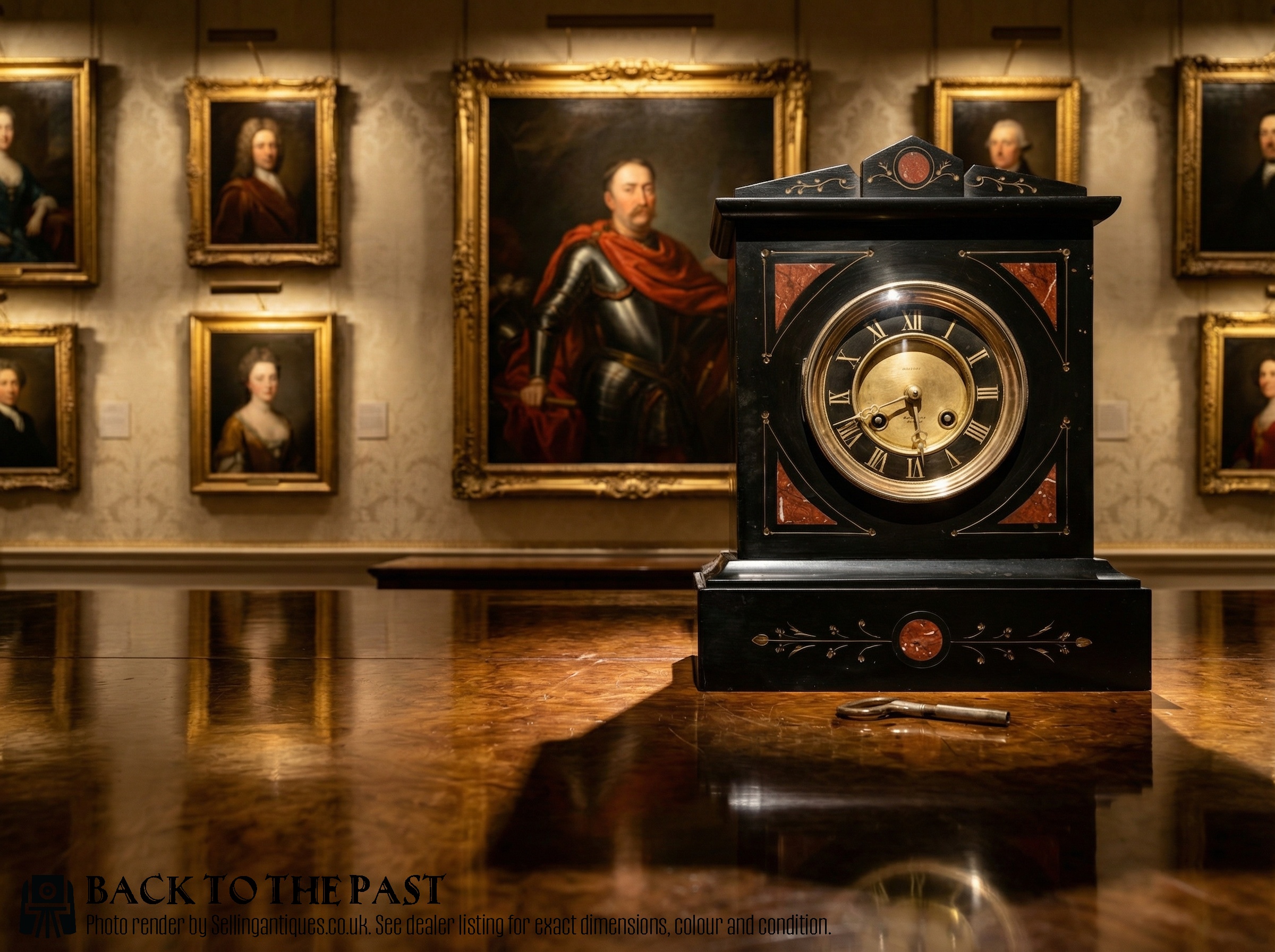
A black marble desk clock is a heavy timekeeper housed in polished stone or slate, manufactured primarily during the nineteenth and early twentieth centuries.
These pieces range from simple drumhead designs to elaborate architectural and Egyptian Revival models featuring bronze mounts.
How do I wind a vintage clock?
Most mechanical desk clocks utilise an eight-day movement that requires winding via a specialised key inserted into small holes on the enamel dial.
Care must be taken not to overwind the mainspring, turning the key gently until firm resistance is felt.
Where should I place a heavy marble clock?
Due to their substantial weight from the stone cases, these clocks require a sturdy surface such as a heavy desk, sideboard, or mantelpiece.
Placement should avoid areas subject to vibrations or direct sunlight to protect the marble finish and internal brass mechanics.
How do I identify the period of a clock?
The period is typically determined by examining the stylistic details, such as classical bronze mounts for Victorian pieces or geometric lines for Art Deco examples.
Signatures on the enamel dial or stamped maker marks on the brass movement backplate also provide definitive dating evidence.
What are clock garnitures used for?
Clock garnitures are matching side ornaments, often shaped as urns or vases, designed to flank the main timepiece on a mantel or shelf.
They create a balanced decorative display that was particularly fashionable during the Victorian and Egyptian Revival periods.