




Victorian Stone Mantel Clock
A Victorian stone mantel clock brings the architectural weight and precise engineering of the nineteenth century directly onto the shelf.
Victorian Stone Mantel Clock
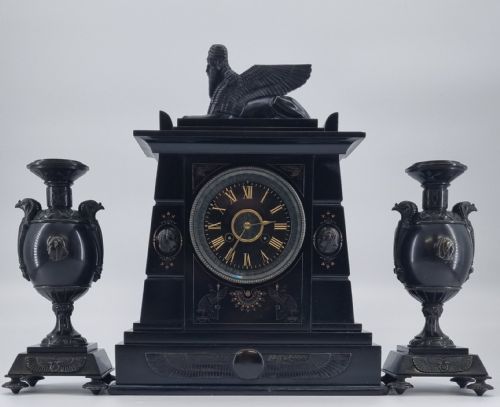
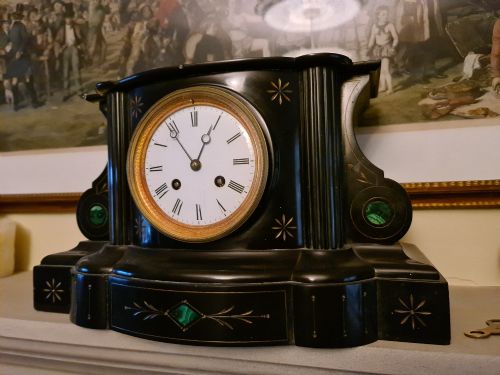
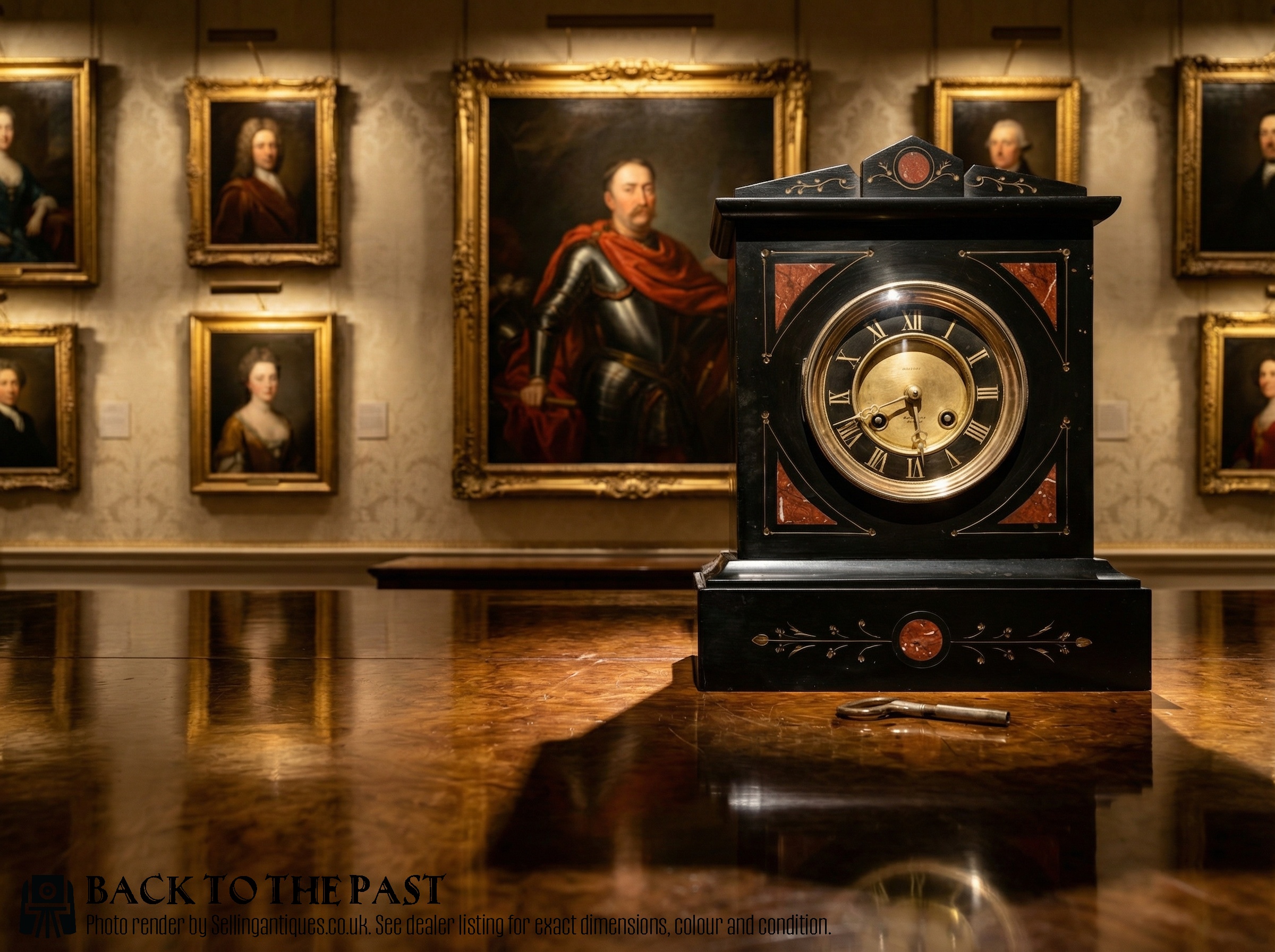
A victorian stone mantel clock is a heavy, architectural timepiece built from dense materials such as black slate and marble. These pieces range from simple drumhead shapes to elaborate garnitures flanked by matching side ornaments.
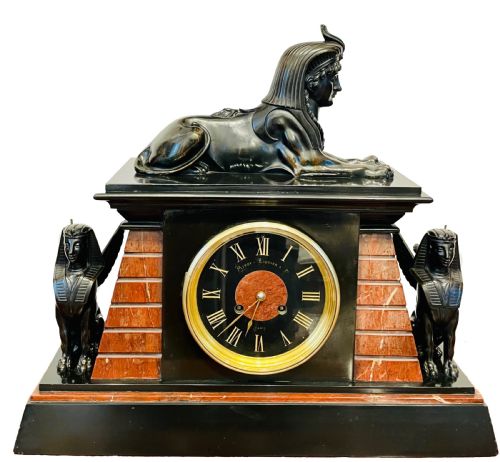
Most examples found here date from the mid to late nineteenth century, spanning decades such as eighteen sixty, eighteen seventy, and eighteen eighty. The aesthetic draws heavily on classical revival and Egyptian influence styles.
Makers often housed eight day movements inside solid stone cases, creating durable timepieces designed for domestic parlours and formal reception rooms. The sheer heft of the marble and slate gives these clocks a permanent, grounded presence.
Materials and construction
Clockmakers utilised natural stones like black slate and various marbles, sometimes accented with malachite, bronze, and brass details. Dials typically feature enamel numerals protected beneath glass bezels.
The construction relies on heavy stone masonry combined with mechanical brass clockwork movements. Architectural elements such as columns, pediments, and incised geometric patterns were laboriously cut and polished by hand.
Many a nineteenth century household relied on these heavy stone clocks, knowing full well that dropping one on your toe required a doctor.
Judging quality and design
Quality in a victorian stone mantel clock rests on the selection of the marble and the ambition of the architectural case. Pieces featuring contrasting coloured marbles, applied bronze mounts, or matching garnitures stand apart from plain single stone versions.
The precision of the dial enamel and the integration of the movement into the heavy stone housing also separate standard domestic clocks from exceptional exhibition pieces signed by Parisian makers.
Philippes Paris
The Victorian Stone Mantel Clock Glossary
- Garniture
- A set consisting of a central clock flanked by matching decorative ornaments such as urns or vases. These symmetrical sets were designed to balance visually on a mantelpiece.
- Drumhead clock
- A timepiece featuring a circular clock face housing set atop a rectangular or stepped stone base. This distinct form resembles a drum mounted on a plinth.
- Egyptian revival
- A nineteenth century decorative style incorporating pharaonic motifs, hieroglyphs, and architectural elements inspired by ancient Egypt. It frequently appears on stone mantel clock cases.
- Slate
- A fine grained metamorphic rock used extensively for Victorian clock bodies due to its ability to take a smooth, dark polish. It often mimics black marble in formal clock design.
Victorian Stone Mantel Clock: Frequently Asked Questions
What is a clock garniture?
A garniture is a matching set comprising a central mantel clock accompanied by two side pieces, such as urns or obelisks. They were designed to sit together symmetrically on a fireplace mantel.
Complete matched sets carry more decorative presence than the clock alone.
How do I wind an eight day clock?
Eight day movements require winding using a specific key inserted into winding holes on the enamel dial approximately once a week. Care must be taken not to overwind the mainspring.
Consulting a professional clockmaker for initial setup ensures the movement runs accurately.
Where should I place my clock?
These clocks need a stable, level surface away from direct heat sources and dampness to protect both the stone case and the internal brass mechanism. A sturdy mantelpiece or heavy sideboard is ideal.
Because of their weight, placement should be permanent rather than temporary.
How do I identify the period?
The period is typically identified through a combination of case materials, architectural style, and dial characteristics. Victorian examples from the mid to late nineteenth century often display classical or Egyptian revival motifs.
Inscribed signatures on the movement or dial can also provide precise maker and date information.