


Black Lacquerware
Black lacquerware pieces bring deep, lustrous surfaces and rich gilt decoration into a room, spanning Chinese export chests to Japanese Meiji cabinets.
Black Lacquerware
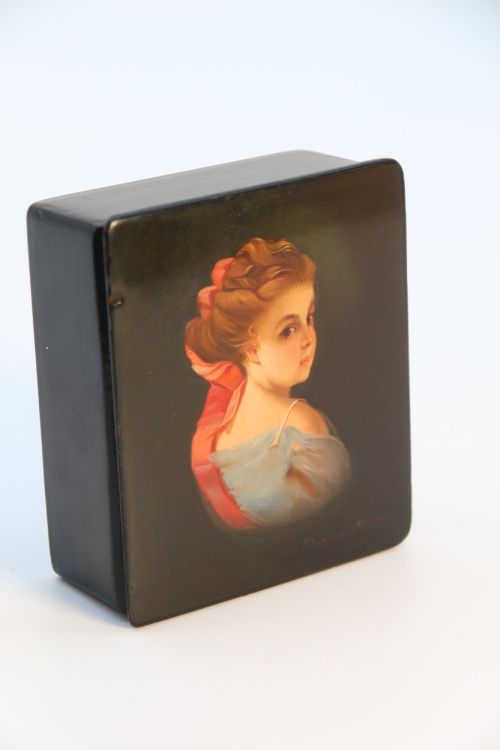
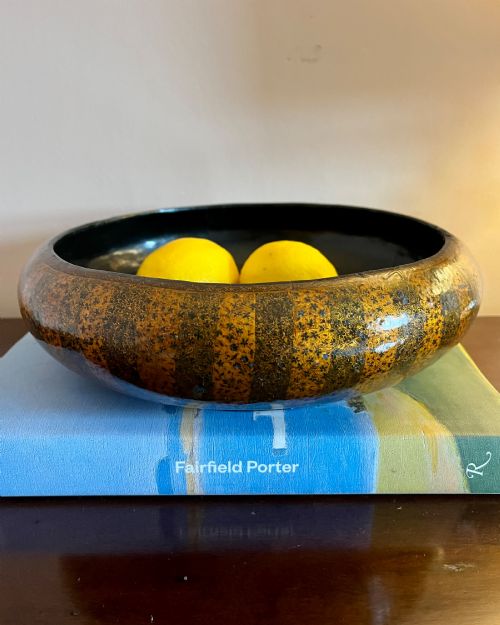
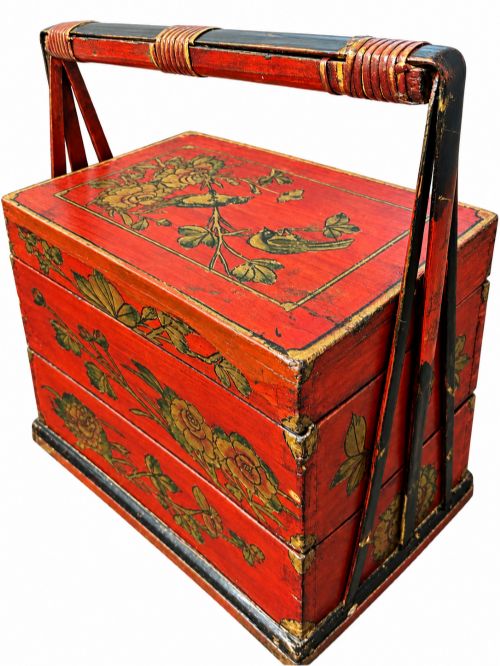
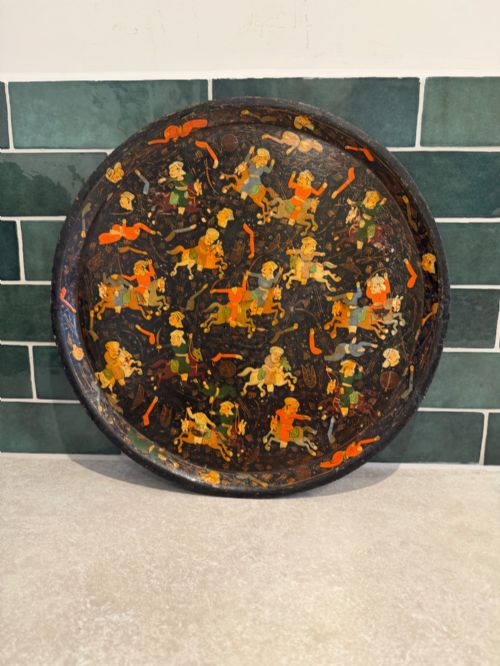
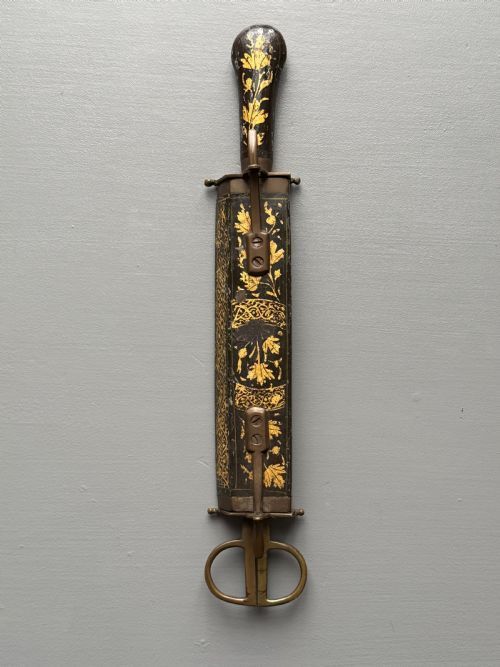
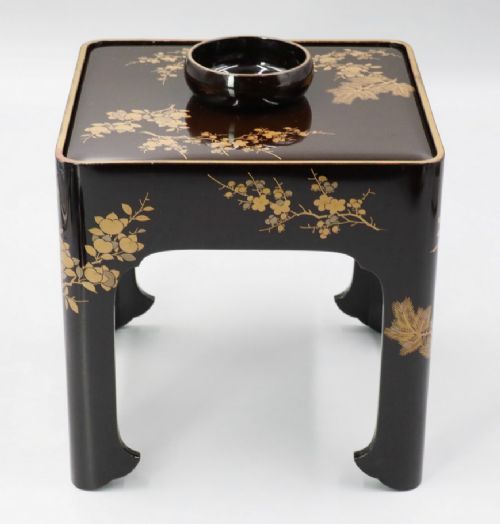
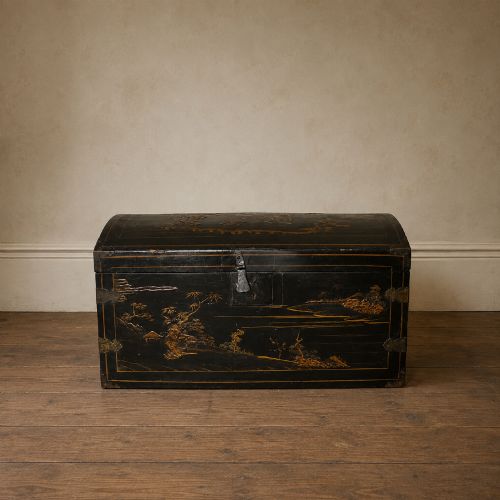
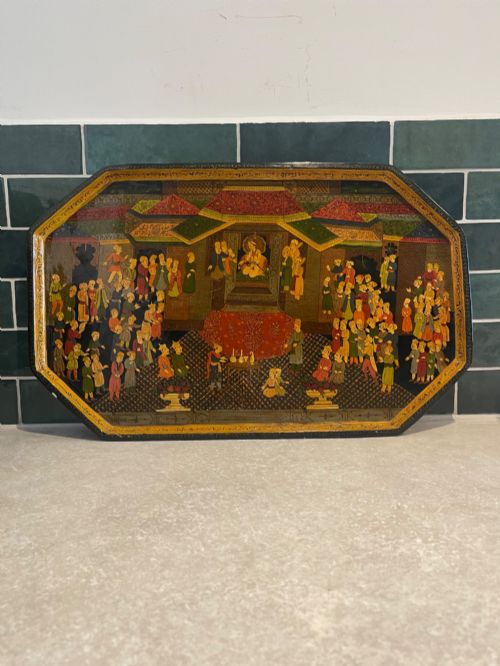
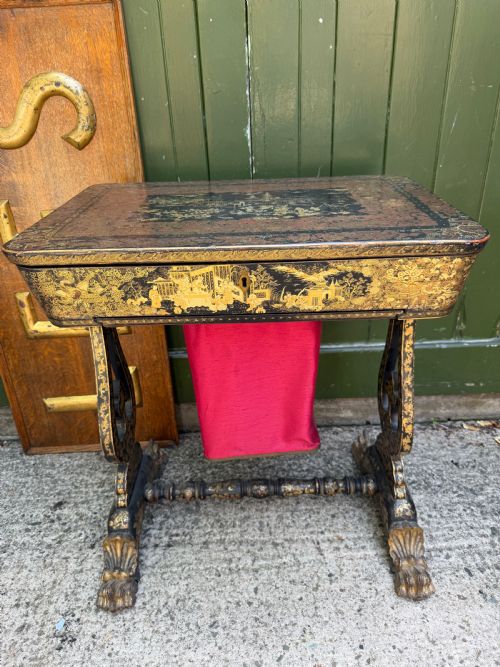
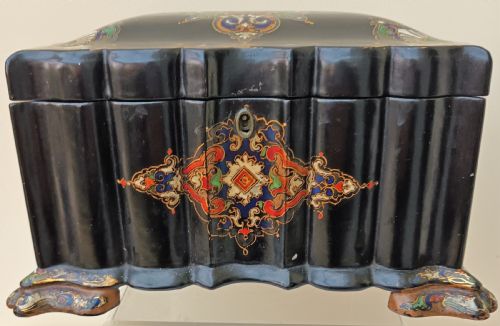
When you search for black lacquerware, you encounter a diverse range of objects created across global workshops, from Chinese export chests and Kashmiri papier-mâché trays to Japanese Meiji period cabinets. These pieces serve practical and decorative functions alike, including tea caddies, work tables, boxes, and temple vases.
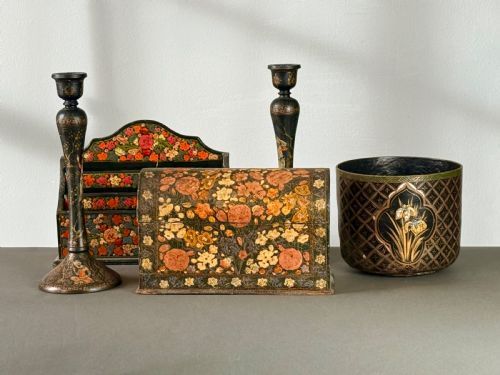
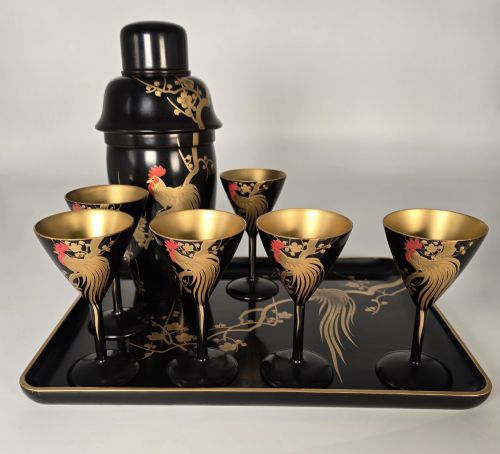
The selections on this page draw predominantly from the nineteenth and early twentieth centuries, reflecting diverse global traditions such as Chinese export work, Japanese Meiji and Taisho periods, Kashmiri crafts, and Persian Qajar items. Trays, cabinets, and small decorative items form the most common encounters in this category.
Materials and Construction
Makers built these pieces using wood, papier-mâché, and lacquered wood as structural bases, often applying multiple layers of lacquer to achieve a deep, reflective black ground. Artisans then enriched these surfaces using gold leaf, gilt decoration, and hand-painted details.
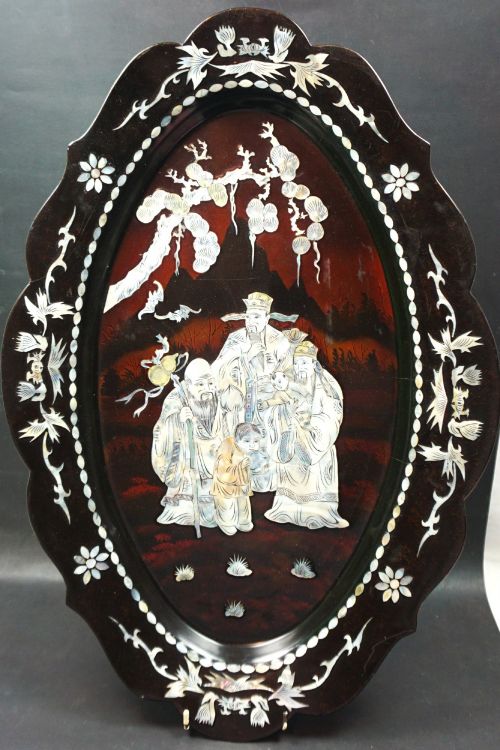
Many examples incorporate mother-of-pearl inlay or brass elements to create textural contrast against the dark background. The combination of durable wooden or papier-mâché foundations with meticulous surface finishing defines the physical nature of these objects.
Black Lacquerware Retail Price Guide 2026
Typical asking prices for black lacquerware among the pieces listed under this phrase on Sellingantiques today, from the lower quarter to the upper quarter. They describe what is for sale here now, not the wider market.
The listings span the Georgian, Victorian, and Edwardian eras alongside specific decades from eighteen eighty to nineteen thirty.
Evaluating Quality
Quality in black lacquerware rests on the depth of the finish, the precision of the gilt or hand-painted decoration, and the stability of the underlying material. Superior examples display crisp detail in motifs such as Chinese export landscapes or Japanese Meiji period imagery without excessive surface degradation.
The refinement of inlay work, such as mother-of-pearl placement, and the structural integrity of complex forms like cabinets and work tables distinguish finer productions from simpler utilitarian items.
The Black Lacquerware Glossary
- Chinoiserie
- European theatrical interpretation of Chinese and East Asian artistic motifs. This style heavily influences many decorative items on this page.
- Papier-mache
- A composite material made of paper pulp or reinforced paper sheets mixed with adhesive, pressed and dried into rigid forms. It serves as a lightweight base for trays and boxes.
- Inro
- A traditional small Japanese case for holding small objects, suspended from a sash. These items often feature intricate lacquer and decorative work.
- Shodana
- A traditional Japanese tabletop display cabinet featuring asymmetrical shelving. They frequently showcase elaborate lacquer finishes.
- Cachepot
- An ornamental container designed to hold a flowerpot. These decorative vessels appear in nineteenth-century groupings.
Black Lacquerware: Frequently Asked Questions
How do I care for black lacquerware?
Keep these items away from direct sunlight and excessive moisture to protect the delicate surface layers and gilt decoration.
Dust gently with a soft, dry cloth and avoid chemical cleaning agents that can damage the finish.
What is Chinese export lacquer?
Chinese export lacquer refers to objects manufactured in China specifically for Western markets during the eighteenth and nineteenth centuries.
These pieces combine traditional Eastern techniques with forms desired by European and American buyers, such as tea caddies, sewing tables, and large chests.
How do I identify a Meiji period piece?
Meiji period items date from eighteen sixty-eight to nineteen twelve, a time of exceptional technical mastery in Japanese craft.
Look for refined lacquer work, detailed pictorial scenes, and sophisticated cabinet forms like shodana and stands.
Where were papier-mache items made?
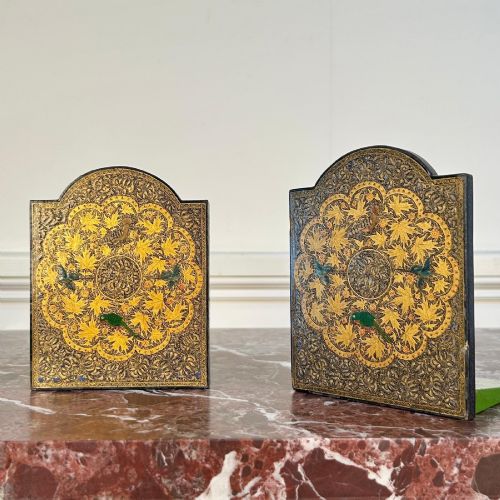
Papier-mache objects in this selection originate from various centres, including Kashmiri workshops and nineteenth-century English makers.
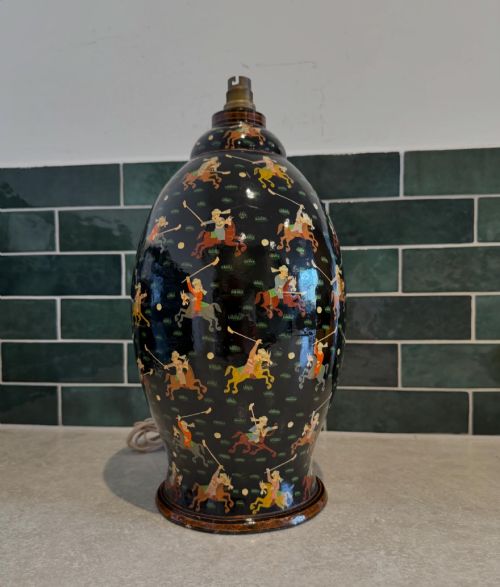
Kashmiri pieces often feature distinctive hand-painted floral or lamp designs, while English examples frequently include tea caddies and trays.